Riding a scooter in Northern Thailand? This guide covers scooter rentals in Chiang Mai, license rules, road conditions, safety tips, and the best scenic routes. (CLICK HERE)
Table of Contents
Riding a scooter in Northern Thailand is one of the best ways to explore the mountains, villages, and scenic roads around Chiang Mai and Chiang Rai.
I’ve personally done this and I can definitely recommend it. Every time you leave the city and start riding towards the mountains, whether it’s the Samoeng Loop or Chiang Mai to Chiang Rai, the road has amazing things to offer. Trust me, you won’t regret this. And because the roads are in such great condition, you don’t have to be an experienced rider to do this.
Yes, riding in cities can be a little hectic and tiring because of the traffic. But as soon as you leave the city, the road is all yours. You can just enjoy the ride.
Scooters are one of the most common ways to explore Northern Thailand. Many scenic routes are easier to reach with a scooter. But mountain roads and local traffic require some preparation.
Why Riding a Scooter in Northern Thailand Is the Best Way to Explore
Honestly, scooters are the best way to explore because they give you the freedom to stop at any place you find interesting. The only disadvantage? You’ll find amazing views every few kilometers. And if you keep stopping at every spot, your destination will arrive after a very long time. But that’s not really a disadvantage. That’s the whole point.
Here’s why scooters work so well in Northern Thailand:
Freedom to explore villages. You can ride into small villages. Stop at random cafés. Take detours when something looks interesting. You’re not stuck to a bus route or a tour schedule.
Easier parking. Finding parking on a scooter is simple. Even in busy areas like Chiang Mai Old City or near temples in Chiang Rai.
Inexpensive rental. Scooter rentals are cheap compared to renting a car or hiring taxis everywhere you go.
Access to scenic routes. Roads like the Samoeng Loop or the route to Mae Salong are built for scooters. You get the full experience. The curves. The views. The wind. All of it.
Renting a Scooter in Chiang Mai: What to Expect
There are a lot of places you can rent scooters in Northern Thailand, especially in Chiang Mai. I would personally recommend renting a scooter in Chiang Mai. There are tons of options. And Chiang Mai is connected to most major cities via bus or train. So it’s a very good starting point for your journey. You could literally get out of the train station and rent a scooter right there for the rest of your stay.
The Rental Process
Every rental place has different requirements. Some ask for your passport. Some just ask for a cash deposit. I’d recommend looking for someone who does cash deposit. I can never trust anyone with my passport. Most trusted rental places allow cash deposits.
Prices
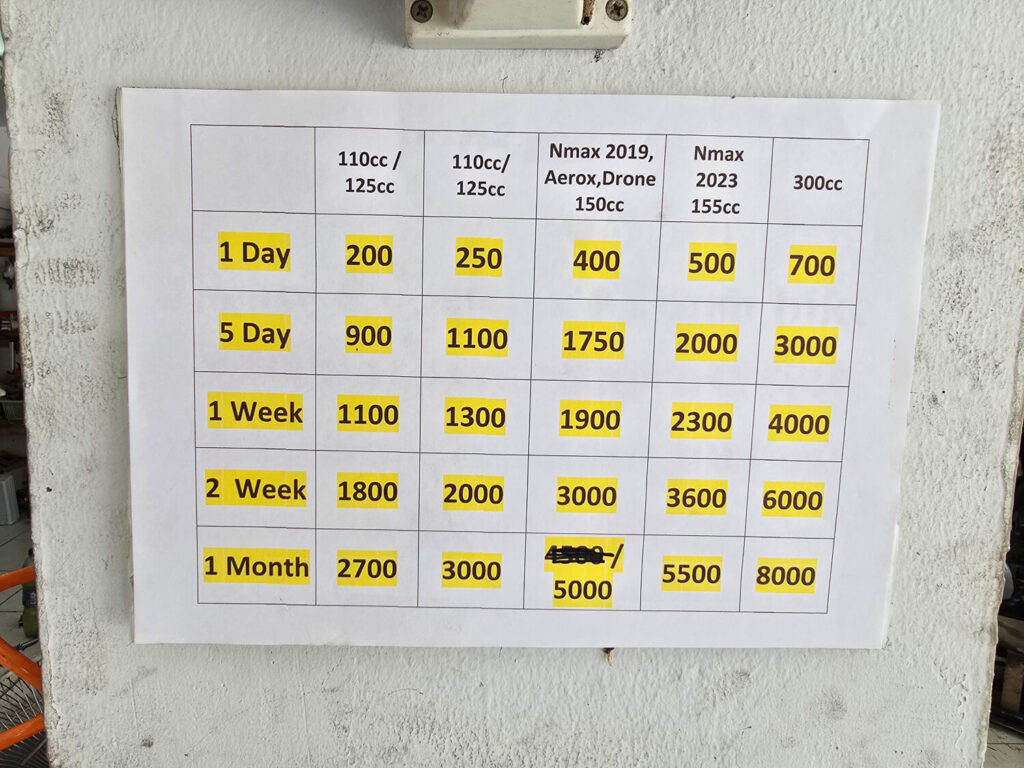
I paid 3,000 THB for two weeks and got a 150cc scooter. A higher cc scooter is highly recommended if you’re planning to ride in the mountains. Because a lot of scooters broke down in the past, rental companies won’t allow smaller scooters in the mountains. You need at least 150cc for the inclines.
I’m attaching the price card and location details of the place I rented from. You can check it out if you’re interested. They also accept US dollars for deposit. So if you don’t have extra THB, you can use US dollars too.
Location – D2 Bike Rentals
What to Check Before Renting
Inspect the scooter before you take it. Check the brakes. Test the throttle. Look at the tires. Make sure everything works. Take photos of any existing scratches or damage so they don’t charge you for it later.
Ask about the fuel policy. Most rentals give you the scooter with a full tank and expect you to return it full. Simple.
Common Scooter Types
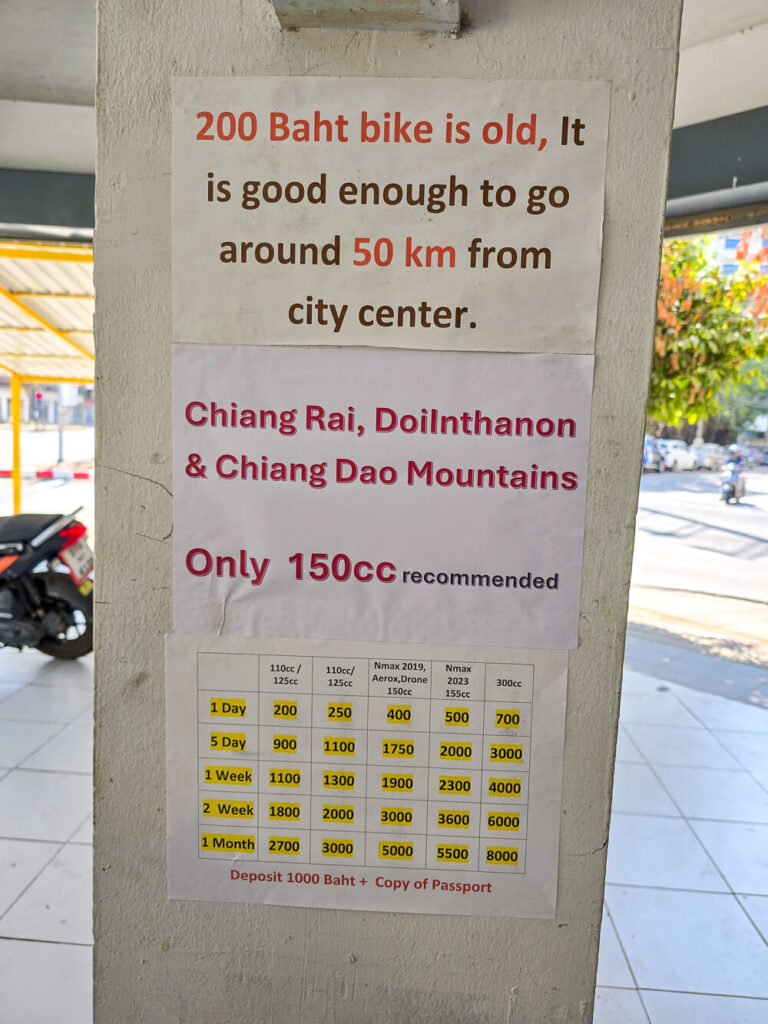
Most rentals offer 110cc to 150cc scooters. The 110cc and 125cc bikes are fine for city riding. But if you’re going to the mountains, get a 150cc minimum. The power makes a huge difference on steep climbs.
Can Tourists Ride Scooters in Northern Thailand?
Yes, tourists can ride scooters in Northern Thailand. However, you should carry an International Driving Permit (IDP) along with your home driver’s license. Police checkpoints are common in Chiang Mai city, and riding without a license can result in a fine.
Do you need an international driver’s license? Yes. I’d highly recommend getting an international driver’s license before renting a scooter.
Want to know my experience? I’ve seen some officers be okay with your home driver’s license. And I’ve seen some officers be strict and demand an international driver’s license.
So yes, you can sometimes get away with your home driver’s license. But it completely depends on your luck and the type of officer you encounter.
My personal opinion? Just be ready with all the necessary documents and save yourself the hassle. It makes life easier for you and the officers.
Police Checkpoints
I’ve only seen police officers posted in Chiang Mai city. During my two weeks, I didn’t see a single officer in the mountains. And I think there were only two checkpoints from Chiang Mai to Chiang Rai.
But that doesn’t mean they’re not there. Just be prepared. Carry your license. Wear your helmet. Follow the rules. And you’ll be fine.
Road Conditions and Safety When Riding a Scooter in Northern Thailand
This is the best part. The roads are in great condition as of January 2026. I never faced any issues with the roads. The only challenging part was in Mae Kampong where the slopes could be a little intimidating for newbie riders. Apart from that, everything was smooth.
Highways Between Cities
The main highways like Route 1 and Route 118 are excellent. Well-paved. Clear lane markings. Good signage. You can ride comfortably without worrying about potholes or rough patches.
Mountain Roads
The mountain roads are winding. Lots of curves. Elevation changes. But they’re well-maintained. The asphalt is smooth. The curves are predictable. Just take your time and you’ll be fine.
Routes like the one to Mae Salong or the Samoeng Loop are incredibly scenic. Green hills. Tea plantations. Small villages. It’s what makes riding in Northern Thailand so good.
Rural Roads Near Villages
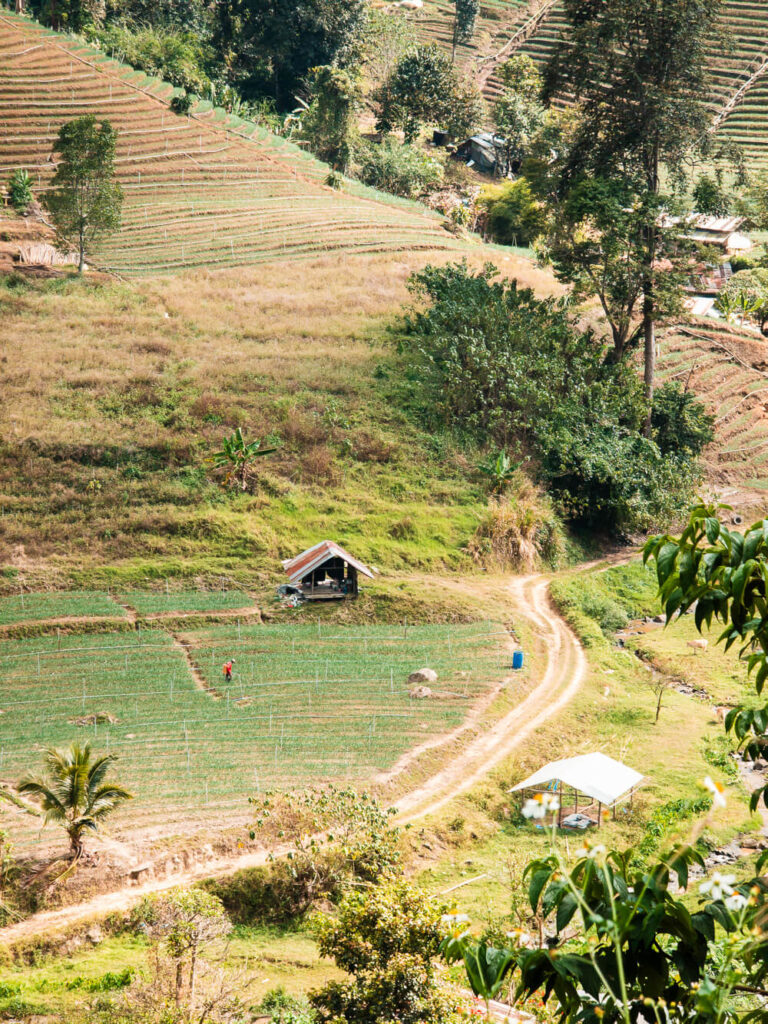
Roads near smaller villages can be narrower. Sometimes a bit rougher. But still manageable. Just slow down and watch for loose gravel on corners.
Occasional Potholes
You’ll hit a few potholes here and there. Nothing major. Just keep your eyes on the road and you’ll see them coming.
Northern Thailand Scooter Routes: My Experience
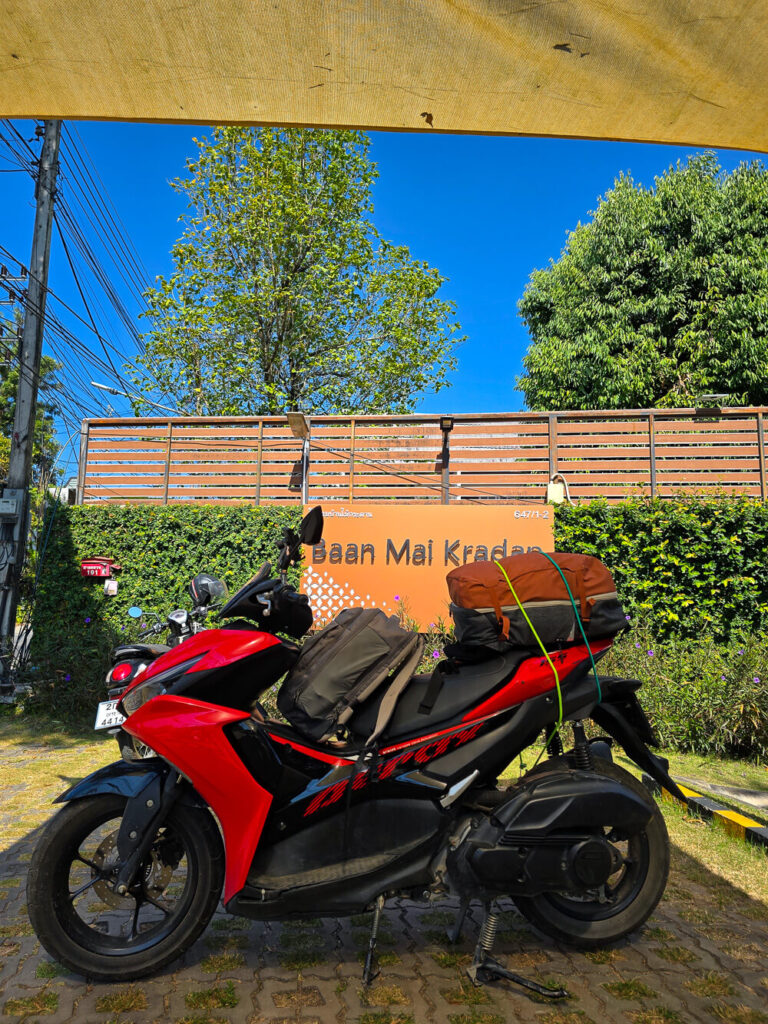
This is how I planned my Northern Thailand ride.
I started in Chiang Mai. Then rode the scooter to Chiang Rai. After staying in Chiang Rai for a few days, I moved further to Mae Salong. Then I returned to Chiang Rai and continued my journey back to Chiang Mai.
I stayed for a night in Chiang Mai. Then did the Samoeng Loop. Then rode to Mae Kampong.
In between, I also did a random day trip towards Pai. I had no plans one day. Just started riding. Ended up going towards Pai. Didn’t stay there. Returned the same night.
The total distance I covered was more than 1,000 kilometers in those two weeks. I remember because when I rented the scooter, the odometer was at 23,800 kilometers. When I returned it, it was at 25,100 kilometers.
Scooter Travel from Chiang Mai to Chiang Rai: What to Expect
The scooter travel from Chiang Mai to Chiang Rai is one of the most popular routes in Northern Thailand. It’s about 185 to 200 kilometers. Takes around 3.5 to 4 hours with stops.
I filled my tank in Chiang Mai before leaving. Cost around 150 THB. Didn’t have to refuel until I got back to Chiang Mai days later. A full tank gives you 200+ kilometers range easily.
The roads are smooth. Well-paved. Route 1 is the main highway. There were a few patches where they were rebuilding the road when I went in January 2026. Had to slow down there. But not for long. And by the time you’re reading this, those sections are probably finished.
Tips for Riding Scooters in the Mountains
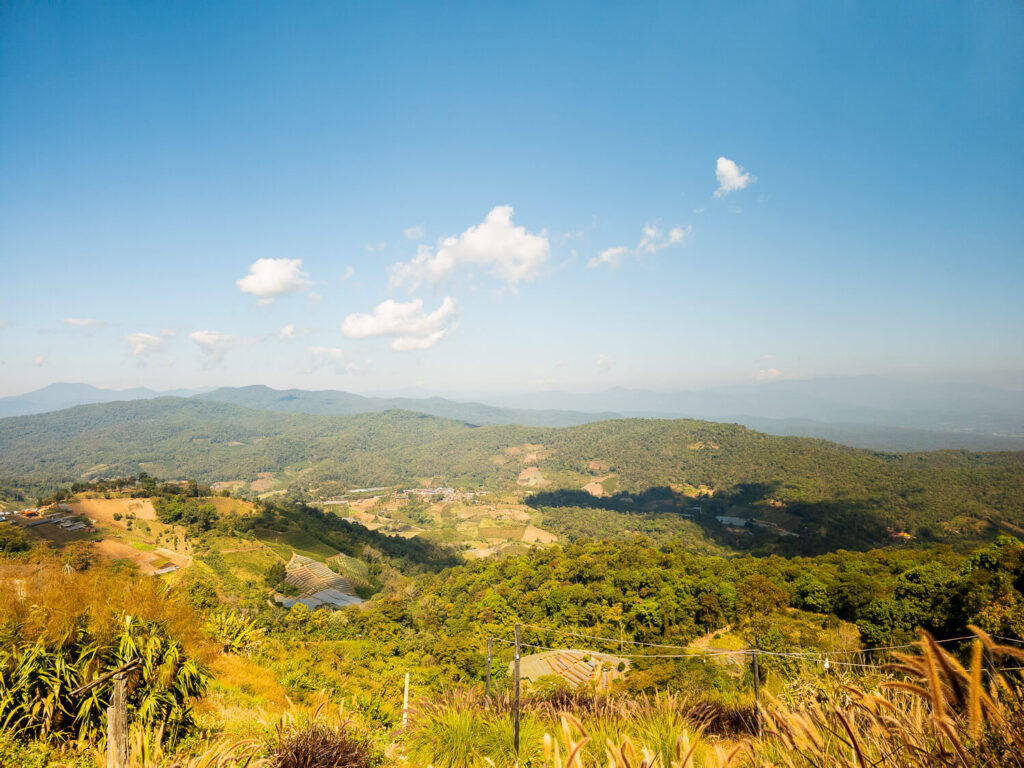
Mountain riding is different from city riding. Here’s what you need to know.
Steep Climbs
Some sections get steep. Your scooter will slow down. That’s normal. Just downshift if you need to and keep a steady throttle. Don’t panic. The bike will climb.
Tight Curves
The roads curve a lot. Especially on routes like the Samoeng Loop. Take the curves slow. Lean into them. Don’t brake mid-turn if you can avoid it.
Braking Technique
Use both brakes. Front and rear. Don’t slam the front brake on a curve. You’ll lose traction. Brake before the turn. Then coast through it.
Avoid Night Riding
Don’t ride in the mountains after dark. The roads are curvy. Visibility drops. And you won’t see potholes or gravel until it’s too late. Get to your destination before sunset.
Safety Tips for Riding a Scooter in Northern Thailand
Wear a helmet. Always. No exceptions. Most rentals provide one. If it doesn’t fit well, buy a cheap one. Your head is worth it.
Avoid riding in heavy rain. The roads get slippery. Visibility drops. It’s not worth the risk. Wait it out.
Watch for gravel on curves. Loose gravel appears on corners, especially after rain. Slow down before the turn.
Keep distance from trucks. Big trucks kick up dust and debris. And they take wide turns. Give them space.
Mistakes to Avoid When Riding a Scooter in Thailand
Here are the common mistakes travelers make when riding a scooter in Northern Thailand:
Not getting an IDP. Don’t assume you won’t get stopped. Get the International Driving Permit before you travel. It’s cheap and saves you from fines.
Renting a scooter that’s too small. If you’re going to the mountains, get at least 150cc. A 110cc or 125cc will struggle on steep climbs and you’ll regret it.
Riding without inspecting the scooter first. Always check the brakes, tires, and throttle before leaving the rental shop. Take photos of existing damage. Otherwise you’ll pay for scratches you didn’t make.
Not downloading offline maps. Cell service can be spotty in the mountains. Download Google Maps offline for the regions you’re visiting.
Riding when you’re tired. Long rides are exhausting. If you’re tired, stop. Rest. Don’t push through it. Tired riding leads to accidents.
Leaving without a full tank. Fuel stations are less frequent in rural areas. Fill up before you leave the city.
Riding after dark in the mountains. This is dangerous. Poor visibility. Curves you can’t see. Potholes. Animals crossing. Don’t do it.
Fuel, Navigation, and Rest Stops
Fuel Stations
Fuel stations are easy to find on main highways. In smaller towns, they’re less frequent. Fill up when you see one. Don’t wait until you’re on empty.
I filled my tank in Chiang Mai before leaving. Cost around 150 THB. Didn’t have to refuel until I got back to Chiang Mai days later.
Using Google Maps Offline
Download offline maps before you leave. Cell service can be spotty in the mountains. Google Maps works offline as long as you’ve downloaded the region.
Planning Rest Stops
Don’t ride for hours without a break. Stop every hour or so. Stretch. Drink water. Rest your hands. Long rides get tiring.
Avoiding Riding When Tired
If you’re tired, stop. Don’t push it. Tired riding leads to mistakes. Find a café. Sit. Rest. Then continue.
When a Scooter Is Not the Best Option
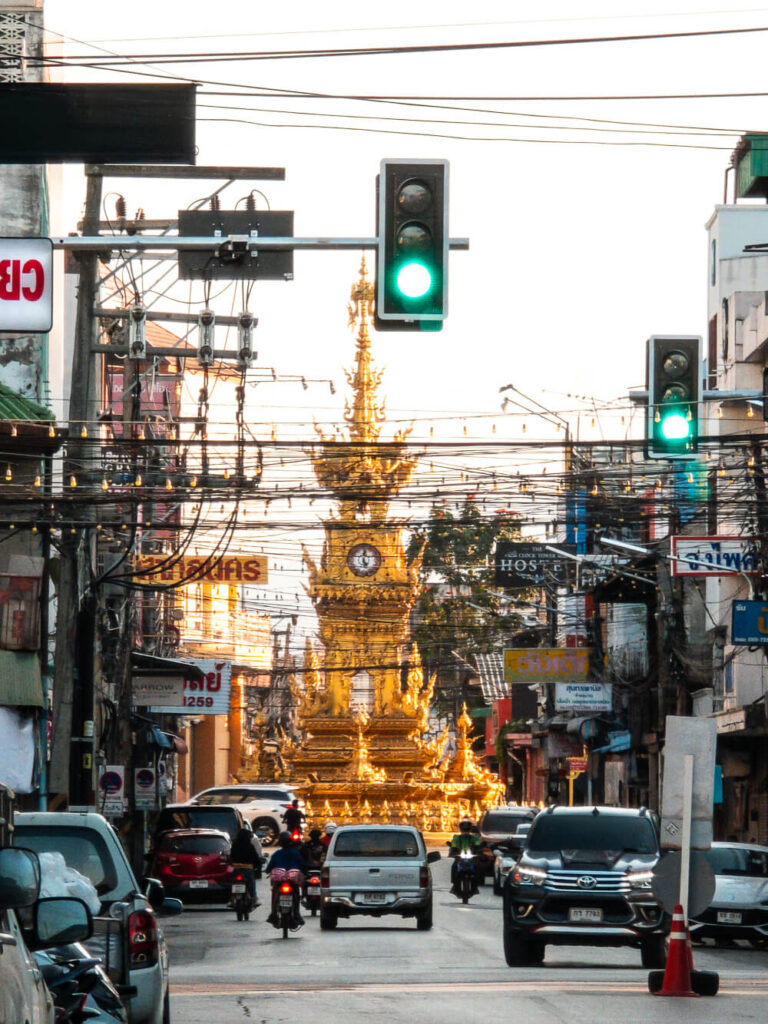
Be honest with yourself. Scooters aren’t for everyone.
Scooters may not be ideal if:
You’re completely inexperienced. If you’ve never ridden a scooter before, Northern Thailand isn’t the place to learn. Practice in your home country first.
There’s heavy rain. If it’s pouring, take the bus. Seriously.
You’re doing long highway distances every day. If you’re riding 300+ kilometers daily on highways, a car is more comfortable.
You’re traveling with lots of luggage. Scooters don’t have much storage. One backpack is fine. Three suitcases? Not so much.
Is It Safe to Ride a Scooter in Thailand?
Yes, riding a scooter in Northern Thailand is safe if you’re experienced and cautious. The roads are good. Traffic outside cities is light. Just follow basic safety rules and you’ll be fine.
The flexibility alone makes it worth it. You stop when you want. Explore random villages. Take detours. No bus schedule. No tour group. Just you and the road.
The scenic routes are incredible. The Samoeng Loop. The ride to Mae Salong. Chiang Mai to Chiang Rai. You see landscapes you’d miss from a bus window.
And the independence. You’re not dependent on anyone. You decide where to go. How long to stay. When to leave.
But with that comes responsibility. Ride safely. Wear your helmet. Follow the rules. Respect the road.
If you do that, riding a scooter in Northern Thailand will be one of the highlights of your trip.
Frequently Asked Questions
Is it safe to ride a scooter in Northern Thailand?
Yes, if you’re experienced and cautious. The roads are good. Traffic outside cities is light. Just follow basic safety rules and you’ll be fine.
Do you need a license to rent a scooter?
Technically, yes. An international driving permit is required. Some rental places don’t check. But if you get stopped by police without one, you’ll be fined. Get the IDP. It’s easy and cheap.
How much does scooter rental cost in Chiang Mai?
Prices vary. Daily rentals are around 200 to 400 THB depending on the bike. Weekly rentals are cheaper per day. I paid 3,000 THB for two weeks with a 150cc scooter.
Can beginners ride mountain roads?
If you’re a complete beginner, no. Mountain roads require experience. Practice on easier roads first. But if you’re comfortable on a scooter and you’ve done some riding before, you’ll be fine. Just take it slow.
How much fuel does a scooter use in Thailand?
Most 125cc to 150cc scooters in Thailand can travel around 35 to 45 kilometers per liter. A full tank usually costs around 120–150 THB and can easily last 200 kilometers or more, depending on terrain and riding style.


