Planning a trip to Northern Thailand? This Chiang Mai Budget Travel Guide shows you how to explore temples, mountains, and markets for just $25–$30 per day. Based on 10+ days of slow travel in 2026, learn the real costs of food, hostels, and scooter rentals to make your money stretch further. (CLICK HERE)
Table of Contents
Chiang Mai is a cultural hub in Northern Thailand. Temples everywhere. Cafés on every corner. Night markets. Mountains. Digital nomads. Tourists. It’s all here.
But most travelers rush through Chiang Mai. Two days. Three if they have time. Hit the temples. See Doi Suthep. Check the Night Bazaar. Move on.
I did it differently. I spent more than 10 days in Chiang Mai during my three weeks in Northern Thailand in January 2026. Not 10 days straight. I came back. Used it as a base. Rested. Explored slowly. Rode out to the Samoeng Loop. Visited Mae Kampong. And then returned to just walk around the Old City.
Chiang Mai is one of the cheapest cities in Thailand. You can travel comfortably on $25 to $30 per day. I did it. And I’m going to show you exactly how.
This Chiang Mai budget travel guide breaks down how much Chiang Mai travel cost per day, where to stay on a budget, cheap things to do, and how to explore slowly without overspending.
Why Visit Chiang Mai on a Budget
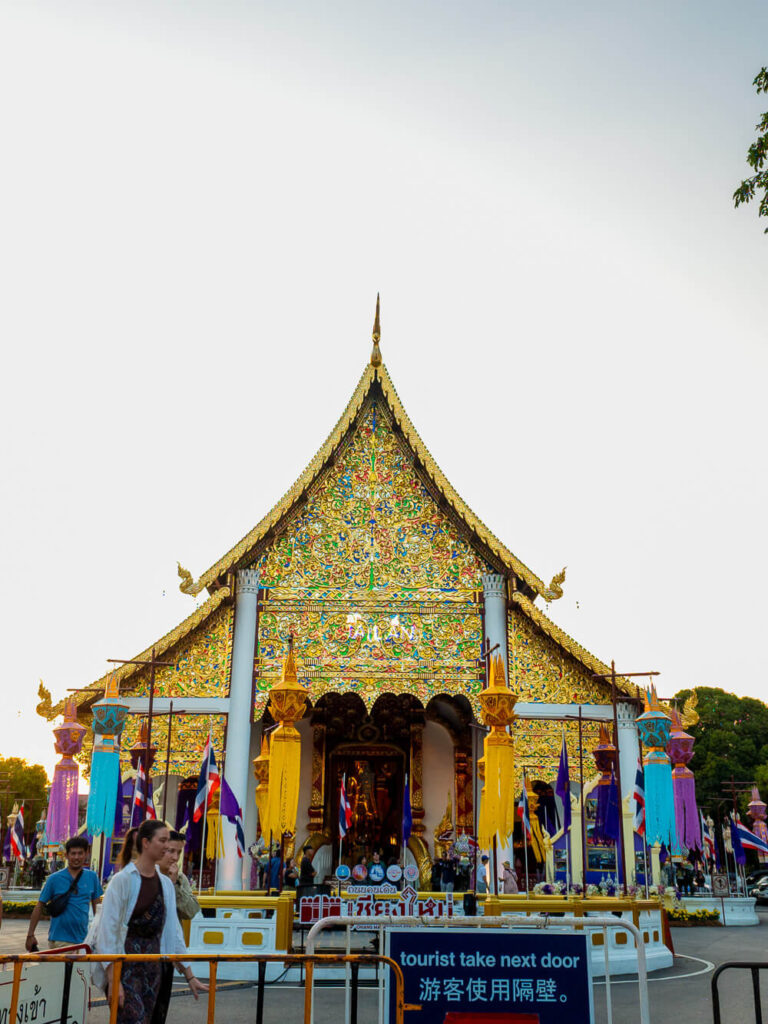
Chiang Mai gives you everything. Culture. Nature. Good food. Mountains. And you don’t need to spend much to experience it all.
You’re in a city with all the conveniences. Good food. WiFi. Hostels. Cafés. But the mountains are right there. You can be riding through rice fields and forests in 30 minutes.
It’s slower than Bangkok. Way slower. The pace is manageable. You don’t feel overwhelmed. Traffic is hectic in parts but nothing like Bangkok.
And there’s access to everything. Chiang Mai is the gateway to Northern Thailand. Want to go to Chiang Rai? Bus leaves hourly. Mae Kampong? 50 kilometers away. Samoeng Loop? Starts right from the city. Pai? Three hours north.
Chiang Mai works as a base. You explore from here. Then come back. Rest. Go out again.
And the best part? It’s cheap. Really cheap. You can eat well for under 250 THB per day. Stay in a good hostel for 200 to 300 THB per night. And most of the best things to do in Chiang Mai are free. That’s what makes budget travel in Chiang Mai Thailand so easy.
What Chiang Mai Is Actually Like
The Old City is the center. It’s a square. Surrounded by a moat and remnants of the old city walls. Inside, it’s packed with temples. Guesthouses. Cafés. Restaurants. Massage shops. Streets crisscross in a grid. Easy to navigate.
The café and digital nomad culture is strong here. Every other building is a café. People sitting with laptops. Working. Drinking coffee. The WiFi is good. The coffee is cheap. And the vibe is relaxed.
Mornings are slower. The city wakes up gradually. By 10 or 11 a.m., things are moving. Markets are open. Cafés are full. Streets are busy.
But there are pockets. Tourist pockets. Near the Night Bazaar. Around the famous temples. Around Doi Suthep. These areas are crowded. Full of tour groups. Souvenir shops. Restaurants charging double. Walk a few blocks away from these spots and it changes. Quiet streets. Local restaurants. Normal life. That’s the Chiang Mai I liked.
How Much Does Chiang Mai Cost Per Day?
Let me give you real numbers from my three weeks in Chiang Mai in January 2026.
Backpacker Budget: $25–$30/day (900–1,050 THB)
This is what I spent. Every day. For three weeks. And I wasn’t suffering. I stayed in good hostels. Ate well. Rented a scooter. Saw everything I wanted.
Here’s the breakdown of Chiang Mai travel cost per day:
- Accommodation: 200–300 THB/night ($6–$9)
- Food: 150–250 THB/day ($4.50–$7)
- Transport: 100–200 THB/day ($3–$6)
- Activities: Mostly free
| Category | Budget (per day) | What You Get |
| Accommodation | 200–300 THB ($6–$9) | Hostel bed, free breakfast, WiFi |
| Food | 150–250 THB ($4.50–$7) | 2 meals street food/local restaurants |
| Transport | 100–200 THB ($3–$6) | Scooter rental or Grab/songthaew |
| Activities | 0–100 THB ($0–$3) | Temples (free), markets (free), occasional entry fees |
| TOTAL | 550–850 THB ($16–$24) | Comfortable budget travel |
This is real budget travel. Not luxury. But definitely comfortable. You’re eating local food. Staying in clean hostels. Getting around easily. And experiencing Chiang Mai the way it’s meant to be experienced.
Budget Breakdown (Accommodation, Food, Transport)
Let me break down how much Chiang Mai costs in detail based on my actual spending.
Accommodation Costs
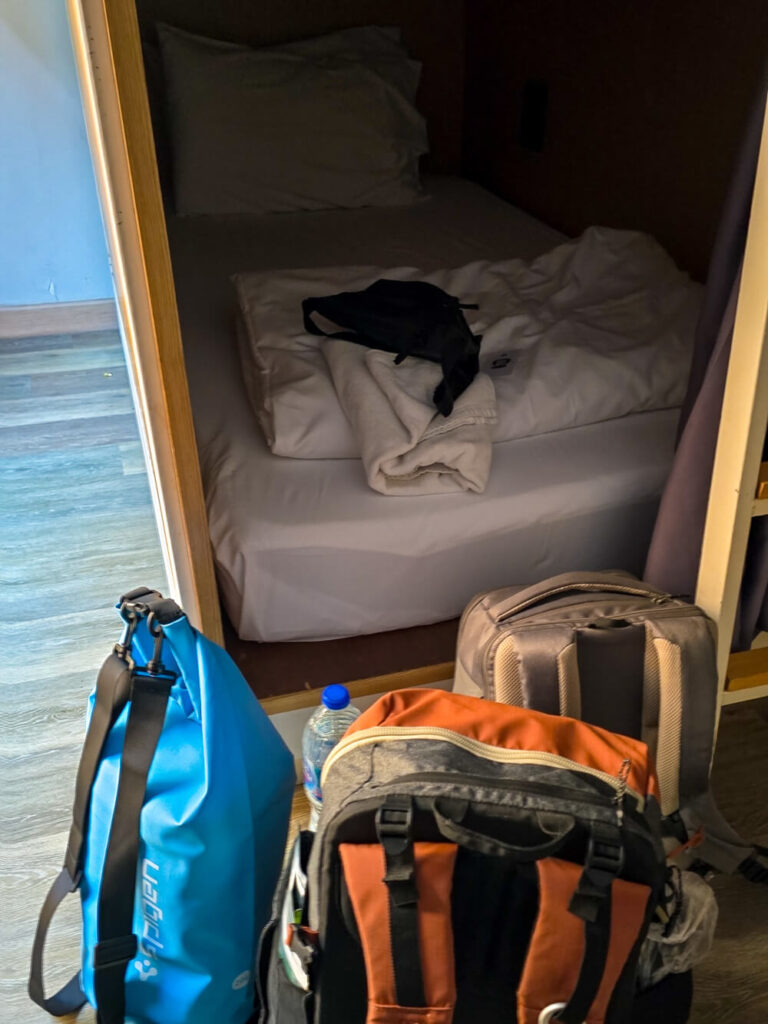
Hostels in Chiang Mai are cheap. And the quality is good.
Dorm beds range from 150 to 400 THB per night ($4 to $11 USD). I stayed in hostels for my entire three weeks. Paid around 200 to 300 THB per night for a bed in a clean hostel with good facilities. Free breakfast. Fast WiFi. Clean bathrooms. Everything I needed.
Private rooms in guesthouses cost 400 to 800 THB per night ($11 to $23 USD). Simple. Clean. Nothing fancy but comfortable.
Budget hotels start around 600 THB ($17 USD) and go up to 1,500 THB ($42 USD) depending on location and facilities.
Where I Stayed
I stayed at Thai Thai Hostel. It was near the Old City. Good location. Free breakfast. Fast WiFi. Clean. And the price was reasonable at around 170 THB per night.
Food Costs
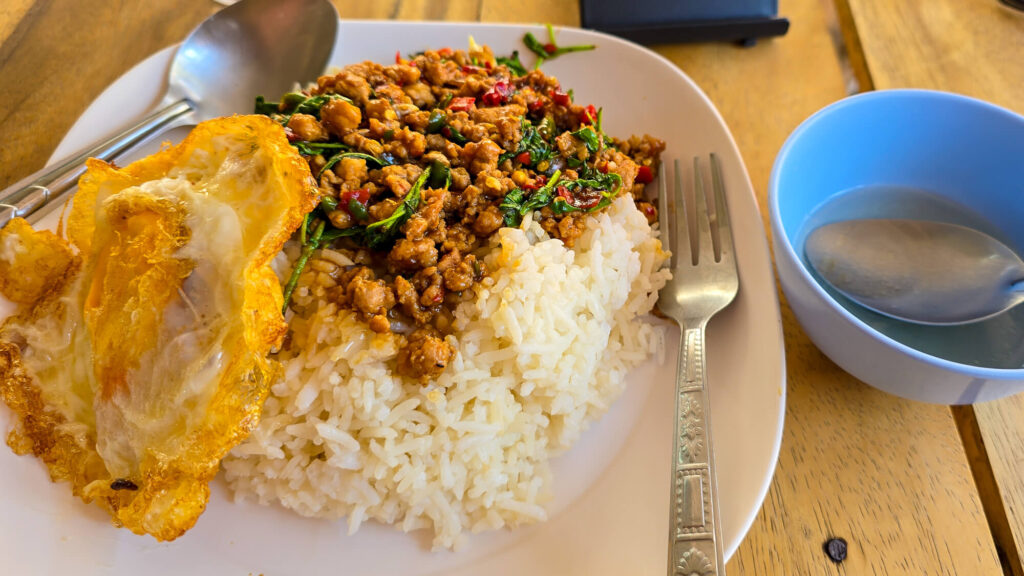
Food in Chiang Mai is cheap. Really cheap. That’s what makes it perfect for backpacking Chiang Mai on a budget.
I ate street food and went to local restaurants 90% of the time during my three weeks. And I never spent more than 250 THB ($7 USD) on food in a day. No matter how hard I tried, my two full meals would always come in under 250 THB.
Personally, I’m not very adventurous when it comes to food. If I like something, I’ll eat it every day until I get bored. So my daily food routine looked like this:
Lunch: Pad Krapao (60 THB / $1.70), Mango smoothie (35 THB / $1)
Dinner: Pad Krapao or Pad Thai or Khao Soi (60-70 THB / $1.70-$2), another fruit smoothie (35 THB / $1), and a plate of gyoza (50 THB for 6 pieces / $1.40)
Breakfast: Free at the hostel. Sometimes if I had a late breakfast, I’d skip lunch too. Then I only had to pay for dinner.
Street Food Prices
Street food is where you save the most money. A full meal costs 40 to 80 THB ($1.10 to $2.30). Snacks are 20 to 40 THB. Fresh fruit shakes are 25 to 40 THB.
Local Restaurants
Local restaurants (the ones where locals eat, not tourist spots) charge 50 to 100 THB per dish. A full meal with a drink costs 80 to 150 THB.
Cafés
Cafés are where prices jump. Coffee costs 60 to 120 THB. Meals cost 150 to 300 THB. Still affordable. But 3x more than street food.
The Point
If you stick to local food and local restaurants, you will not run out of money. This is the core of any Chiang Mai budget travel guide. Eat where locals eat and your budget stretches far.
Transportation Costs
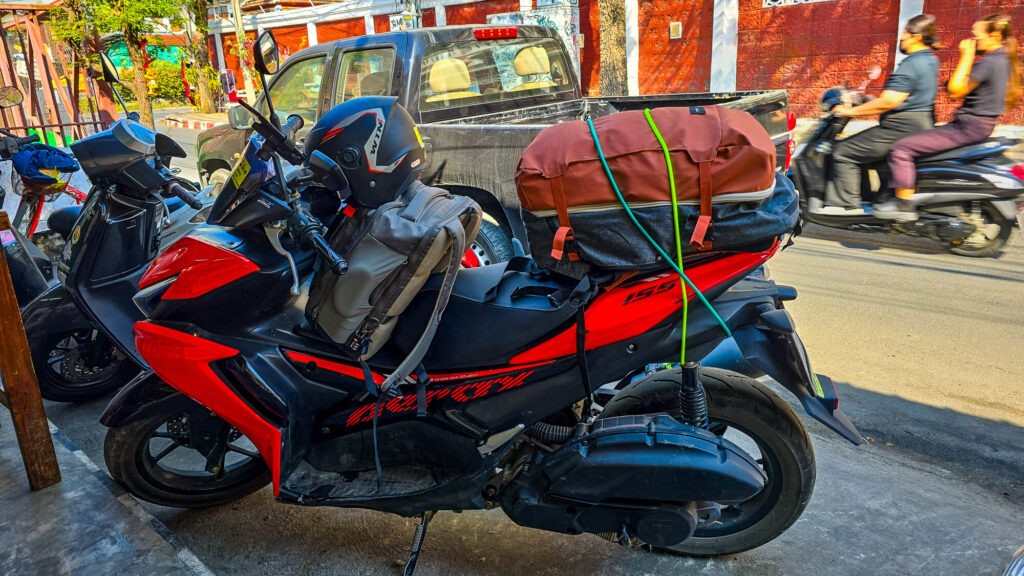
Transportation in Chiang Mai is cheap if you do it right.
Scooter (Best Option)
Renting a scooter is the best way to get around. It gives you complete freedom. You go where you want. When you want. No waiting for buses or taxis.
I rented a scooter for two weeks. 3,000 THB total ($85 USD). That’s about 215 THB per day. Cheaper than daily rentals.
The scooter let me do everything. Ride the Samoeng Loop. Visit Mae Kampong. Explore outside the city. And get around Chiang Mai itself without dealing with traffic jams.
For complete details read my full scooter guide here, Riding a Scooter in Northern Thailand: Complete Guide for Travelers.
Fuel Costs
I rode the scooter for around 1,300 kilometers in those two weeks. Filled the tank about 6 times. A full tank cost me around 140 to 150 THB ($4 to $4.30).
Grab
Grab works in Chiang Mai. It’s reliable. Prices are fair. A ride across the Old City costs around 40 to 80 THB.
I used Grab twice during my entire three weeks. Once to get from the station to my hostel. Once to get back to the station. Total spend: 60 THB.
Songthaews
Songthaews are red pickup trucks with benches in the back. They work like shared taxis. Cost is usually 30 to 60 THB depending on distance.
They’re cheap. But not always convenient. You might wait a while for one going your direction. For a complete guide on renting and riding a scooter in Northern Thailand, including costs, routes, and safety tips, [link to scooter guide].
Cheap Things to Do in Chiang Mai
Here’s the best part of this Chiang Mai travel guide. Most things in Chiang Mai are free or very cheap.
Explore the Old City (Free)
The Old City is packed with temples. Wat Chedi Luang. Wat Phra Singh. Wat Chiang Man. All beautiful. All different. And most of them are free to enter.
I didn’t visit all of them. I walked past many. Stopped at a few that looked interesting. Went inside. Sat for a while. Left. No entry fees. No pressure.
Walk Around (Free)
Just walking around Chiang Mai is an activity. Explore the streets inside the Old City. Walk along the moat. Check out the old city walls. Watch people. Sit in a park. It costs nothing.
Sunday Walking Street (Free)
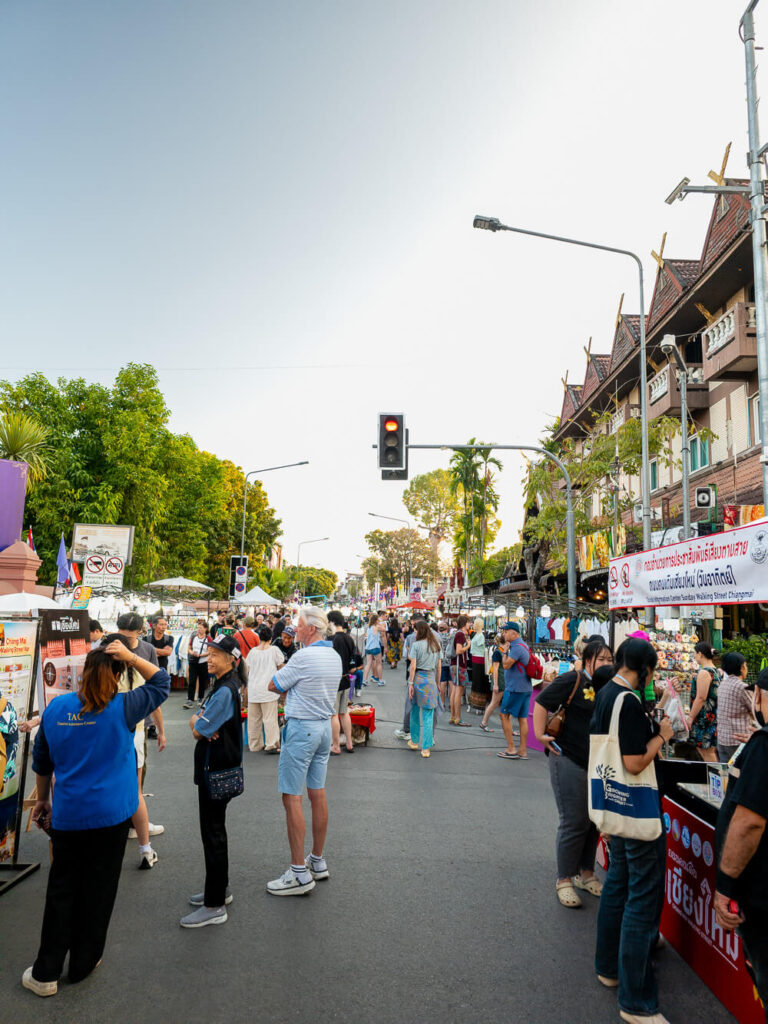
Sunday Walking Street takes over the main road in the Old City. Vendors. Food stalls. Handicrafts. Live music. It’s packed. But worth seeing once. Free to walk through. You only pay if you buy something.
Local Markets (Free Entry)
Warorot Market. Muang Mai Market. These are where locals shop. Fresh produce. Meat. Fish. Cheap clothes. No tourists. Real Chiang Mai. Free to walk around. Buy something if you want. Or just look.
Ride the Samoeng Loop (Fuel Cost Only)
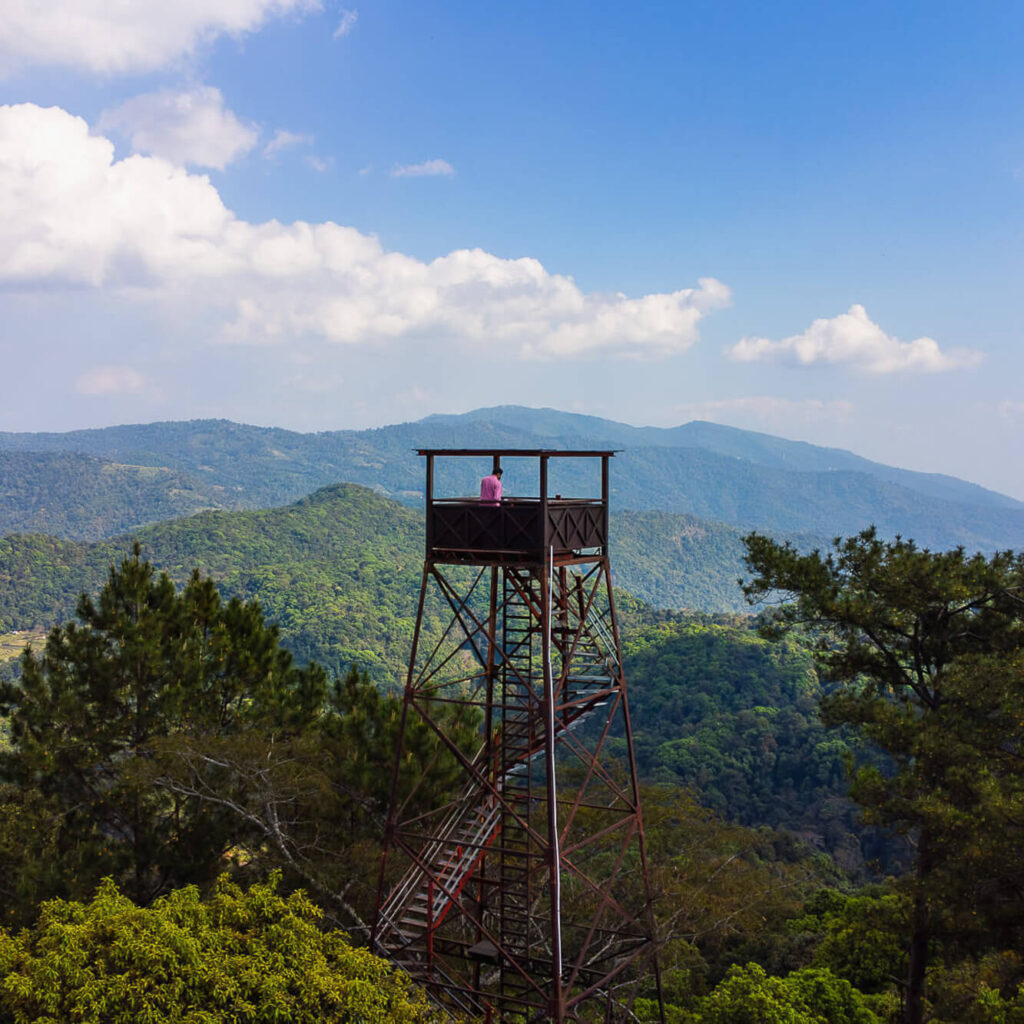
The Samoeng Loop is a 100-kilometer route that loops around the Doi Suthep-Pui National Park. One of the best scooter rides in Northern Thailand. Well-paved roads. Curves. Amazing views.
It’s free to ride. You only pay for fuel. About 150 THB for a full tank. That’s it.
I spent a full day on the Samoeng Loop. Left in the morning. Came back in the evening. Stopped multiple times. Ate lunch at a local restaurant. And didn’t spend more than 300 THB total including fuel and food.
For a detailed guide on the Samoeng Loop including the route, stops, and tips, Samoeng Loop Chiang Mai Guide: Route, Map & Best Stops (2026).
Visit Mae Kampong Village (Free + Optional Café Costs)
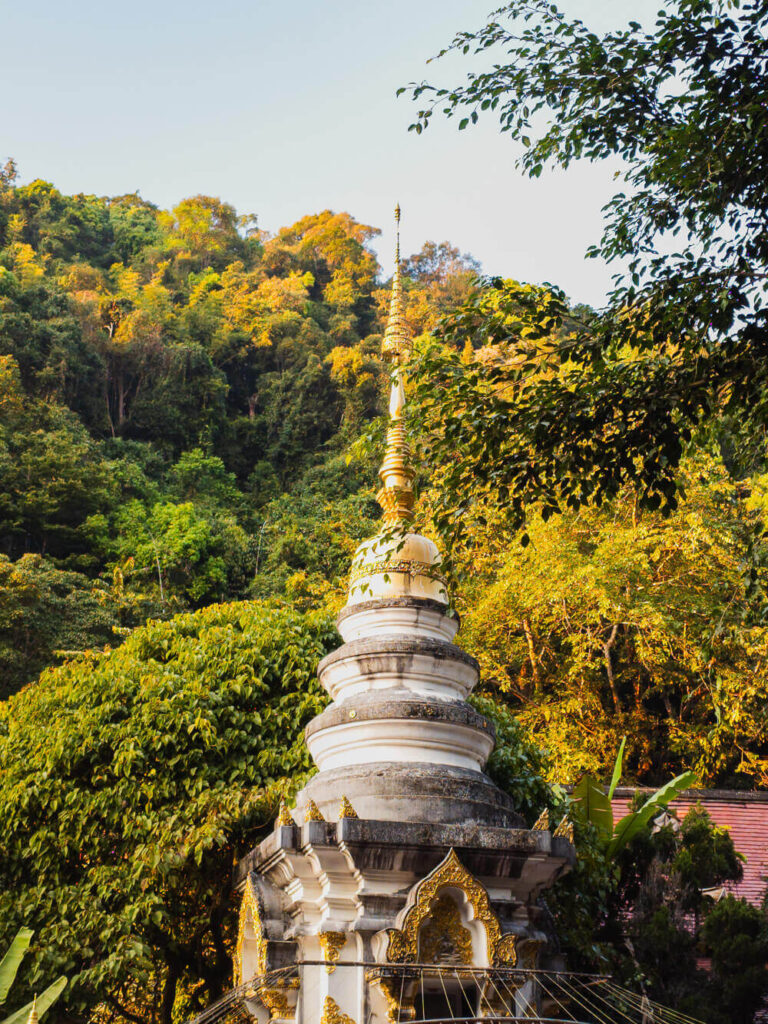
Mae Kampong is a small mountain village about 50 kilometers east of Chiang Mai. Wooden houses. A stream running through the village. Cafés overlooking the valley. A waterfall in the forest.
The village is free to explore. The waterfall is free. You only pay if you stop at cafés (coffee 40-60 THB) or buy something.
I climbed to the top of the waterfall. Spent 30-40 minutes up there. Just sitting. Watching the water. Cost? Zero.
For a complete guide to Mae Kampong including the waterfall climb and best time to visit, Mae Kampong Village Chiang Mai: Waterfall, Cafes & How to Visit.
Three Kings Monument (Free)
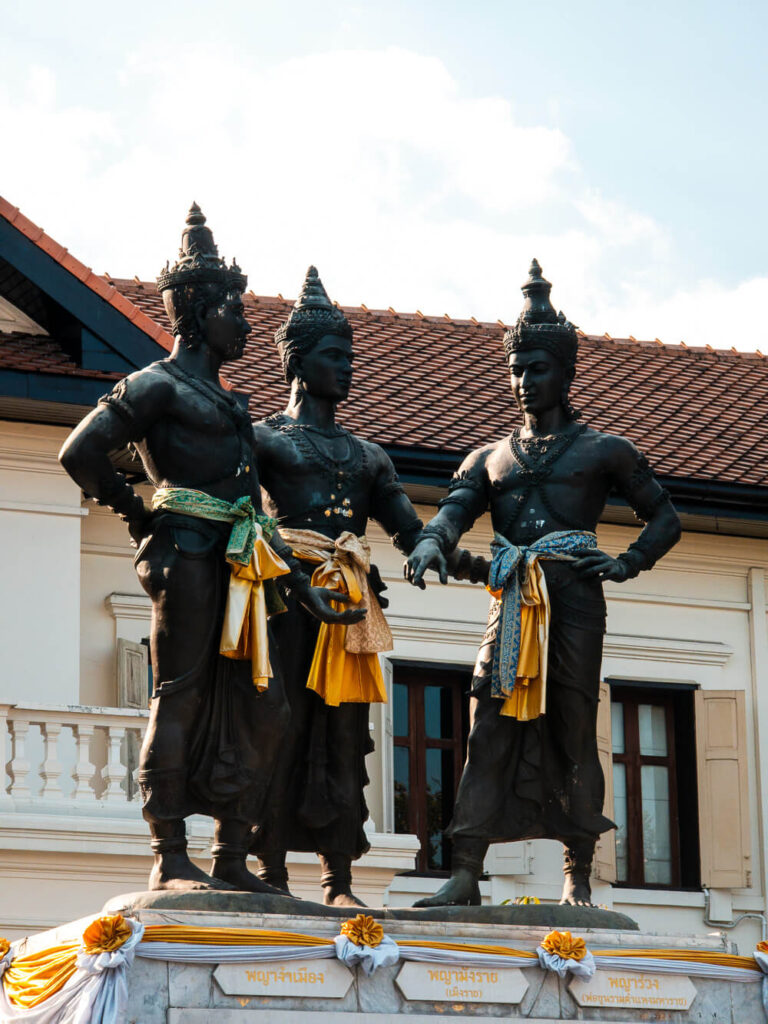
Located in the Old City. A monument of three kings who founded Chiang Mai. It’s a popular photo spot. Free. Quick stop. 5 minutes.
Night Markets (Free to Walk)
Chiang Mai Night Bazaar is the big tourist market. Open every night. Free to walk through. You only pay if you buy souvenirs or food.
I walked through once. Bought nothing. Ate some street food. Left. No entry fee.
Most of the best things to do in Chiang Mai don’t cost much. Or they’re completely free. You just need to know where to go and how to travel.
Best Areas to Stay in Chiang Mai for Budget Travelers
Chiang Mai has accommodation everywhere. But some areas are better for budget travelers.
Old City
This is where most first-time travelers stay. And for good reason. You’re in the center. Everything is walkable. Temples. Markets. Restaurants. Cafés. All within the Old City or just outside the moat.
Hostels in the Old City range from 150 to 400 THB per night. Private guesthouse rooms start around 400 to 800 THB.
I stayed near the Old City. Paid around 200 to 300 THB per night for a hostel bed. Clean. Good facilities. Free breakfast. WiFi. Everything I needed.
Nimmanhaemin
This area is more modern. Cafés everywhere. Trendy restaurants. Boutique shops. It’s where digital nomads hang out. The vibe is different from the Old City. More hip. More international.
Accommodation here is slightly more expensive. But not by much. Hostels are around 200 to 500 THB. Guesthouses and small hotels are 600 to 1,500 THB.
Outside the City
If you want quiet, stay outside the Old City. Areas like San Kamphaeng or Mae Rim. You’ll need transport. But it’s quieter. Less crowded. More space.
Guesthouses and small hotels in these areas are cheaper. Around 400 to 1,000 THB per night.
How to Get Around Chiang Mai Cheaply
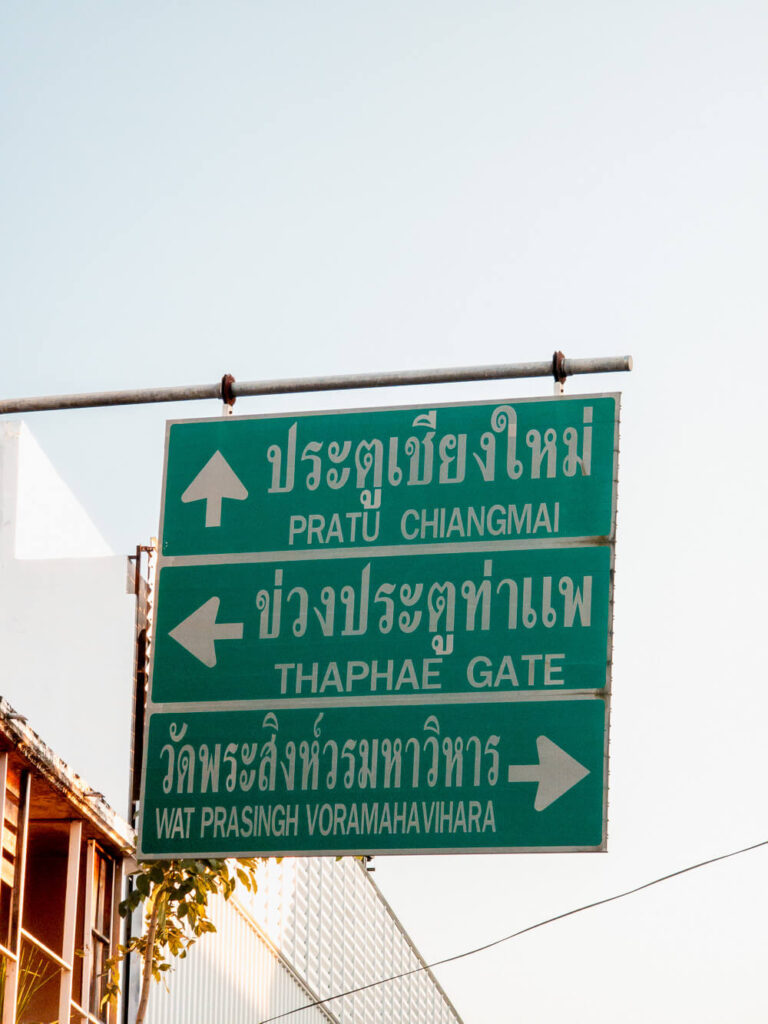
Getting around Chiang Mai doesn’t have to cost much.
Walk
The Old City is walkable. You can walk from one side to the other in 30 minutes. Most temples, cafés, and restaurants are within walking distance.
Cost: Free.
Rent a Scooter
For longer trips outside the city, rent a scooter. 3,000 THB for two weeks is way cheaper than taking Grab or songthaews every day.
Cost: 215 THB per day for two-week rental.
Grab Bike
If you don’t have a scooter, use Grab bike. It’s cheaper than Grab car. A ride across the Old City costs 40 to 60 THB.
Songthaew
Red pickup trucks. Shared taxis. Flag one down. Tell them where you’re going. If they’re heading that way, they’ll take you. Cost is usually 30 to 60 THB.
Avoid Tourist Taxis
Taxis near tourist spots charge more. Walk a block away and prices drop. Or just use Grab.
3–5 Day Chiang Mai Budget Itinerary
Here’s a realistic budget itinerary for Chiang Mai.
Day 1: Arrive & Explore Old City
- Arrive in Chiang Mai
- Check into hostel (200-300 THB)
- Walk around Old City
- Visit Wat Chedi Luang (free)
- Visit Wat Phra Singh (free)
- Dinner at local restaurant (80-100 THB)
- Daily Cost: ~500 THB
Day 2: Samoeng Loop
- Rent scooter or use your rental
- Ride Samoeng Loop (100 km)
- Stop at viewpoints
- Lunch in Samoeng town (80-100 THB)
- Return to Chiang Mai
- Daily Cost: ~400 THB (fuel + food)
Day 3: Mae Kampong Day Trip
- Ride scooter to Mae Kampong (50 km)
- Walk through village
- Climb waterfall
- Stop at café (optional, 100 THB)
- Return to Chiang Mai
- Daily Cost: ~400 THB
Day 4: Sunday Walking Street (if it’s Sunday)
- Relax in morning
- Walk around Old City
- Visit local markets
- Sunday Walking Street in evening
- Street food dinner (60-80 THB)
- Daily Cost: ~350 THB
Day 5: Rest Day / Leave
- Pack up
- Last walk around Old City
- Grab to bus station (30-40 THB)
- Daily Cost: ~300 THB
Total 5-Day Budget: ~2,000 THB ($56 USD)
This assumes you already have a scooter rental. If not, add 300 THB per day for rental.
Money-Saving Tips for Chiang Mai Budget Travel
Here’s how to keep costs low while exploring Chiang Mai.
Eat local food. Street food and local restaurants are cheap. Avoid tourist restaurants near the Night Bazaar or Doi Suthep. This is the core of any Chiang Mai budget guide.
Rent a scooter for the week or two weeks. Way cheaper than daily rentals or using Grab every day.
Stay in hostels with free breakfast. This cuts out one meal. Huge savings.
Book accommodation in advance during peak season. I visited in January (peak season) and hostels were filling up. Book a few days ahead for better prices.
Skip the cafés. Or limit them. One café stop a day is fine. Three café stops and your budget doubles.
Walk when possible. The Old City is walkable. Save the scooter for longer distances.
Go on weekdays to Mae Kampong. Avoid weekends. It’s packed. Weekdays are quieter and you get a better experience.
Visit free temples. Most temples in the Old City are free. You don’t need to pay for Doi Suthep to see beautiful temples.
Buy from local markets. Warorot Market has everything. Way cheaper than tourist shops.
Best Time to Visit Chiang Mai (Budget Perspective)
From a budget perspective, the best time to visit Chiang Mai is shoulder season. May-June or September-October.
Shoulder Season (May-June, September-October)
Accommodation is cheaper. Hostels drop their prices. Fewer tourists. You get better deals everywhere.
The weather isn’t perfect. You might get some rain. But it’s manageable. And the savings are worth it.
Cool Season (November-January)
This is peak season. Best weather. But also the most expensive. Accommodation prices go up. Places book out. You need to book in advance.
I visited in January 2026. Peak season. And I still managed to keep costs low by eating local food and staying in budget hostels.
Avoid March
March is burning season. Air quality is terrible. And it’s hot. Skip this month if you can.
For a detailed breakdown of Chiang Mai’s weather throughout the year, Best Time to Visit Northern Thailand (2026): Weather, Burning Season & When to Avoid.
Is Chiang Mai Worth Visiting?
Yes. But it depends on how you travel.
If you’re rushing through. Hitting temples. Checking boxes. Moving on after two days. You’ll miss what makes Chiang Mai good.
Chiang Mai is better when slowed down. When you stop trying to see everything. When you let the city unfold at its own pace.
I came back to Chiang Mai twice during my three weeks. Used it as a base. Rested. Went out. Came back. And that’s when I actually started to appreciate it.
The cafés where I returned multiple times. The local restaurant where the lady knew my order. The quiet streets in the morning. The ride out to the mountains. That’s the Chiang Mai worth experiencing.
For a complete budget breakdown with real numbers from my three weeks in Northern Thailand, Beyond Chiang Mai: Offbeat North Thailand Itinerary for Slow Travelers.
Frequently Asked Questions
Is Chiang Mai cheap for tourists?
Yes. Chiang Mai is one of the cheapest cities in Thailand. You can travel comfortably on $25-30/day. Hostels cost 200-300 THB. Street food is 40-80 THB per meal. Most attractions are free. It’s very budget-friendly.
Can you travel Chiang Mai on $20 a day?
Yes, but it’s tight. You’d need to stay in the cheapest hostels (150-200 THB), eat street food only (100-150 THB/day), and avoid cafés and paid activities. It’s doable but not comfortable. $25-30/day is more realistic.
What is the cheapest way to get around Chiang Mai?
Walking is free for the Old City. For longer distances, rent a scooter for a week or two weeks (215 THB/day). Grab bike is cheapest for occasional trips (40-60 THB). Songthaews cost 30-60 THB but aren’t always convenient.
Is Chiang Mai cheaper than Bangkok?
Yes. Chiang Mai is cheaper than Bangkok overall. Accommodation is cheaper. Food is similar prices but more local options. Transport is easier and cheaper. Bangkok is more expensive, especially for accommodation in central areas.
Is Chiang Mai expensive?
No. Chiang Mai is not expensive. It’s one of the most budget-friendly cities in Thailand. The Chiang Mai travel cost per day averages $25-30 for comfortable budget travel. If you eat local food and stay in hostels, you can travel very cheaply.