A complete Chiang Rai travel guide covering the best temples, a 4-day itinerary, budget tips, where to stay, day trips, and how to visit Mae Salong. (CLICK HERE).
Table of Contents
I got to Chiang Rai thinking it’d be more of the same. Another northern city with temples and tourists and traffic. Basically Chiang Mai part two.
I was wrong.
First thing I noticed? The roads are wide. Like really wide. And empty. At sunset I was riding my scooter down one of the main streets and there was almost no one around. Just me, a couple other bikes, and this quiet I hadn’t felt in weeks.
That’s when it hit me. Chiang Rai is not Chiang Mai. Not even close.
In this Chiang Rai travel guide, I’ll cover the best things to do in Chiang Rai, how many days you need, where to stay, and how to explore Mae Salong on a budget.
Why Chiang Rai Feels Different from Chiang Mai
Chiang Rai has a completely different vibe compared to Chiang Mai. The city feels calm. Especially if you’re coming from the chaos of Chiang Mai streets. And I say this in a good way.
One thing I noticed right away is how early everything closes. Most shops and stores shut down by early evening. Like 6 or 7 p.m. kind of early. At first I thought it was weird. But then I realized it’s just the rhythm here. People aren’t out late. The city isn’t designed for that. It’s designed to be calm.
And don’t get me wrong. The city doesn’t look dead at night. It’s still alive with the night street markets and food stalls people set up. There’s a weekly Saturday market you can check out if you happen to be here on the weekend. Locals come out. Tourists wander through. But it’s not chaotic. It’s just… happening. At a slower pace.
The first night I was there, I walked around the night market near the clock tower. Got some food. Sat on a plastic stool. Watched people walk by. And I remember thinking, this is way more my speed than Chiang Mai. Chiang Mai has its charm. But Chiang Rai? Chiang Rai lets you breathe.
If you’re someone who gets overwhelmed by constant movement and noise, Chiang Rai will feel like a reset. If you need constant stimulation and packed streets, you might find it too quiet. But for me, after weeks of moving through North Thailand, Chiang Rai was exactly what I needed.
Chiang Rai City — Small, Spread Out & Easy to Understand
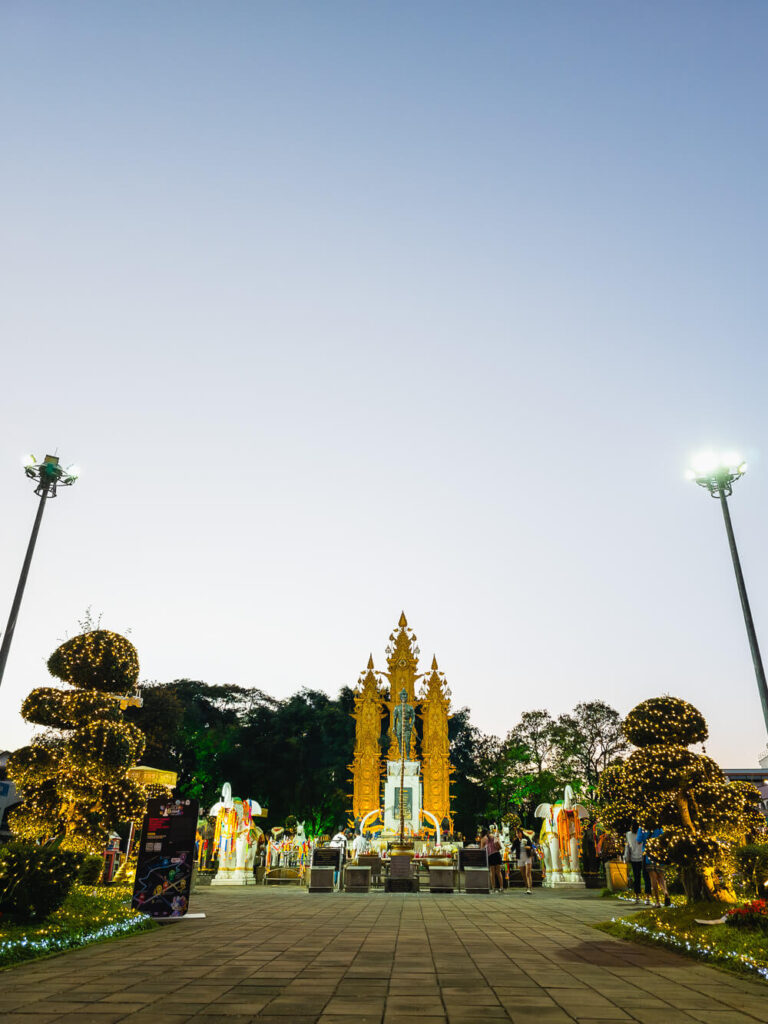
Let’s talk about how the city is actually laid out. Because Chiang Rai is small. Way smaller than Chiang Mai. But it’s also spread out. Things aren’t clustered together the way they are in Chiang Mai’s Old City. So you need a scooter. Walking everywhere isn’t really an option unless you’re planning to stay in one small area the whole time.
The city is built around a few key areas. There’s the central clock tower zone. That’s kind of the heart of the city. Night markets happen around there. Restaurants. Shops. It’s where most tourists end up spending their evenings.
Close to the clock tower area, there’s the King Menrai Monument. This is a nice spot you can discover while just walking around. They’ve made these mechanical butterflies that actually move. They look amazing. It’s a good place to stop for 15-20 minutes if you’re exploring the area on foot. Not a huge tourist attraction but it’s there and it’s cool.
Then there’s the bus terminal area. That’s where you’ll arrive if you’re coming by bus from Chiang Mai or heading out to places like Mae Salong. It’s not in the center but it’s not far either. Maybe a 10-minute ride.
And then there’s the riverside. The Kok River runs through the city and there are spots along it where you can just sit and watch the water. It’s quiet. Peaceful. Not a lot of people. I’ll talk more about the river beach later because that’s one of the best parts of Chiang Rai that most tourists miss.
Overall, Chiang Rai is easy to understand. You can get the layout of the city in a day or two. It’s not overwhelming. And once you know where things are, you can just relax and enjoy being here instead of constantly figuring out where to go next.
Must-Visit Temples in Chiang Rai (Updated 2026 Prices)
Now let’s move on to the temples. Because let’s be real, most people come to Chiang Rai for the temples. Specifically the White Temple and the Blue Temple. They’re all over Instagram. They’re in every Chiang Rai travel guide. And yeah, they’re worth seeing. But I have some thoughts.
White Temple – Wat Rong Khun
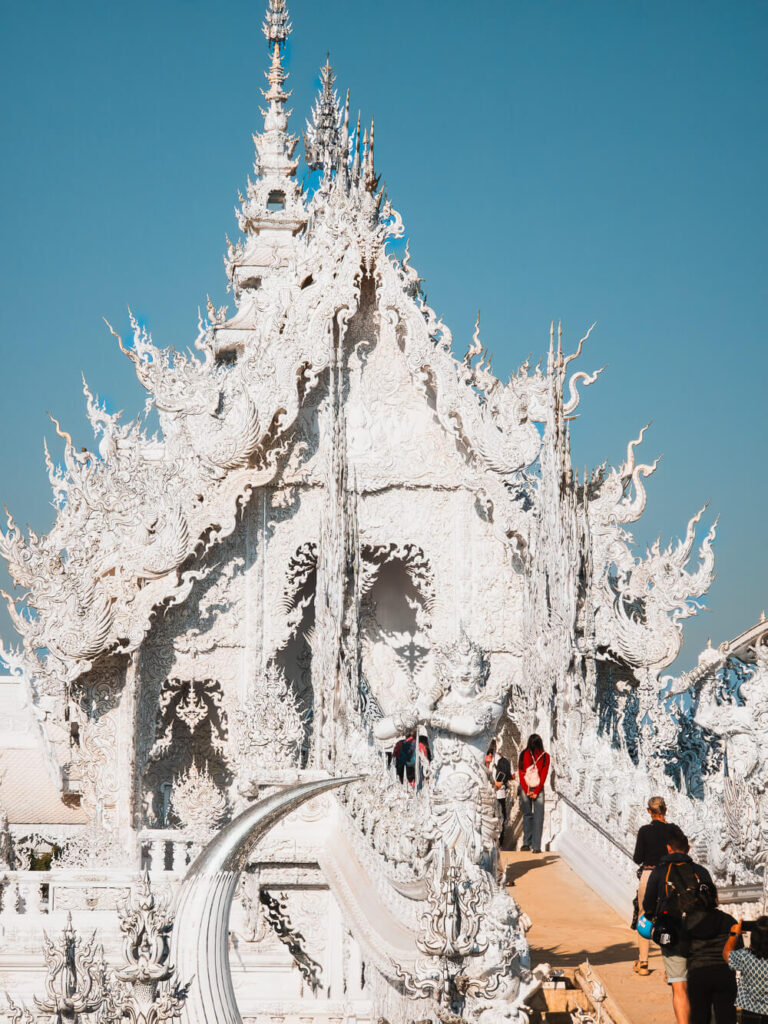
This is the most visited landmark in Chiang Rai. If you search Chiang Rai, this place will come up first. It’s impossible to miss.
And just so you know, the entry fee has gone up. It used to be 100 THB. As of January 2026, it’s 200 THB (about $5.70 USD). Not a huge increase but worth mentioning.
You want my opinion? The White Temple is not really a temple. It’s more of a unique architectural landmark. A very modern art installation that happens to look like a temple. And I have mixed feelings about it.
Is it beautiful? Yes. Is it interesting? Yes. Is it worth seeing? Also yes. But it’s always crowded. Always. And when I say crowded, I mean you’re constantly dodging people trying to get their photo. Someone’s always in your way. Someone’s always crossing in front of you. You never really get to experience the place without feeling like you’re part of a tourist conveyor belt.
Should you visit it? Yeah, go once. Get the experience yourself. See what all the hype is about. But don’t make it the only thing you do in Chiang Rai. And don’t spend too long there. You’ll see what you need to see in 30 to 45 minutes and then you’ll be ready to leave.
There are other structures and grounds outside the main temple area. And those are completely free. You only have to pay to enter the White Temple itself. But you can actually see the entire White Temple from these free grounds. You can take photos. There are no restrictions. So if you don’t want to pay 200 THB and deal with the crowds inside, you can just walk around the outside and still get a good look at everything. You won’t be disappointed.
There’s also a golden building and some other art installations on the grounds. Walk around. Check those out. They’re actually pretty cool and way less crowded.
Blue Temple – Wat Rong Suea Ten
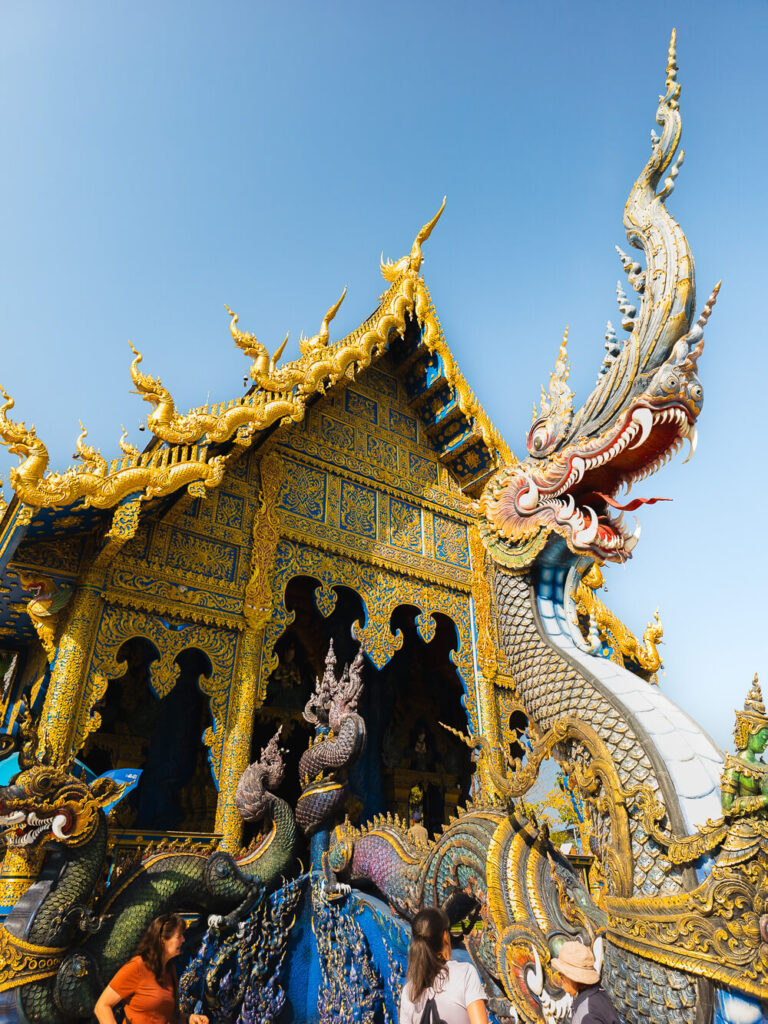
The Blue Temple is the other big one. And I liked this one way more than the White Temple.
Entry is free. That’s already a win. And while it does get tourists, it’s nowhere near as crowded as the White Temple. You can actually walk around and look at things without feeling rushed.
The inside is stunning. Everything is blue and gold. The walls. The ceiling. The Buddha statue. It’s all very detailed and intricate. And because it’s an actual functioning temple, there’s a different energy here. It feels more respectful. More calm. People aren’t just taking selfies and leaving. They’re actually looking around.
I spent maybe an hour here just sitting and observing. There were monks. There were locals praying. And yeah, there were tourists with cameras. But it didn’t feel overwhelming. It felt like a temple that happens to also be beautiful, not a tourist attraction pretending to be a temple.
If you only have time for one, go to the Blue Temple. Free entry. Less crowded. And in my opinion, more interesting.
Wat Huay Pla Klang
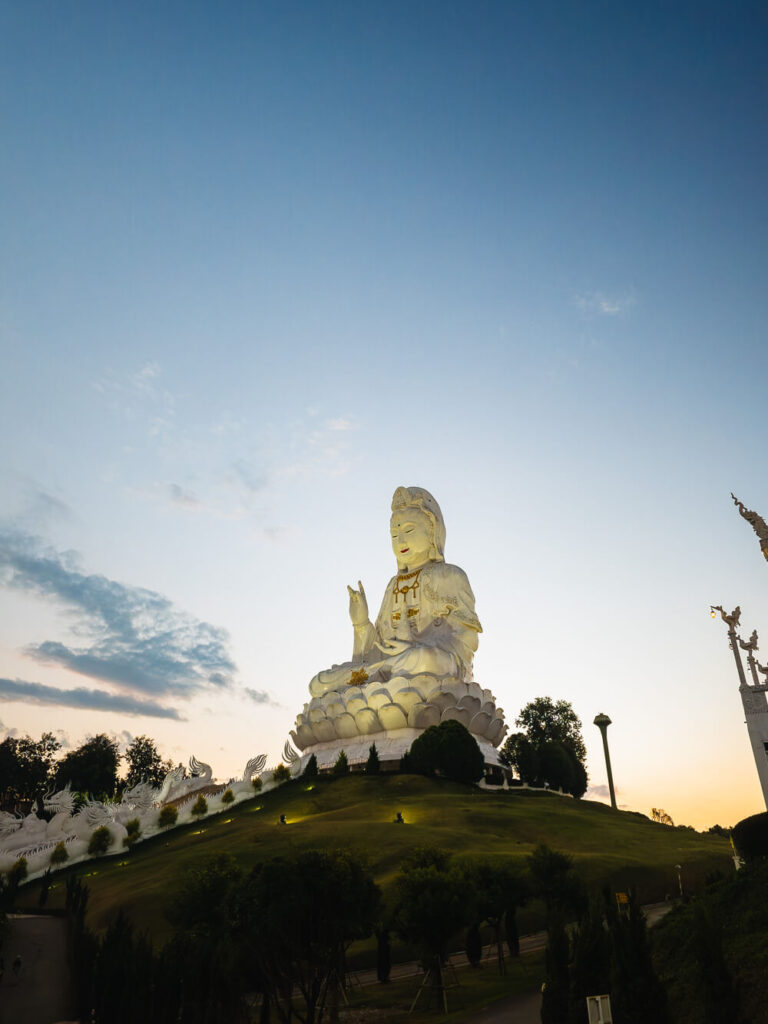
Okay this one is my favorite. And I feel like not enough people know about it.
Wat Huay Pla Klang is this massive white Buddha statue sitting on top of a hill. You can see it from all over Chiang Rai. And the best time to go is late afternoon or evening. You ride up the hill. Park your scooter. Walk around. And then you just sit there and watch the sunset over the mountains.
Entry fee? Free. And it’s not crowded at all. There are some locals. A few tourists. But nothing like the White Temple. You actually have space to just exist here.
I think one reason this place isn’t as hyped is because of the Lalita Café. You know, the famous waterfall café that’s all over Instagram. It’s right near Wat Huay Pla Klang. So people go to the café, take their photos, and leave. They don’t even realize there’s this incredible temple and viewpoint right next to it.
This Café (the one with the fake waterfall) is right next door. If you want the perfect Instagram photo, go for it. But if you want a soul-stirring sunset that costs absolutely nothing, skip the café and head straight up to the Dragon Temple (Wat Huay Pla Klang). The view alone is worth the ride up. And if you’re there around sunset, it’s even better. The light changes. Everything goes golden. The mountains in the distance. The Buddha statue. It’s one of those moments where you’re just standing there thinking, okay, this is why I travel.
If you’re looking for a place to relax and get away from the tourist crowds, this is it. Bring some water. Sit on one of the benches. Watch the sunset. Free entry. Peaceful. And it’s one of the best things you can do in Chiang Rai.
Chiang Rai River Beach – The Quieter Corners Most People Overlook
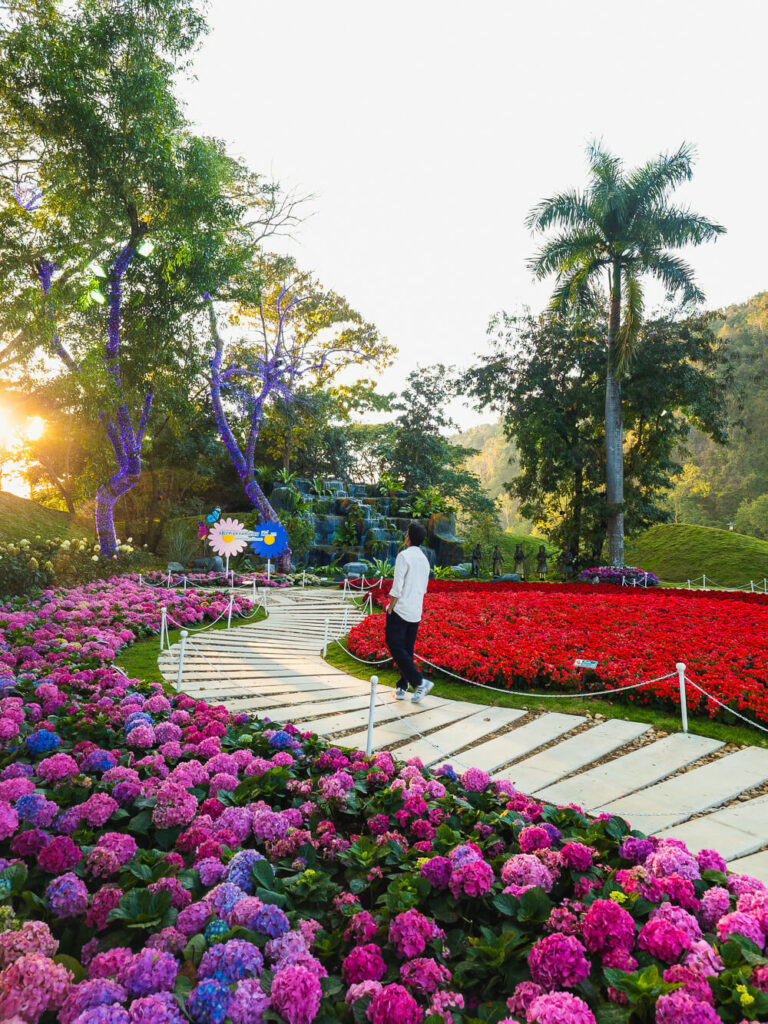
And now we get to the good part. If you only have one evening in Chiang Rai, this is my number one recommendation.
I’m genuinely shocked by how few tourists know about this place. And by tourists, I mean foreigners. The locals know. They’re here all the time. Families. Kids. People just hanging out. But tourists? Almost none.
Chiang Rai River Beach is located along the banks of the Kok River. It’s not far from the city center. Maybe a 10-minute ride on a scooter. And it is beautiful.
You enter and there’s this path you can walk through the trees. Then you come to the main area which has different kinds of flowers planted everywhere. They’ve made these structures out of flowers. Turtles. Bees. Other animals. It’s cute. Well-maintained. Free entry.
There’s a beautiful fountain just past the flower area. If you’re into art, there’s also a section where they’ve displayed paintings. And they’ve even created this fake waterfall feature. It’s not natural but it looks nice.
But the real highlight is when you walk a little further and you reach the Kok River itself. That’s where everything just clicks.
You can sit by the river for hours. Literally hours. There are benches. There are spots on the grass. There are these bamboo huts where you can sit and eat if you bring food. And it’s so relaxing. The sound of the water. The breeze. The trees. You just forget about everything else and exist in your own element for a while.
I went there three times during my stay in Chiang Rai. And every time it felt like hitting a reset button. No crowds. No noise. Just life happening quietly.
If you’re tired of temples and tourist spots, go here. Free. Beautiful. And it’s exactly the kind of place that makes Chiang Rai special.
A Simple 4-Day Chiang Rai Itinerary
Okay so if you’re planning a trip to Chiang Rai and you’re wondering how to spend your time, here’s a simple Chiang Rai itinerary based on how I did it. This works if you have three to four days.
Day 1: Arrive and settle in. Get your scooter. Ride around the city. Check out the clock tower area. Walk to the King Menrai Monument and see the mechanical butterflies. Go to the night market for dinner. Get a feel for the city without rushing.
Day 2: White Temple in the morning. Get there early to avoid some of the crowds. Spend 30-45 minutes. Then head to the Blue Temple. Spend an hour there. It’s way more peaceful. Afternoon, head to Chiang Rai River Beach. Bring some water. Sit by the river. Relax. Stay till evening if you want.
Day 3: Wat Huay Pla Klang in the late afternoon. Go around 4 or 5 p.m. Watch the sunset from up there. It’s worth the ride. After that, head back to the city for dinner at the night market.
Day 4: If you have a fourth day, this is when you can explore other places around Chiang Rai. Maybe Singha Park if you want something chill. Or if you’re leaving for Mae Salong, you can head out in the morning.
This isn’t rigid. You can swap days around. You can skip things. You can add things. But this gives you a rough idea of how to plan your time without feeling rushed. The key is not packing every single day. Leave room to just sit somewhere and do nothing. That’s when Chiang Rai actually works.
Where to Stay in Chiang Rai
Let’s talk about where to actually stay when you’re here.
I stayed at Baan Mai Kradan Hostel. Centrally located. Lots of stuff within walking distance or a short scooter ride. The Saturday night market is about a 5-minute walk. The clock tower area is close. Bus terminal isn’t far. It’s a solid base if you’re trying to figure out where to stay.
The hostel was around Rs. 650 per night (about $7.50 USD) for a dorm bed. They had free breakfast. Clean rooms. Good common area. I’d recommend it if you’re looking for something budget-friendly and central.
But there aren’t a ton of hostel options in Chiang Rai compared to Chiang Mai. So if you’re booking, do it a few days in advance. Especially if you’re traveling during high season.
If hostels aren’t your thing, there are guesthouses and budget hotels too. Prices range from Rs. 800 to Rs. 1,500 per night ($9–$17 USD) depending on what you want. Most of them are near the clock tower or along the main roads. Use Agoda. I’ve found it’s consistently the cheapest for this region.
The key is staying somewhere central. Chiang Rai is spread out, so if you’re too far from the center, you’ll be riding your scooter everywhere. Which is fine if you have one. But if you don’t, it gets annoying.
Best Day Trips from Chiang Rai
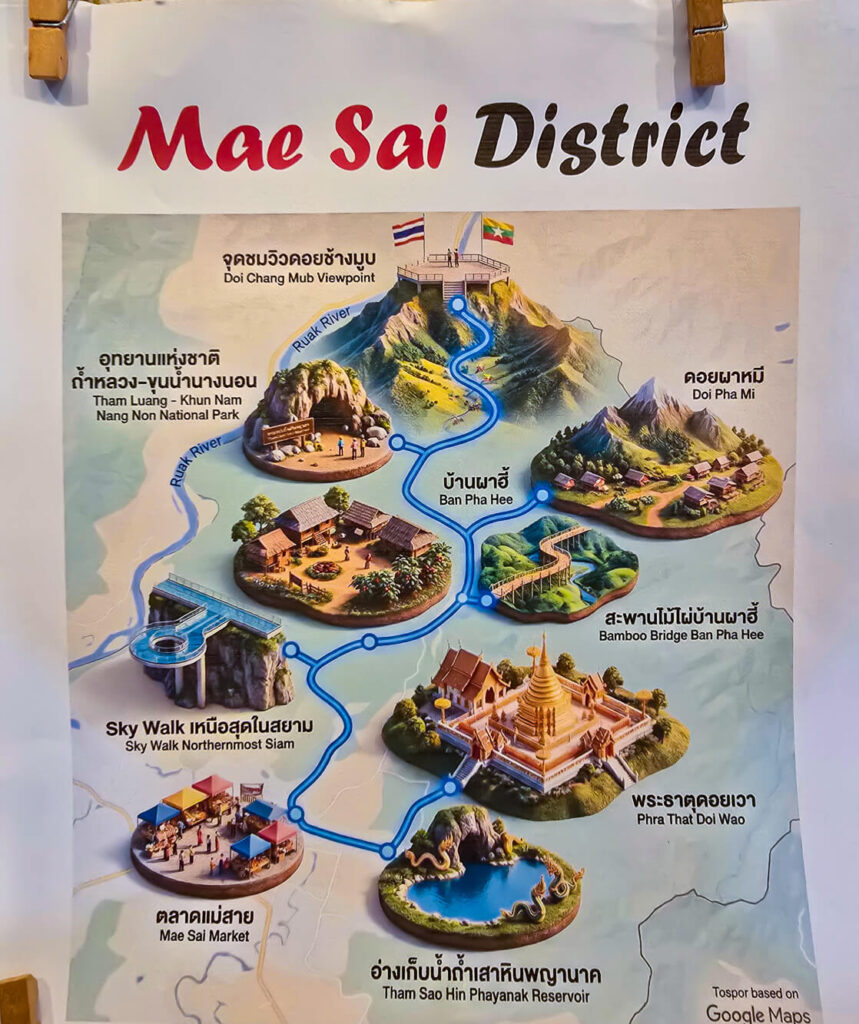
Okay so my hostel had this photo on the wall showing all the different places you can visit around Chiang Rai. I took a picture of it because I thought it was helpful. And there are way more places than just the temples and the river beach.
Some of these places I didn’t get to. Some I did. But I’m mentioning them here so you know what’s out there if you have extra time or if you want to explore beyond the usual spots.
Singha Park. This is a big park owned by the Singha beer company. Got tea plantations, flower gardens, and you can rent bikes to ride around. Free to enter. Good for a half-day trip if you want something different.
Phu Chi Fa. Mountain viewpoint on the border with Laos. People go there for sunrise. I didn’t make it because it’s pretty far and you have to leave really early. But if you’re into that kind of thing, it’s supposed to be amazing.
The Golden Triangle. This is where Thailand, Laos, and Myanmar meet. Famous for being part of the old opium trade route. You can visit temples there and take boat rides. Bit touristy but interesting if you’re into history.
There are more places too. Hot springs. Villages. Waterfalls. Chiang Rai has a lot to offer if you’re willing to explore. I’m just mentioning these so you know what’s possible. You don’t have to do all of them. Pick what sounds interesting. Or don’t. Just knowing they exist gives you options.
Mae Salong Travel Guide: The Chinese Village in Northern Thailand
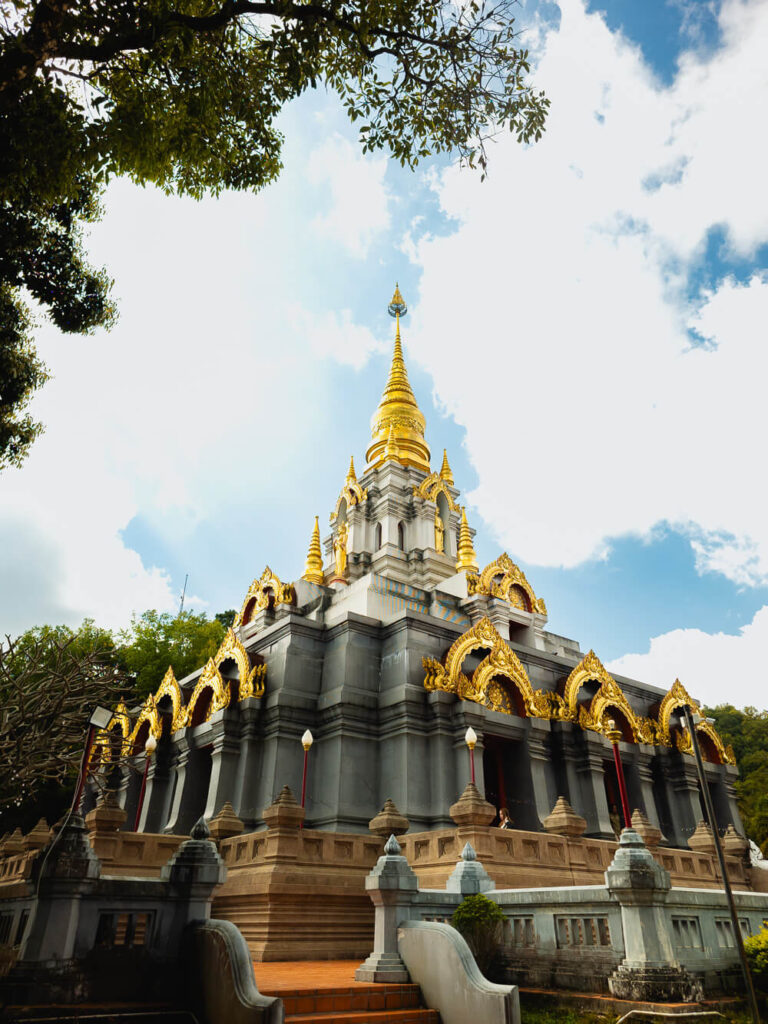
After three or four days in Chiang Rai, let’s move further north. Because there’s this place you need to know about.
Did you know there’s an offbeat Chinese village in the mountains of northern Thailand? Yeah. A full-on Chinese settlement just a few hours from Chiang Rai.
If you’re looking for a completely different vibe in Thailand, Mae Salong is it. This place is fascinating. Known for its tea. The people here speak both Chinese and Thai. The food is Yunnanese, not Thai. The architecture is different. The whole atmosphere is different. It genuinely feels like you’ve left Thailand and ended up in some rural part of China.
The history is interesting too. Mae Salong was settled by soldiers from the Chinese Nationalist Army—the Kuomintang—after they fled China following the Communist takeover in 1949. They were given permission to settle in these northern mountains by the Thai government. And over the decades, they built a community here. They brought their culture. Their language. Their food. Their tea. And it’s all still here today.
Walking through Mae Salong feels surreal if you’ve just come from the rest of Thailand. The signs are in Chinese. The restaurants serve dim sum and noodles. The tea shops are everywhere. And the mountains. The views are incredible. Misty mornings. Tea plantations stretching across the hills. It’s one of those places that just makes you stop and think, how did I not know about this?
If you’re doing an offbeat North Thailand trip, Mae Salong should 100% be on your list. Different. Quiet. And one of the most interesting places I’ve been in Thailand.
Costs When Traveling Chiang Rai on a Budget
Alright let’s talk money. How much do you actually need for this part of the trip?
Chiang Rai
Food. If you’ve read my Chiang Mai articles, you know I never managed to cross 250 THB per day (about $7 USD) for food. That includes two meals and free breakfast from my hostel. The prices in Chiang Rai were pretty much the same.
I usually ate at the Daily Chiang Rai night market. One meal would cost me around 100 to 150 THB ($2.80–$4.30 USD). This would be a Pad Kra Pao, fried chicken, and a mango smoothie. Each dish is around 40 to 50 THB ($1.10–$1.40 USD).
So you can plan according to your preferences. There are tons of options at the night market. You don’t have to order the same Pad Kra Pao I do every single day. Hahaha.
Accommodation. Prices for hostels are similar to Chiang Mai. The only difference is there are way fewer hostel options. I paid around Rs. 650 per night (about $7.50 USD) for a dorm bed. You should be able to find decent hostels for Rs. 600 to Rs. 700 per night ($7–$8 USD).
Mae Salong
Food. In Mae Salong, I did find lunch spots similar to Chiang Mai and Chiang Rai. Pad Kra Pao cost me around 50 to 70 THB ($1.40–$2 USD). There are many local spots that offer this price. I’m sure you can find plenty if you look around.
But dinner gets more expensive. Most of these local places close around 6 or 7 p.m. Then you have to find a restaurant or order from your hostel or homestay. Prices can go from 50 THB up to 130 or 150 THB ($3.60–$4.30 USD) for a single dish. So keep that in mind when budgeting.
Accommodation. Mae Salong is different when it comes to accommodation. I didn’t find any hostels here. There are guesthouses and homestays. The cheapest guesthouse I found was around Rs. 980 per night (about $11.50 USD). If you want something decent, be prepared to spend Rs. 1,400 to Rs. 1,600 per night ($16.50–$19 USD).
More expensive than Chiang Rai or Chiang Mai. But Mae Salong is also smaller and more remote. So that’s expected.
Transport
I rented a scooter for my entire North Thailand route. 3,000 THB for two weeks ($85 USD). I rode from Chiang Mai to Chiang Rai, then to Mae Salong, and continued from there.
If this works for you, do the same. Or you can travel between cities by bus or van and rent a scooter after you arrive in Chiang Rai.
For Mae Salong specifically, there’s no public transport. You 100% need a scooter or a car if there are more than two of you. Or you can hire a taxi from your homestay or hotel. But having your own scooter is way more convenient. The roads up to Mae Salong are winding and beautiful. And once you’re there, you’ll want to explore the surrounding areas. A scooter gives you that freedom.
How to Move Through This Region Slowly
Here’s how I did it. And I think this is the best way to move through the far north without rushing.
Start in Chiang Mai. Use it as your base. Settle in for a few days. Get comfortable. Then ride up to Chiang Rai. Spend three or four nights there. Don’t try to see everything in one day. Just pick a temple or two. Go to the river beach. Eat at the night market. Ride around. Get a feel for the city.
Then head up to Mae Salong. About two hours from Chiang Rai. The ride is beautiful. Mountain roads. Curves. Views. Take your time. Stop when you see something interesting.
Spend a night or two in Mae Salong. Walk around the village. Drink tea. Sit at a viewpoint. If you’re staying two nights, consider a day trip to Sam Yaek Village. It’s nearby and it’s a nice way to spend a day without feeling like you have to move to a new place.
Then either head back to Chiang Rai or continue north if you’re exploring more of the region. Or loop back to Chiang Mai and use it as your base again.
The key is not rushing. If you only have three days total for Chiang Rai and Mae Salong, you’ll feel pressed for time. But if you have five or six days, you can actually settle in and enjoy both places without feeling like you’re always packing up and moving.
How Long to Stay in the Far North
My recommendation? Three to four nights in Chiang Rai. One to two nights in Mae Salong.
Chiang Rai is bigger. There’s more to see and do. But it’s also calm. So you don’t need a week. Three nights gives you time to see the temples, go to the river beach, eat at the markets, and just relax without feeling rushed. Four nights if you want an extra day to do absolutely nothing.
Mae Salong is smaller. One night is enough if you just want to see it and move on. Two nights if you want to actually settle in and explore the surrounding area. If you’re staying two nights, do the day trip to Sam Yaek Village. Worth it.
Anything less than three nights total in this region will feel rushed. Anything more than five or six nights might feel like too much unless you’re really into just sitting and doing nothing. Which is also fine. Chiang Rai is a great place to do nothing.
But for most people, five or six nights total—split between Chiang Rai and Mae Salong—is the sweet spot.
Final Thoughts
Look, Chiang Rai isn’t as famous as Chiang Mai. Doesn’t have the same energy. Doesn’t have as many hostels or cafés or expats working on laptops. But that’s exactly what makes it good.
If you’re tired of crowds and chaos, Chiang Rai is where you go to reset. The temples are worth seeing. The river beach is worth visiting. And Mae Salong is one of the most unexpected places you’ll go in Thailand.
Don’t rush through this part of the North. Give it time. Ride around. Sit by the river. Eat at the night markets. And then head up into the mountains and see what Mae Salong is all about.
You won’t regret it.
Frequently Asked Questions
How many days do I actually need in Chiang Rai?
If you want to experience the slower pace mentioned in this Chiang Rai travel guide, three to four nights is the sweet spot. This gives you enough time to see the main temples in the morning, spend an afternoon doing absolutely nothing at the River Beach, and take a ride up to Wat Huay Pla Klang for sunset without packing your schedule too tight.
Are the famous temples in Chiang Rai free to enter?
The Blue Temple (Wat Rong Suea Ten) and the massive white Buddha at Wat Huay Pla Klang are completely free to enter. The famous White Temple (Wat Rong Khun) charges a 200 THB entry fee to go inside, but you can actually walk the surrounding grounds and view the main structure from the outside for free.
Do I need to rent a scooter in Chiang Rai?
Yes, renting a scooter is highly recommended. Unlike the Old City of Chiang Mai where everything is clustered together, Chiang Rai is much more spread out. Having your own wheels is the cheapest and most convenient way to get from the central clock tower to spots like the Kok River or to take the scenic mountain ride up to the Chinese village of Mae Salong.
Is Chiang Rai better than Chiang Mai?
It’s not necessarily “better,” but it has a completely different rhythm. Chiang Mai has more infrastructure, cafés, and expats, but it can get chaotic. Chiang Rai is smaller, the roads are emptier, and the city shuts down earlier in the evening. It’s the perfect place to visit if you want to escape the crowds and just breathe.
