This route unfolds slowly—from Chiang Mai to quieter northern towns—designed for travelers who prefer depth over checklists. (CLICK HERE)
Table of Contents
The Train That Changed Everything
5 a.m. I woke up on a train somewhere between Bangkok and Chiang Mai and for a second I had no idea where I was. The train was swaying gently. The kind of rhythm that could lull you back to sleep if your body wasn’t aching from the seat you’d been crammed into for the last several hours.
See, I made a rookie mistake. Last-minute ticket booking. Classic me. This landed me a third-class seater bench for what turned out to be a twelve-hour journey. No sleeper. No cushion. Just a hard bench, a window, and the slow unfolding of the Thai countryside outside. None of which I could see because it was pitch black. My back was already drafting a formal complaint letter.
But here’s the thing. That uncomfortable seat might have been one of the best things that happened to me on that trip.
Not just because of the dawn light creeping over the hills or the quiet rhythm of the train. But because of the elderly Thai couple sitting across from me. We started talking somewhere around hour six. The kind of conversation that happens when you’re all slightly delirious from lack of sleep and there’s nothing else to do.
The grandfather spoke a little English. His wife kept smiling and nodding. And at some point, after we’d been chatting about travel and life and everything in between, he got this look in his eye. The kind of look that grandparents get when they have an idea.
He turned to his wife. Said something in rapid Thai. She started laughing. Then he turned back to me, pulled out his phone, and showed me a photo of his granddaughter. “Very beautiful,” he said, grinning. “You meet her in Bangkok?”
I didn’t know whether to laugh or panic. His wife was crying from laughing at this point. And honestly? It was one of the best moments of the entire journey. We spent the next hour joking about it. Him insisting I was perfect for her. Me politely declining while we all cracked up.
That’s the thing about traveling without a tight schedule. The memorable moments aren’t always the views or the temples. Sometimes they’re an elderly Thai couple trying to set you up with their granddaughter on a third-class train at 6 a.m.
But somewhere between those aches and that quiet morning light and the unexpected matchmaking session, I started thinking. This was going to be my third time in Chiang Mai. Third. And every single time before, I’d done the same things. The same temples. The same cafés. The same Instagram spots that everyone and their scooter was already photographing. I’d been to Chiang Mai before, sure. But had I actually been there?
I already knew the answer.
So by the time the train pulled in, something had shifted. I wasn’t going to do Chiang Mai the way I’d done it before. I wasn’t going to follow the guidebook or the top-ten lists or the pinned posts on travel forums. This time, I wanted to go beyond. Beyond the familiar. Beyond the packaged version of North Thailand that gets handed to every tourist who steps off a plane or a train.
I wanted to find the North Thailand that doesn’t make it onto anyone’s map. The slow version. The quiet version. The real one.
And that’s exactly what this article is about. This offbeat North Thailand itinerary is designed for slow travelers who want to move beyond Chiang Mai and experience the quieter side of the region.
If you’re someone who’s tired of rushing from one “must-see” to the next, if you’ve ever sat in a stunning place and felt like you weren’t actually there because your mind was already planning the next stop, this one’s for you. What follows is a two-week offbeat itinerary through North Thailand. Not a checklist. Not a highlight reel. A route through places that will make you feel like you’ve actually discovered something.
No tours required. No packed schedules. Just you, a scooter, and the kind of mornings that remind you why you travel in the first place
What “Offbeat” Actually Means Here
Before we get into the route, let me clear something up. Because every time I talked about offbeat experiences with people during my time in the North, the very first question was always the same. “Oh, do you know any hidden spots?”
And I get it. The word “offbeat” has become its own kind of buzzword, hasn’t it? People hear it and they immediately think hidden cafés, secret Instagram locations, viral spots that haven’t gone viral yet. Places that feel exclusive. Places that make you feel like you’ve cracked a code nobody else has.
That’s not what I mean. Not here.
When I say offbeat North Thailand, I mean something quieter. Places where you don’t feel rushed. Towns where nobody is racing to photograph the same golden-hour shot. Villages where the pace of life is so gentle that you actually start to notice the small things. The way the mist sits on the rice fields in the morning. The sound of a motorbike engine cutting through silence. The taste of coffee that costs less than a dollar and somehow hits different because of where you’re sitting when you drink it.
Offbeat means stepping away from the famous spots. The White Temple. The Blue Temple. The Sunday Walking Street. The old city moat. Those places are popular for a reason and I’m not saying skip them entirely. But this itinerary is built around what happens after you’ve seen those things. The small towns. The quiet loops. The places that don’t show up when you Google “things to do in Chiang Mai.”
This itinerary is for anyone who wants to feel like they’ve actually lived in a place rather than just visited it.
It is not for people who need to tick off twenty things in two weeks. If that’s your style, no judgment. But this route will feel frustratingly slow for you. And honestly? That’s the point.
One thing I realized during my time in the North: the moment you stop trying to see everything is the moment it actually starts to show you something.
The Two-Week Offbeat North Thailand Itinerary
Chiang Mai: Your Base, Your Breathing Room
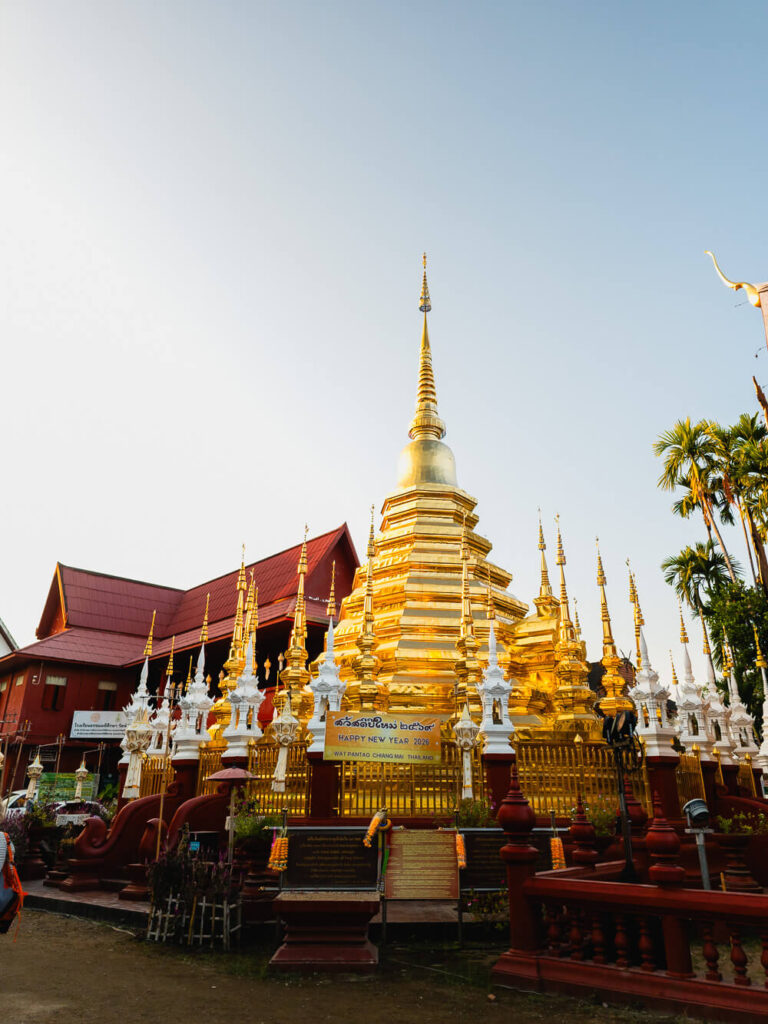
Every good journey needs an anchor. And for this route, that anchor is Chiang Mai.
Now, I know what you might be thinking. Chiang Mai? Isn’t that the most touristy city in North Thailand? And yes, parts of it are. The old city, the moat, the temples. They’re beautiful and they draw crowds. But Chiang Mai is also massive. And most travelers only ever see one small slice of it. It’s a bit like judging an entire city by one street.
For this itinerary, Chiang Mai isn’t a destination to conquer. It’s your base. The place you come back to between trips. The place where you refuel. Do your laundry. Eat something familiar. Sleep in a bed that you’ve already broken in.
I stayed in a hostel I found on Agoda. Which, by the way, is consistently the cheapest option for accommodation in this part of Thailand. During January, peak season, I was paying around 700 to 800 INR per night. Not the cheapest place on the planet but for what you get, a clean room, your own space, a place to call home for two weeks, it felt like nothing.
Don’t try to “do” Chiang Mai right away. Let it be your starting point. Explore it between your other trips. You’ll get to know it better that way than any guidebook could teach you.
Stay: 3 to 4 nights, spread across the two weeks, returning between trips.
Chiang Rai: A Different Rhythm
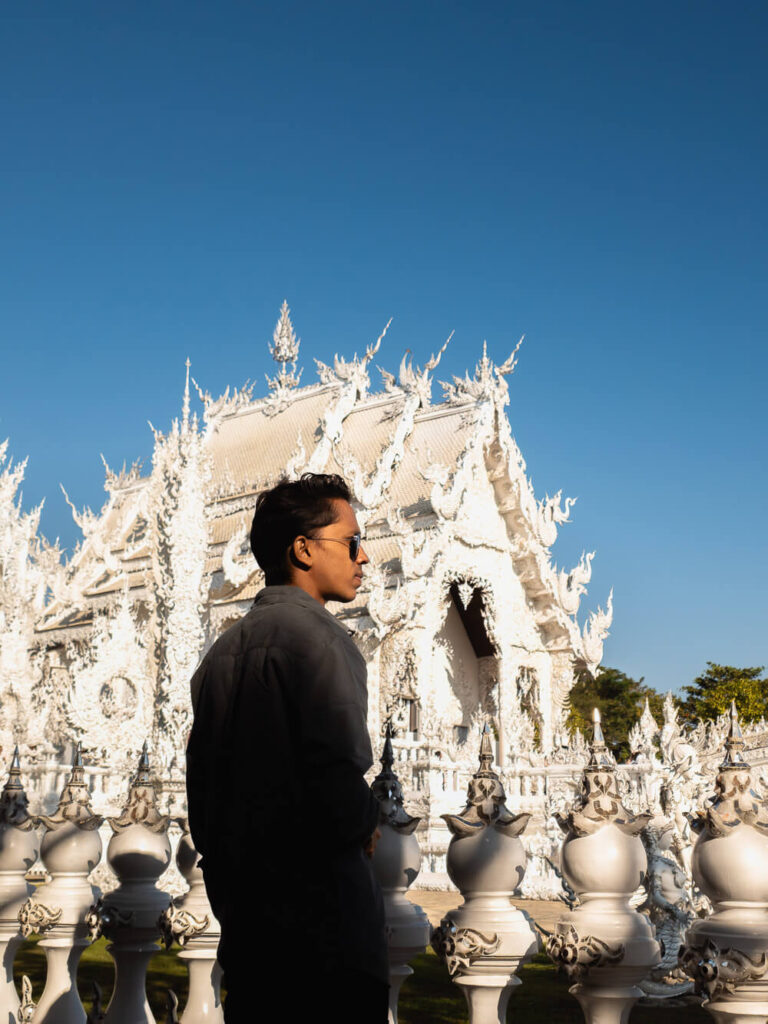
Chiang Rai is about a three-and-a-half to four-hour ride north of Chiang Mai. And the moment you arrive, you feel the shift. It’s quieter. Smaller. Less polished than Chiang Mai. And that’s exactly why it works.
Most people come to Chiang Rai for the White Temple and the Blue Temple. And sure, they’re stunning. Worth seeing. But if that’s all you do, you’ll miss what actually makes Chiang Rai special. The sleepy afternoons. The local food stalls. The way the town just breathes. It’s the kind of place where your to-do list quietly dissolves and you don’t even notice it happening.
Spend your first day just walking around. No agenda. Grab some street food. Find a spot to sit. Let the town settle into you. Chiang Rai has a rhythm that’s completely different from Chiang Mai and it takes a little time to tune into it.
Stay: 2 to 3 nights.
This place is for: Anyone who wants a quieter, less rushed alternative to Chiang Mai’s buzz.
Chiang Rai River Beach: The Spot Nobody Talks About
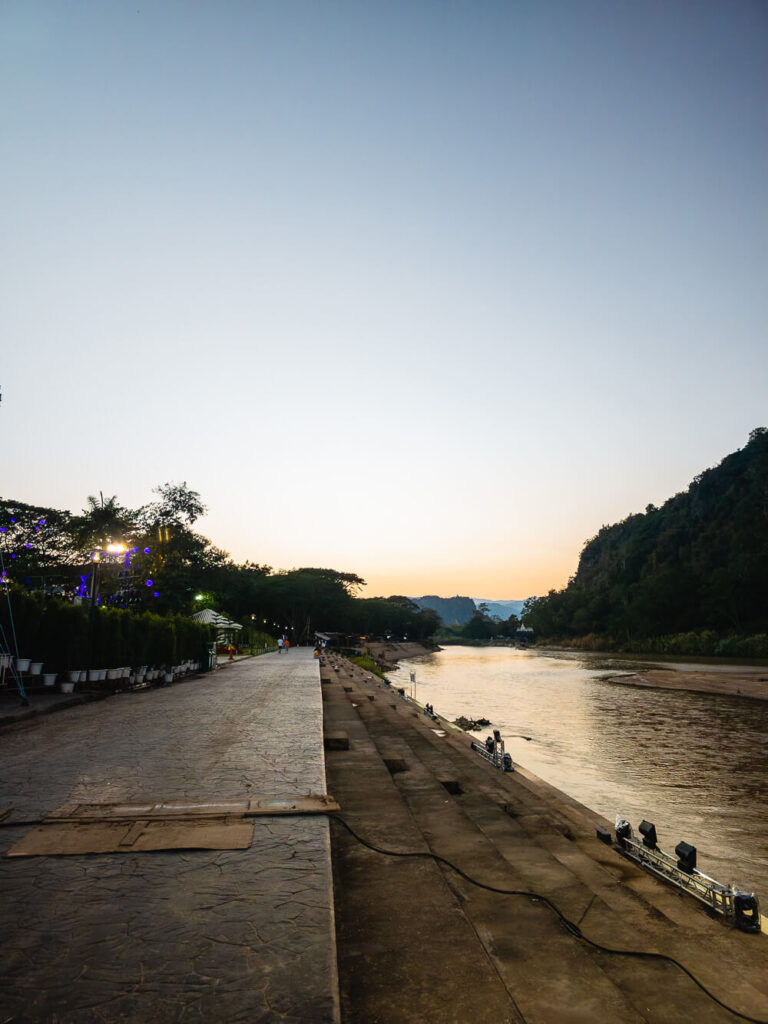
Okay, this one is a personal favorite. And I genuinely can’t believe how few travelers actually know about it.
Chiang Rai River Beach. Or what locals sometimes call it, the riverside park. It sits along the banks of the Kok River, just a short ride from the town center. It’s free. Completely free. No entry fee. No ticket. Nothing. Just show up, park your scooter, and walk in.
And it is beautiful.
It’s not a beach in the traditional sense. There’s no ocean here, obviously. We’re in the mountains. But there’s a sandy stretch along the river. Small bamboo huts where you can sit and eat. And this quiet, almost lazy energy that feels nothing like the tourist spots in town. Most of the people you’ll see here are locals. Kids playing in the water. Families having lunch. Long-tail boats drifting by. Nobody is posing for a photo. Nobody is performing. It’s just life, happening quietly.
I went there multiple times during my stay in Chiang Rai. And every single time it felt like a reset. Like the rest of the world had just paused.
If you only take one piece of advice from this article about Chiang Rai, make it this: skip one of the famous temples and go to the river beach instead. You won’t regret it.
Cost: Free.
This place is for: Anyone who wants to see how locals actually spend their day in Chiang Rai.
Mae Salong: A Piece of China, Dropped in the Thai Mountains
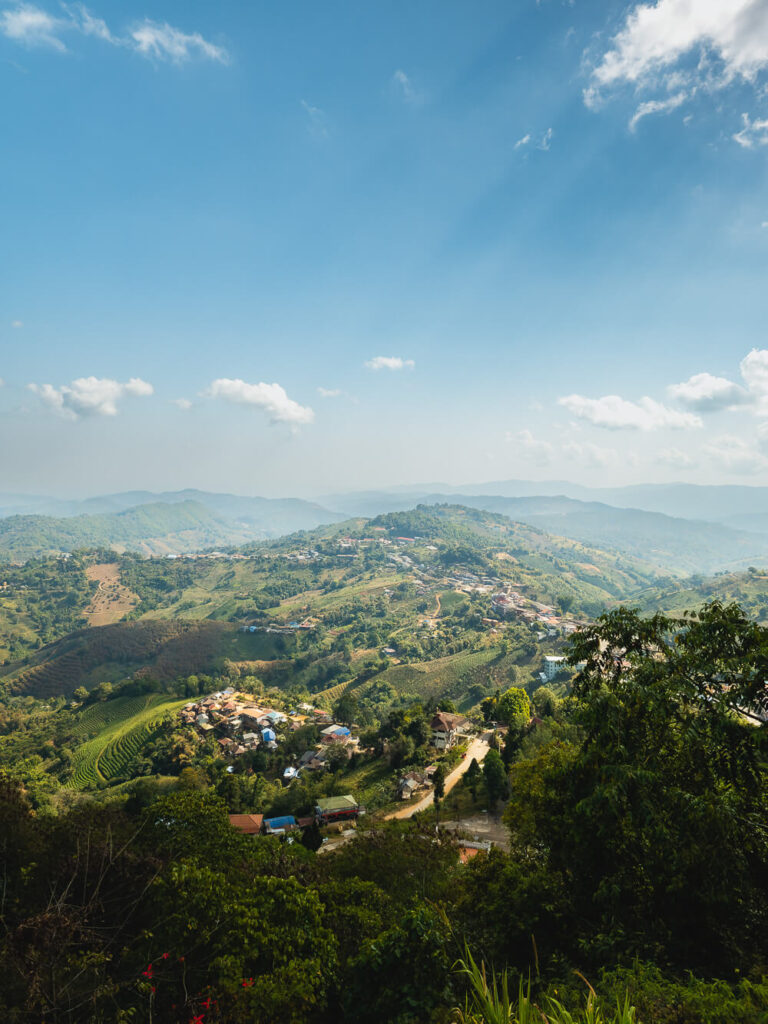
Mae Salong might be the most unexpected place on this entire route. And I mean that in the best possible way.
Sitting at around 1,200 meters above sea level, Mae Salong is officially called Santikhiri. But nobody uses that name. It’s a small mountain town in the far north of Chiang Rai province, close to the Myanmar border. And it feels nothing like the rest of Thailand. There are signs in Chinese. The food is Yunnanese, not Thai. The whole place has this calm, cool, slightly surreal quality that made me feel like I’d accidentally crossed into a different country entirely. I genuinely triple-checked Google Maps to make sure I hadn’t taken a wrong turn somewhere.
The history behind it is fascinating. Mae Salong was settled decades ago by ex-soldiers of the Chinese Nationalist Army. The Kuomintang. They fled China after the Communist takeover. They brought their culture. Their language. Their food. Their tea. And today, you can still feel all of it.
The mornings here are misty and cool. There’s a small local market where hill tribe women come to sell their goods. The tea plantations stretch across the hills and the smell of roasting tea drifts through the streets during the season. It’s one of those places that just makes you stop and think: Wait. Where am I?
Stay: 2 nights.
This place is for: Anyone who wants something completely unlike the rest of Thailand. Culture lovers. People who love good tea and quiet mornings.
Returning to Chiang Mai: The Beauty of Going Back
Here’s something I did on this trip that most itineraries would never suggest: I went back to Chiang Mai. In the middle of the route. On purpose.
After Mae Salong and Chiang Rai, I rode back south to my hostel in Chiang Mai. And it felt wonderful. Not because I was bored of the North. But because having a home base to return to completely changes how you experience a trip. You stop rushing to the next place because you know there’s a familiar bed and a favorite food stall waiting for you when you need a break.
Think of Chiang Mai as your pit stop. Minus the tire changes. Plus a bowl of Pad Kra Pao.
Stay: 1 to 2 nights to rest and recharge before the next leg.
The Samoeng Loop: Riding Without a Destination
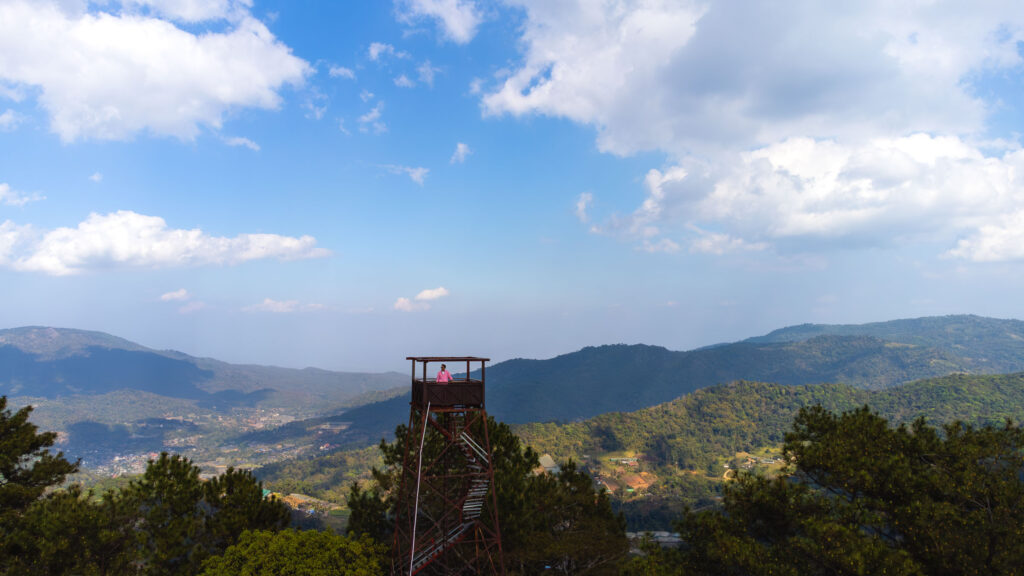
If there’s one thing on this entire route that I could do again and again and never get tired of, it’s the Samoeng Loop.
It’s a roughly 100-kilometer circular road that starts and ends in Chiang Mai. Winding through the mountains, past rice fields, through forest, and over hills that will genuinely take your breath away. And the best part? You don’t have to do it all in one go. You don’t have to rush through it.
I rode it on my scooter with absolutely no plan. No timed stops. No must-see checkpoints. I just rode. And whenever something caught my eye, a viewpoint, a tiny roadside café, a stretch of road where the light was hitting the trees in a way that made me want to pull over, I stopped. Sometimes for five minutes. Sometimes for an hour. My phone stayed in my pocket for most of it. And honestly? That was the best decision of the entire loop.
One of the highlights was stumbling upon a café that was perched almost on top of a waterfall. It was called the River Rock Cafe. It was one of those places where you sit with a coffee and the sound of rushing water fills the entire space. The kind of spot you don’t plan for. You just find it.
The Samoeng Loop isn’t really about the destinations along it. It’s about the ride itself. The way the road curves through the green. The way the air changes as you climb higher. The small cafés tucked into the hillsides where you can sit with a coffee and just look.
On a weekday, the road is quiet. Almost empty in places. Just you and the mountains. And honestly, that feeling, alone on a winding mountain road with nothing but your scooter and the sound of the engine, is one of the reasons I travel in the first place.
Stay: A full day. Take your time.
This place is for: Anyone who loves riding. Anyone who wants to feel completely free.
Mae Kampong: Go on a Weekday (Or Very Early Morning on Weekends)
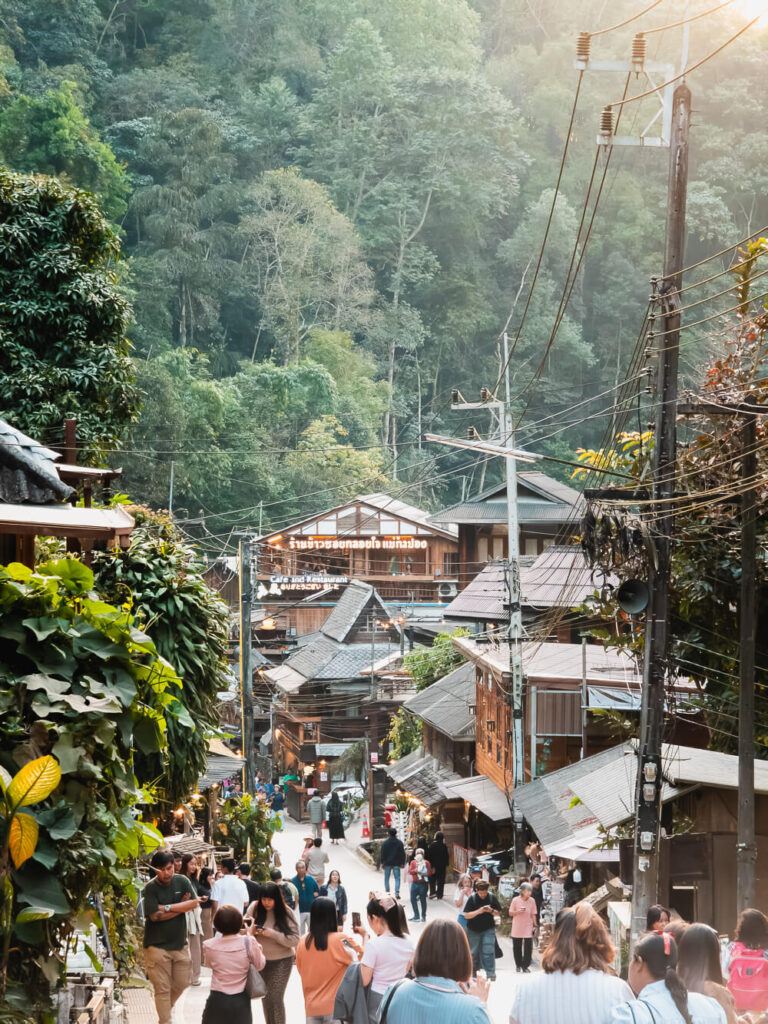
I’m going to be honest with you about Mae Kampong, because I think that’s more useful than just painting it as perfect.
I’d read articles about it. Watched videos. Everyone was calling it this magical, serene mountain village just an hour from Chiang Mai. So I packed up and rode there, excited. And I made one stupid mistake: I went on a weekend afternoon.
It was packed. Scooters everywhere. Locals and foreign tourists filling the narrow streets. The quiet village vibe that everyone had been raving about? Gone. It felt less like a peaceful mountain escape and more like a weekend mall. Minus the air conditioning.
But here’s what saved it. I talked to some locals while I was there and they told me something simple: come back on a weekday. The weekends are when all the Chiang Mai day-trippers flood in. Weekdays? It’s a different place entirely. And even on weekends, if you get there early in the morning before the crowds arrive, you’ll catch that peaceful village energy.
So that’s my advice. If you want to experience Mae Kampong the way it’s meant to be experienced, quietly, with the sound of the stream and the cool mountain air and nobody else around, go on a Tuesday or a Wednesday. Or if you’re there on a weekend, wake up early. You’ll have the village almost to yourself.
Mae Kampong is a genuinely beautiful place. The wooden houses. The waterfall. The cafés perched on the hillside with views over the mountains. It’s all real. You just have to time it right.
Stay: 2 days to experience both the early morning quiet and the village at different times of day.
This place is for: Anyone who wants a peaceful village escape. Go on a weekday or arrive very early on weekends.
Chiang Mai Old Town: Seeing It With New Eyes
By the time I got to the final leg of this route, something had shifted in how I saw Chiang Mai.
The Old Town, the area inside the ancient moat, is where most tourists spend their time. And it’s genuinely lovely. The temples are stunning. The old walls and gates tell a story that goes back centuries. But when I walked through it at the end of my two weeks, after having spent time in quiet villages and misty mountain towns, the Old Town felt different. Smaller. More intimate. Like I was seeing it for the first time, even though I’d walked these streets before.
The places you return to don’t look the same as they did when you first arrived. You notice things you missed. You appreciate things you rushed past. The Old Town became less of a “thing to do” and more of a place I actually wanted to sit in. Sip a coffee. Watch the monks walk by in the early morning. Just be there.
Stay: 1 to 2 days at the end of the route, with fresh eyes.
This place is for: Everyone. But especially for people who’ve already been to Chiang Mai and want to see it differently.
How to Move Around North Thailand
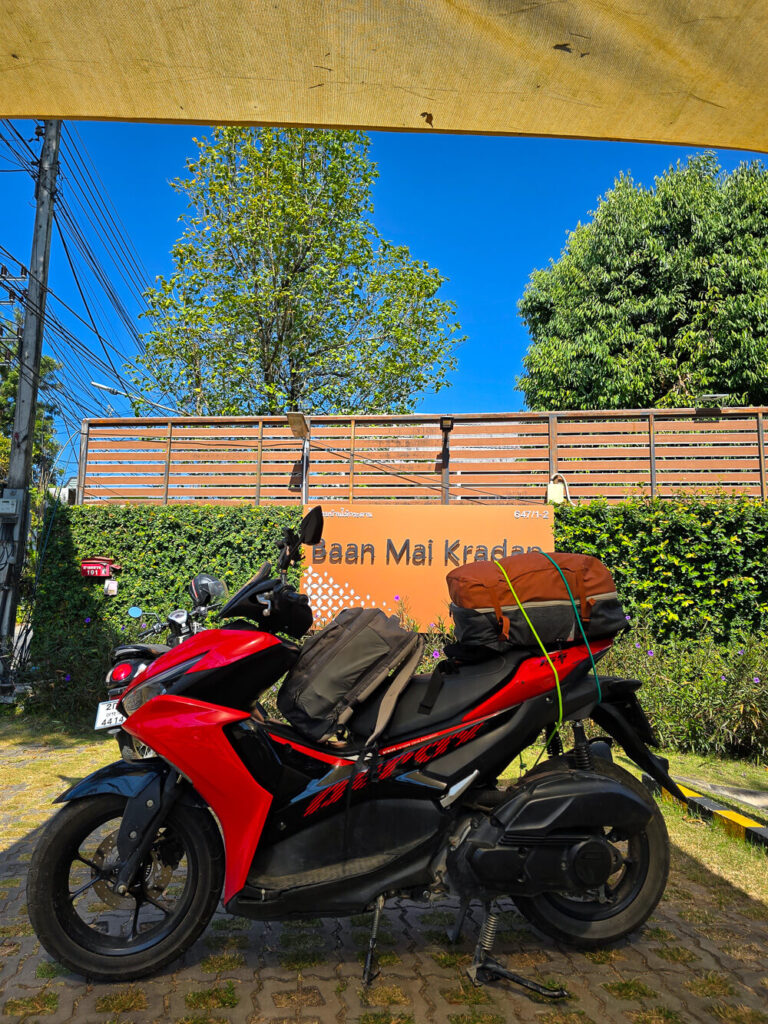
Let’s talk logistics. Because one of the first things people ask is: “Okay, but how do I actually get around?”
The short answer: a scooter. That’s it.
I rented a 155cc bike for the entire two weeks in Chiang Mai and used it for everything. From navigating the city streets to riding up into the mountains on the Samoeng Loop. The total cost? Around 3,000 THB for two weeks. That’s less than $90.
And here’s the thing: almost all rental places in Chiang Mai will only let you rent a 150cc or above if you’re planning to ride outside the city and into the mountains. This is because of a lot of scooter breakdowns in the past with smaller engines. So don’t think you can save money by renting a 125cc. They simply won’t let you take it to the hills. The mountain roads around North Thailand have real inclines and a smaller engine will have you struggling. Think of it as the difference between a bike that wants to climb and one that’s silently questioning your life choices every time you hit an uphill.
Now, about the pace and the timeline. I personally spent close to a month in North Thailand. But you don’t have to. This itinerary is designed to work in 14 days and even two weeks won’t feel rushed if you do it the way it’s meant to be done. If you have more time, great. Stretch it. Stay an extra night somewhere that feels right. There’s no rule here that says you have to move on just because a new day has started.
Here’s the route at a glance, the way I rode it:
Chiang Mai – Chiang Rai – Mae Salong – Back to Chiang Mai – Samoeng Loop – Mae Kampong – Chiang Mai Old Town.
No tours needed for any of this. Just your scooter, Google Maps, and a willingness to get a little lost sometimes. The roads in the North are well-maintained, especially during the cool season from November to February. And most of the route is straightforward. The beauty of having your own wheels is that you stop when something catches your eye. You stay when a place feels right. You leave when it doesn’t.
This offbeat North Thailand itinerary only works if you have the freedom to move at your own pace.
What a Slow Day in North Thailand Actually Looks Like
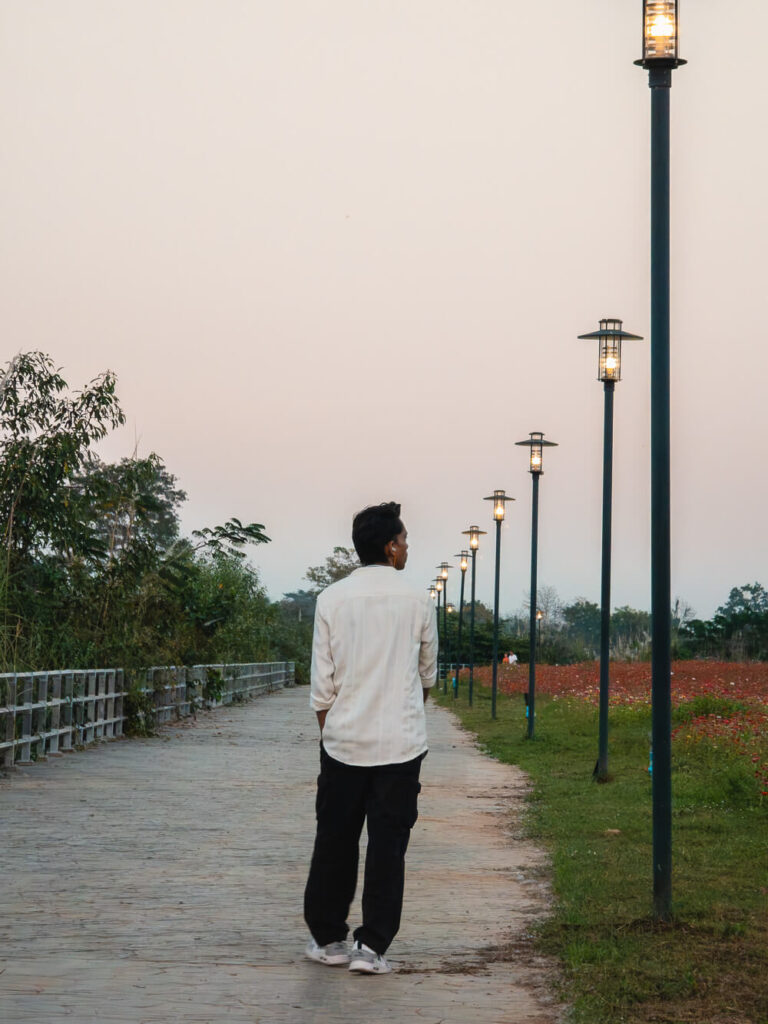
Let me paint you a picture. No instructions here. Just a day.
Morning. You wake up without an alarm. The light is coming through the window. Soft. Golden. The kind that makes everything look slightly dreamlike. You lie there for a minute, maybe two, just listening. A rooster somewhere. A motorbike passing on the street below. The distant sound of a temple bell. No notification sounds. No alarm screaming at you. Just the world, doing its own thing.
You get up slowly. Splash water on your face. Step outside. The air is cool. Cooler than you expected. And there’s a mist hanging low over the rooftops. You find a place to eat breakfast. It’s not a café with a menu and WiFi. It’s a stall. Or a small shop run by a woman who’s been doing this for years. You point. She serves. And whatever lands in front of you is going to be the best thing you eat all day.
Afternoon. You ride somewhere. Or you don’t. Maybe you just sit. Maybe you find a bench under a tree and watch the afternoon unfold. A group of kids on bicycles. A dog sleeping in a patch of sunlight. A vendor pushing a cart, calling out something you don’t understand but somehow find oddly comforting.
If you do ride, there’s no destination. You just go and the road takes you somewhere. A village you’ve never heard of. A coffee shop with a view that stops you mid-sip. A stretch of road where the trees form a tunnel and the light filters through in a way that makes you slow down without even thinking about it.
Evening. The light changes. Everything goes golden, then amber, then deep blue. You find somewhere to eat. A local restaurant. The kind with plastic stools and food so good it doesn’t need a sign. You eat slowly. You don’t check your phone. You just sit there, full and quiet and present, and you think: This. This is what I came here for.
Night. You ride back in the dark. The stars are ridiculous up here. More than you’ve seen in years. You get to your guesthouse. Shower. Lie down. Tomorrow has no plan. And that’s the most beautiful part.
Budget and Reality: What It Actually Costs
One of the things I love about North Thailand is how naturally affordable it is. Not in a “you have to suffer” kind of way. In a “you actually spend less because you’re living more simply” kind of way.
Here’s what my days looked like, money-wise.
Food. I mostly ate at local restaurants. The ones without English menus. The ones where you sit on a plastic stool and eat what the locals eat. My go-to dish was Pad Kra Pao. Stir-fried basil rice with minced pork. At my regular spot in Chiang Mai, it cost 60 THB. The portions were generous and they had a big bowl of free soup that you could help yourself to. As much as you wanted. They also had free filtered water. Both cold and warm. Pretty much anything you could ask for, all for 60 THB.
And here’s where it gets funny. I went to this place every single day. Same time. Same dish. After about a week, I walked in one afternoon and before I could even open my mouth, the woman running the stall started laughing. She said something in Thai, which I obviously didn’t understand, and then she looked at me and said three words in English: “PORK. SPICY. WITH EGG.”
That was it. That was my entire order, distilled into three words. I didn’t even have to nod. She just started cooking. And when the plate landed in front of me a few minutes later, it was perfect. Exactly how I’d been ordering it for the past week.
Once you find a spot like this, you don’t leave. It becomes your spot. The woman becomes someone who knows your order before you do. And honestly? That’s one of the best parts of staying in one place long enough to become a regular.
I also ate a lot of chicken gyoza. 6 pieces for 50 THB from any local vendor. And the juices and smoothies? Ridiculously cheap. 25 THB for a fresh juice. 35 THB for a smoothie. My personal favorite was the mango yogurt smoothie. I had it almost every day. At that point it wasn’t even a choice anymore. It was a ritual.
Even with two full meals a day, my food spend never crossed 250 THB. That’s less than $8. For an entire day of eating. Let that sink in for a second.
Accommodation. January is peak season in North Thailand so prices were a bit higher than they would be during the off-season. I was paying around $9 USD to $10 USD per night for a clean, comfortable hostel room. I booked everything through Agoda. Consistently the cheapest option I found for this region. If you’re flexible on dates and can travel during the shoulder season, you’ll find even better deals.
Transport. The scooter rental was around 3,000 THB for two weeks. Fuel cost me about 700 to 800 THB for the entire two weeks and over 1,000 kilometers of riding. Almost all rental places in Chiang Mai will only allow you to rent a 150cc bike if you’re heading outside the city and into the mountains like I told you earlier.
The bigger picture. When you eat where locals eat and stay in one place long enough to settle in, the money just stretches. You’re not paying tourist prices. You’re not buying overpriced cocktails at rooftop bars. You’re living simply and it costs almost nothing. That’s not deprivation. That’s freedom.
The Philosophy of Slow Travel (And the Mistakes That Break It)
Now that you’ve seen the route, let me tell you why this kind of travel matters. And what kills it.
Why staying matters. When you move through a place at speed, one night here, half a day there, you only ever see the surface. The version of a place that’s designed for people who are passing through. But the moment you stay two or three nights somewhere, you start seeing the layers underneath. The way a town actually functions. The rhythm of its mornings. The people who live there and aren’t performing for anyone.
One night and you’re still adjusting. Two nights and you start to settle. Three nights and the place starts to feel familiar. And that’s when the real experience begins.
One of the things I loved most about traveling the North was that I didn’t always move forward. Sometimes I went back. I’d ride out to a new place. Spend a couple of days. And then return to Chiang Mai. Not because I’d run out of things to do. But because it had become a kind of home base. A place to breathe between adventures. And that felt right. It felt natural in a way that “progressing” from destination to destination never does.
And here’s what breaks it:
Overplanning. Having a rough idea of where you want to go is great. Having every hour mapped out? That’s the opposite of what this itinerary is about. The moment you build a rigid schedule, you stop being present. You start worrying about whether you’re “on track.” Let go of the plan. The best moments on this route happened when I wasn’t planning for them.
Chasing spots. The moment you start traveling for the photo or the story, you’ve already lost the thread. I’ve been guilty of this. You ride to a place because someone said it was beautiful and then you spend the entire time trying to capture it instead of feeling it. Put the phone down. The place will still be beautiful whether or not you have proof.
Moving every single day. This one kills depth faster than anything. If you’re packing up and moving to a new town every 24 hours, you never get past the surface. Two nights minimum. Three if a place feels right. That’s where the magic lives.
Treating towns like tasks. “Done with Chiang Rai, moving on to Mae Salong.” That checklist mentality is the enemy of everything this itinerary is trying to do. These aren’t boxes to tick. They’re places to be in. There’s a difference.
Never actually resting. This doesn’t mean doing less exciting things. It means giving yourself permission to do nothing sometimes. Sit. Watch. Breathe. A full afternoon of doing absolutely nothing productive is one of the most productive things you can do on a trip like this. Your brain will thank you. Eventually.
Ignoring the locals. The people in these small towns and villages are the real story. Talk to them. Even if the language barrier is there, a smile and a genuine curiosity go a long way. Some of the best moments of my trip came from conversations that started with nothing more than pointing at a dish and asking, “This one? Good?”
Rushing back to the city too soon. There’s a pull to go back to Chiang Mai. To the comfort. The WiFi. The familiar. And sometimes that pull is healthy. But if you’re always running back to the city after half a day in the countryside, you’re never giving the quieter places a real chance. Stay. Be a little uncomfortable. It’s worth it.
Let the weather guide you. Let your mood guide you. If it’s a rainy afternoon and you feel like just sitting somewhere with a coffee and watching the world go by, do that. That is the experience.
North Thailand doesn’t reveal itself all at once. It opens slowly. Like something that’s been waiting for you to finally stop moving long enough to notice it.
Begin with One Quiet Step
If you’ve made it this far, you might be feeling a little overwhelmed. A two-week route through North Thailand. All these places. All this advice. It can feel like a lot.
So let me say this: you don’t have to do all of it.
You don’t have to do it perfectly. You don’t have to follow this route exactly the way I did. You could start with just Chiang Mai and the Samoeng Loop. Or just spend a week in Chiang Rai and Mae Salong. Or pick one village and stay there for five days and call it a trip. Any of those things would be a better version of North Thailand than the rushed, temple-hopping, checklist version that most travelers settle for.
Start with one quiet step. That’s all it takes.
Book a train ticket. Rent a scooter. Find a hostel that feels like a place, not just a room. And then, just go. Let the North do the rest.
North Thailand opens itself slowly. The quieter your road, the more it gives back.
Frequently Asked Questions
What makes this an offbeat North Thailand itinerary compared to standard tours?
Most standard tours treat the region like a checklist, rushing you from the White Temple to Doi Inthanon in a matter of days. This offbeat North Thailand itinerary is entirely different. It’s built around the philosophy of slowing down and staying longer. Instead of just hopping between famous landmarks, it focuses on the quiet rhythm of places like the Chinese-influenced mountains of Mae Salong, the empty stretches of the Samoeng Loop, and the local river beaches of Chiang Rai.
How many days do I need for slow North Thailand travel?
To truly experience slow North Thailand travel, you should aim for a minimum of 14 days. A two week North Thailand itinerary gives you enough breathing room to spend 2 to 3 nights in smaller towns, allowing you to settle in, find a favorite local food stall, and actually feel the energy of a place rather than just photographing it. If you have more time, even better—stretch it out and let the road dictate your pace.
What is the best way to travel beyond Chiang Mai?
If you want to go beyond Chiang Mai, renting a scooter is absolutely the way to go. Having your own wheels gives you the freedom to pull over at hidden waterfalls, stop at roadside cafes, and alter your plans on a whim. Just remember to rent a scooter with at least a 150cc engine; the mountain inclines are steep, and rental shops won’t let you take a smaller 125cc bike into the hills for safety reasons.
Is it safe to ride a scooter on a North Thailand off beaten path route?
Yes, the roads are surprisingly well-maintained, especially if you visit during the cool, dry season from November to February. Taking a North Thailand off beaten path route—like the winding roads up to Mae Kampong or the Samoeng Loop—is very straightforward with Google Maps. The key is to ride during daylight hours, take it slow on the curves, and ensure you have that 150cc engine so your bike can comfortably handle the climbs.
How much does a two week North Thailand itinerary cost?
Traveling this way is incredibly budget-friendly because you aren’t paying tourist premiums. By eating at local spots (where a plate of Pad Kra Pao costs around 60 THB), staying in comfortable hostel rooms (roughly 700 to 800 INR per night during peak season), and renting a scooter (around 3,000 THB for two weeks), your money stretches much further. You end up spending less precisely because you are living more simply.

2 Responses
Loved this so much ✨ The train story pulled me in instantly, and your take on slow travel feels real and grounded, not just another “hidden gems” list 🌿 Going back to Chiang Mai instead of constantly chasing the next spot really hit me. Beautifully written 👏🌏
Thank you. I’m glad you enjoyed it.