A realistic Hanoi travel guide for slow travelers. Skip the tourist traps. Discover where to stay, how to eat cheap, and how to find the city’s true rhythm.(CLICK HERE)
Table of Contents
This isn’t your typical Hanoi travel guide. I’m not going to give you a perfect 3-day itinerary or tell you the “top 20 must-see attractions.” Because honestly? I didn’t see most of them.
I spent 10 days in Hanoi. And I worked for most of it. Sat in cafés. Walked around the lake. Ate street food. That’s it.
This guide is about what Hanoi actually feels like when you stop treating it like a checklist. When you slow down. When you let the city be what it is instead of forcing it to be something Instagram told you it should be.
Quick Summary: Hanoi at a Glance

Duration I stayed: 10 days (7 days initially + 3 days after Sapa)
Daily budget: 250,000–300,000 VND ($10–$12)
Accommodation: 135,000 VND/night ($5.50) at Hanoi Capsule Station Hostel
Food cost: 65,000–105,000 VND/day ($2.60–$4.20)
Best area to stay: Old Quarter
Main activity: Walking around Hoàn Kiếm Lake, working from cafés, eating street food
Ideal for: Digital nomads, backpackers, slow travelers
Not ideal for: People who need packed itineraries or quiet environments
Best time to visit: October–November or March–April
The Reality Behind This Hanoi Travel Guide: Working, Not Exploring
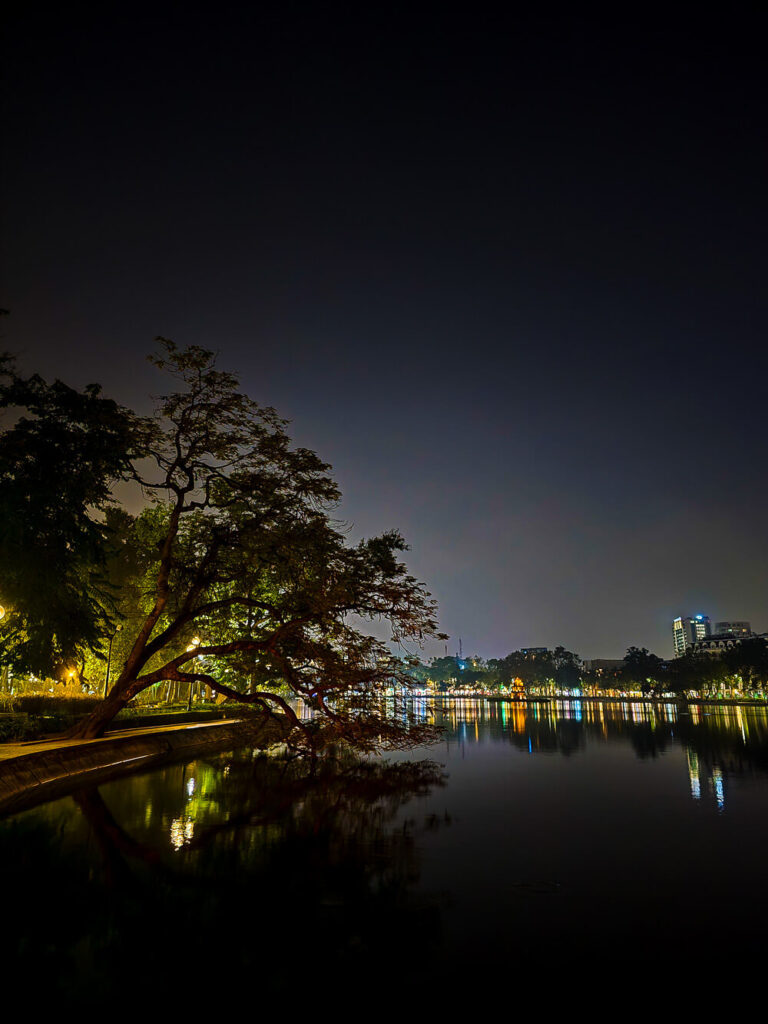
Let me be clear about something. I didn’t do the full Hanoi tourist circuit.
I stayed for a week initially. And most of that week I was working. Writing articles. Answering emails. Sitting in cafés with coffee and WiFi. Using Hanoi as a base to settle into Vietnam before heading north to Sapa.
What I Actually Did:
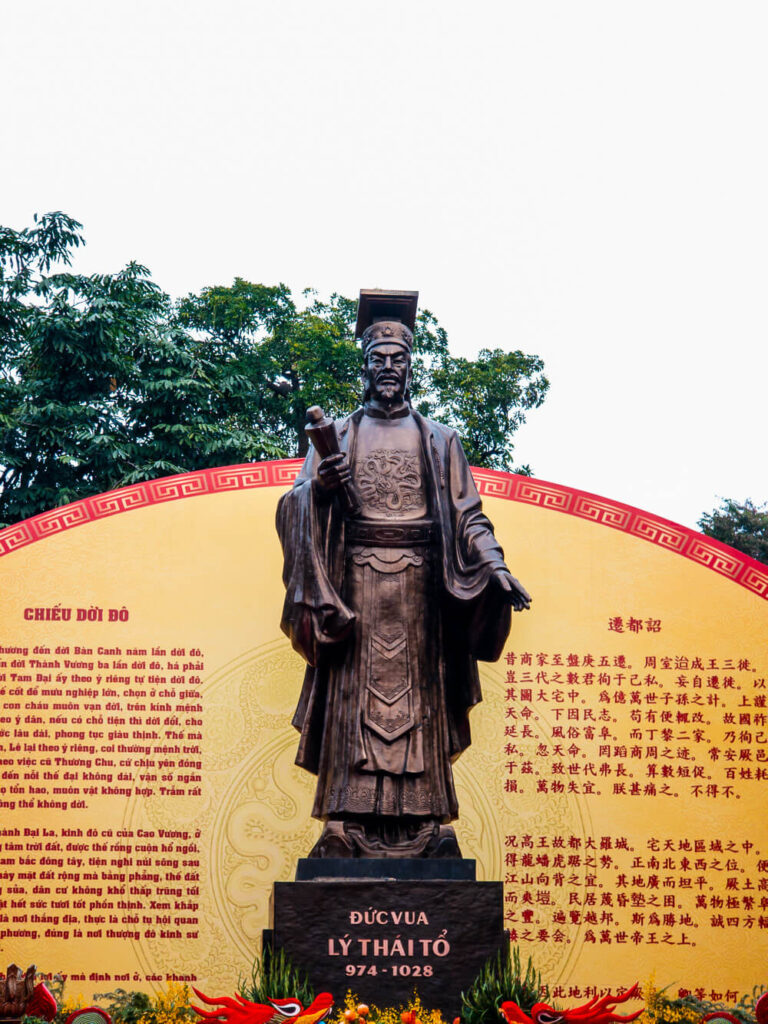
I walked around Hoàn Kiếm Lake. A lot. Morning walks. Evening walks. The lake sits right in the center of the Old Quarter and it’s the heartbeat of the city. There’s a statue of Chiêu Dời Đỏ near the lake surrounded by a beautiful garden. The Ngoc Son Temple sits on the lake with a red bridge leading to it. I walked the entire perimeter on foot multiple times.
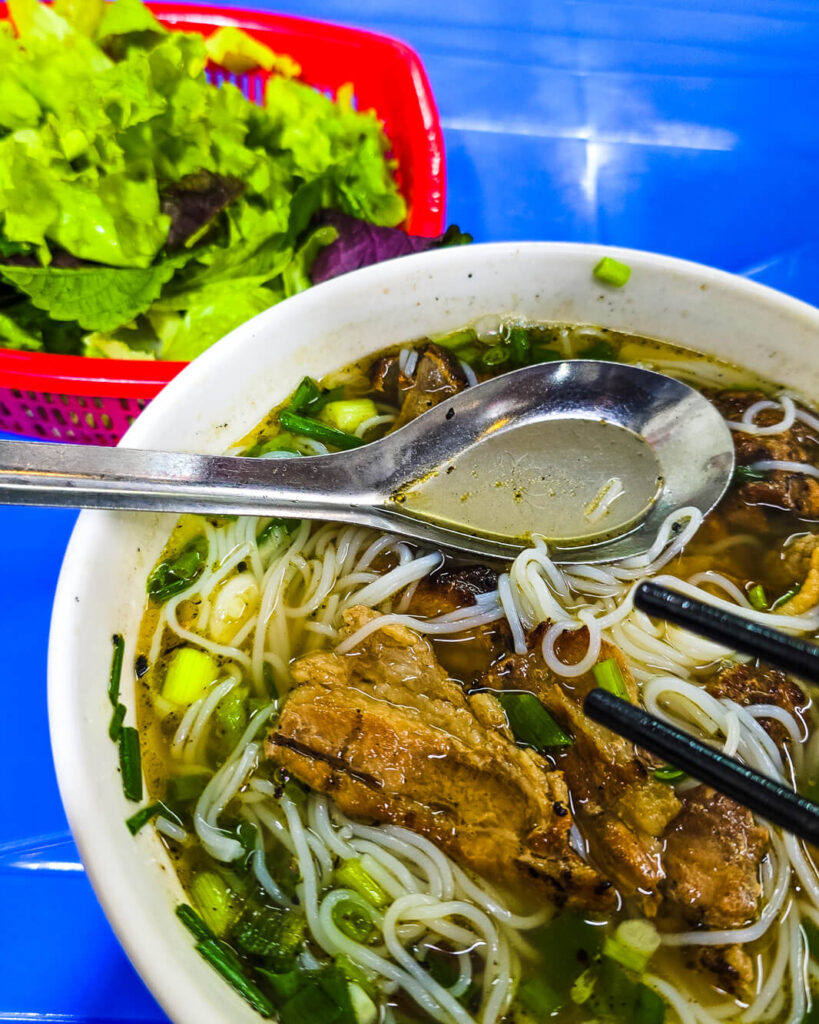
I ate street food. Bánh mì for 25,000 VND ($1). Phở or bún chả for 40,000 VND ($1.60). Two meals a day. Sometimes just bánh mì for lunch if breakfast was heavy. No fixed routine. Just ate whatever I felt like eating.
I went to Train Street. But being from Mumbai where trains are part of daily life, Train Street didn’t excite me much. It’s a narrow alley with a train track running through it. Locals live right next to the tracks. Tourists gather to take photos. The train comes through once or twice a day. It’s unique. But not life-changing. And from what I’ve heard, it’s shutting down soon anyway.
After Returning from Sapa:
I came back to Hanoi for three more days. And this time I arrived right when Tet celebrations were starting.
The atmosphere around Hoàn Kiếm Lake during Tet was incredible. People all dressed up. Especially young women in áo dài taking photos along the lake. Families out walking. Food stalls everywhere. The whole city felt alive in a way it hadn’t during my first week.
I didn’t go to museums or historical sites or pagodas. I just walked. Watched. Existed in the city for a few more days before heading to Ninh Binh.
I didn’t explore Hanoi deeply. But I got a feel for it. And that feel is what this guide is built on. Not on seeing everything. But on understanding what the city actually offers when you slow down.
The “Best Things to Do in Hanoi” (If You Really Want a Checklist)
Okay so here’s the part where I give you the list.
My hostel host gave me a list of places to visit when I first arrived. I didn’t follow most of it. But it’s a solid starting point if you actually want to explore Hanoi properly. So I’m passing it on to you.
These are the best things to do in Hanoi based on what locals recommend and what most travelers actually enjoy.
Hoàn Kiếm Lake & Ngoc Son Temple
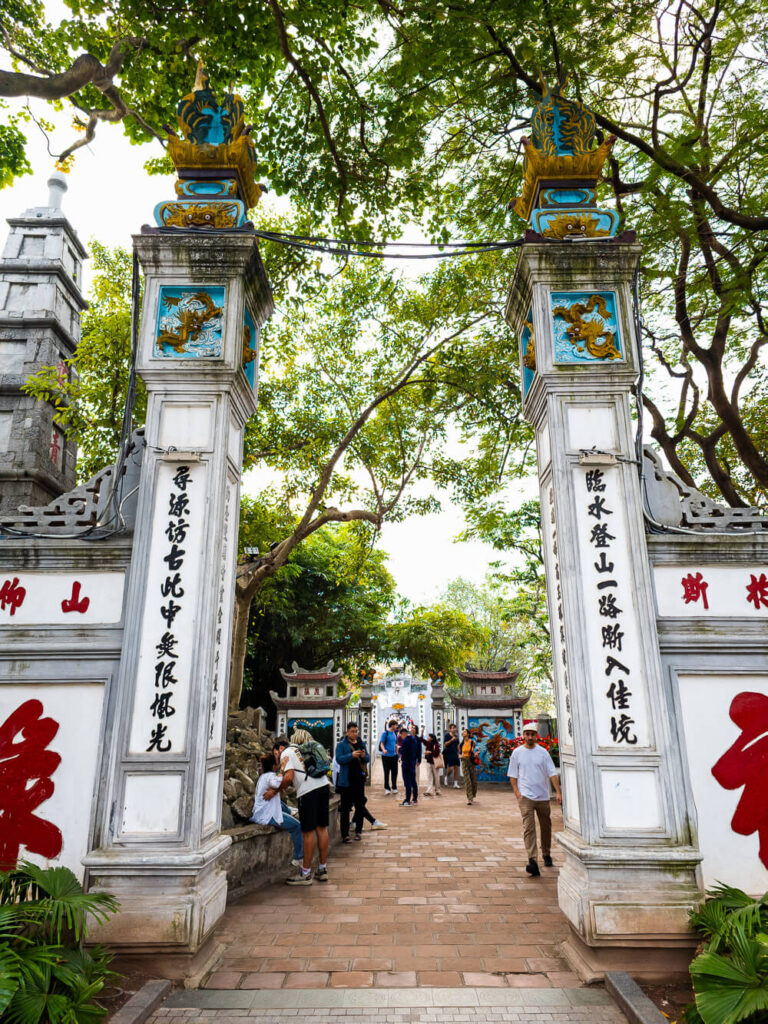
This is the center. The heart of Hanoi. Everyone comes here.
The lake is beautiful. Calm. Surrounded by trees. People walk around it all day. Mornings you’ll see locals doing tai chi. Evenings it’s packed with couples, families, tourists. Weekends it gets even busier.
Ngoc Son Temple sits on a small island in the lake. You reach it via the red Huc Bridge. The bridge itself is photogenic. The temple is small but peaceful. Entry fee is 30,000 VND ($1.20).
I walked around the lake probably ten times during my stay. It never got boring. Different light. Different crowds. Different energy depending on the time of day.
Best time to visit: Early morning or late evening. Avoid midday when it’s crowded and hot.
Hanoi Old Quarter
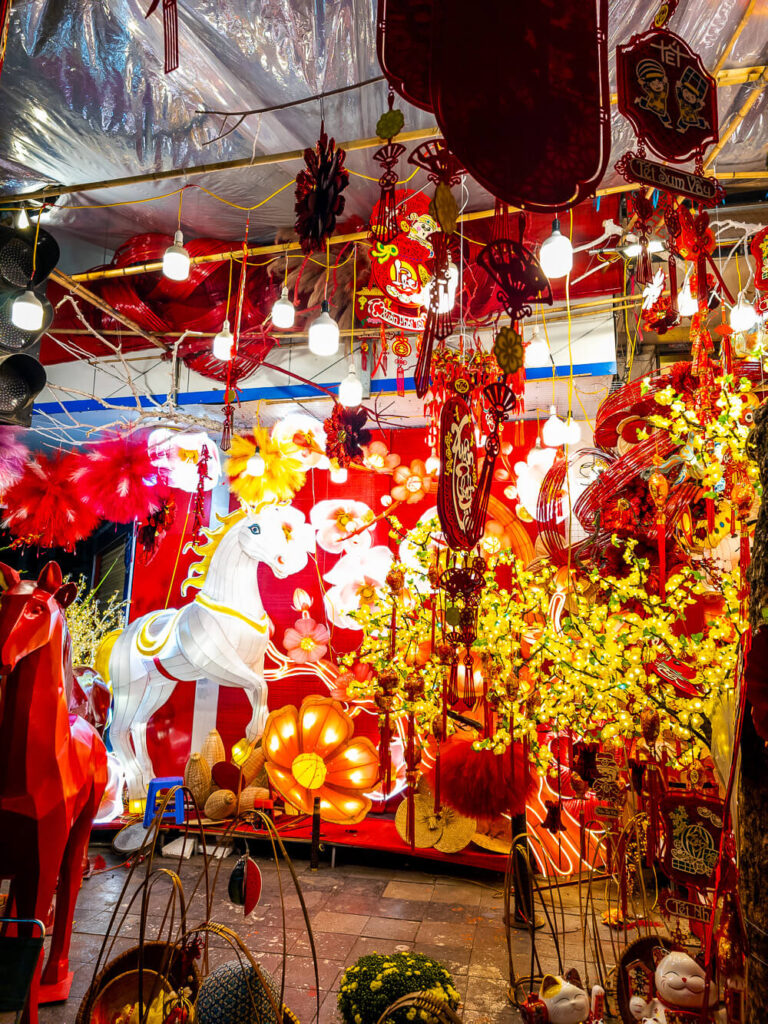
The Old Quarter is where you’ll probably stay. It’s chaotic. Narrow streets. Motorbikes everywhere. Street vendors. Shops. Cafés. Restaurants. Noise. Energy. All of it packed into a maze of streets that don’t follow any logical grid.
You don’t “visit” the Old Quarter. You just walk through it. Get lost in it. Stop when something looks interesting. Eat when you see locals eating. That’s the whole experience.
The streets are named after the trades that used to operate there. Hang Bac (Silver Street). Hang Gai (Silk Street). Some still specialize in those goods. Some don’t. But the names remain.
Best for: Walking, street food, feeling the chaos of Hanoi.
Train Street
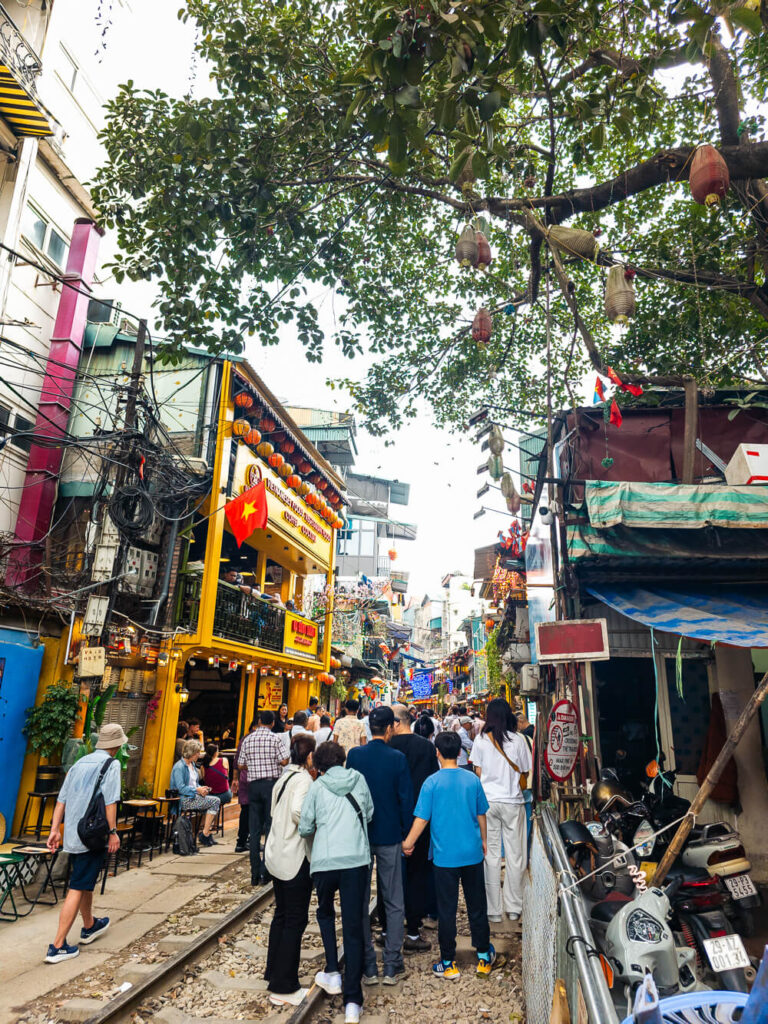
I mentioned this earlier. It’s a narrow residential street with a train track running through the middle. Cafés set up right next to the tracks. Tourists gather. Train comes through. Everyone takes photos. Train leaves. Repeat.
It’s unique. Worth seeing once if you’re curious. But don’t go out of your way for it.
Also, I’ve heard it’s shutting down soon. So by the time you’re reading this, it might already be closed. Just check before making plans.
Ho Chi Minh Mausoleum
This is where Ho Chi Minh’s body is preserved and displayed. Big historical site. Huge open square in front. Guards in white uniforms. Very formal. Very serious.
The mausoleum is only open certain hours and certain days. Usually mornings. And it closes for maintenance for a few months every year. Check the schedule before you go.
Entry is free but there are rules. No shorts. No hats. No phones. No talking. You walk through in a line. You see the body. You exit. Takes maybe 10 minutes.
Best for: History buffs. People interested in Vietnamese politics and culture.
Temple of Literature
This is one of Hanoi’s oldest and most important temples. Built in 1070. Originally a Confucian school. Beautiful architecture. Peaceful gardens. Ponds. Courtyards.
It’s quieter than most places in Hanoi. A break from the chaos. You can spend 30 minutes here or two hours depending on how much you care about the history.
Entry fee is 30,000 VND ($1.20).
Best for: Anyone who wants a calm, cultural experience.
Hỏa Lò Prison Museum
Also known as the “Hanoi Hilton.” This was a prison used by the French colonizers and later by North Vietnam during the war. American POWs were held here including John McCain.
The museum is small but heavy. Lots of history. Lots of war stories. Exhibits show conditions under French rule and during the Vietnam War.
Entry fee is 30,000 VND ($1.20).
Best for: History and war history specifically.
Long Biên Bridge
An old bridge built by the French in the early 1900s. It’s still used today. Trains and motorbikes cross it daily.
It’s not a tourist attraction in the traditional sense. But it’s a good photo spot. Especially at sunrise or sunset. And it gives you a view of the Red River.
You can walk across it. Or just look at it from the riverbank. Either works.
Best for: Photographers. People who like old infrastructure.
West Lake (Hồ Tây)
West Lake is the largest lake in Hanoi. It’s in a quieter, more upscale part of the city. Less chaotic than the Old Quarter. More expats. More modern cafés.
The lake itself is nice for walking or cycling around. There are pagodas and temples along the shore. And the sunset views are good.
If you want a break from the Old Quarter madness, West Lake is the place to go.
Best for: Relaxing. Sunset. Escaping the crowds.
Dong Xuan Market
This is the biggest market in Hanoi. Three floors. Everything from clothes to electronics to food. It’s more for locals than tourists. But if you want to see how people actually shop in Hanoi, this is it.
It’s crowded. Hot. A bit overwhelming. But real. No English signs. No tourist prices. Just locals buying and selling.
Best for: Experiencing local life. Buying cheap stuff.
What Hanoi Is Actually Good For (And What It Isn’t)
Let me set expectations.
Hanoi is not a museum city. It’s not a temple city. It’s not a beach city. It doesn’t have one massive landmark that defines it.
What Hanoi is good for:
Café culture. Hanoi runs on coffee. Egg coffee. Vietnamese iced coffee. Every street has a café. Some are modern with air conditioning and WiFi. Some are tiny sidewalk setups with plastic stools. All of them work. You can spend an entire day in different cafés and never get bored.
Walking. The Old Quarter. Hoàn Kiếm Lake. Random streets. Hanoi is a walking city. Not because it’s pedestrian-friendly. It’s not. The sidewalks are packed with motorbikes. But because walking is the best way to see it.
Observing daily life. Watching street vendors set up. Seeing locals eat breakfast on the sidewalk. Crossing the street and somehow not getting hit by a motorbike. That’s the Hanoi experience.
Slow travel. If you’re working remotely or you just need a base to settle into Vietnam, Hanoi works. The cost is low. The infrastructure is good. The food is incredible. You can stay here for a week or two and not feel like you’re wasting time.
What Hanoi is NOT good for:
Big attractions. If you need a long list of things to do, you’ll run out fast. There’s temples and museums and historical sites. But not enough to fill a week if you’re the checklist type.
Quiet relaxation. Hanoi is loud. Always. The Old Quarter especially. If you need peace and quiet, stay near West Lake or skip Hanoi entirely.
Where to Stay in Hanoi: The Old Quarter & Beyond
This is easy. Stay in the Old Quarter.
The Old Quarter is central. You can walk to Hoàn Kiếm Lake in five minutes. You can walk to most restaurants and cafés. You’re right in the middle of everything.
I stayed at Hanoi Capsule Station Hostel. Paid around 135,000 VND per night ($5.50). The price included breakfast. Free WiFi. Clean capsule beds. Good location right in the Old Quarter.
It wasn’t fancy. But it worked. And honestly, for the price, it was perfect.
Other areas to consider:
French Quarter – Quieter than the Old Quarter. Wider streets. Nicer buildings. More expensive. Good if you want a break from the chaos.
West Lake – Even quieter. More residential. Cafés and restaurants are pricier. Good for longer stays or if you prefer a more relaxed vibe.
But if it’s your first time in Hanoi, just stay in the Old Quarter. Everything is close. The energy is good. And you won’t waste time commuting.
How to Get Around Hanoi (and Survive the Traffic)
Walking is the best option in the Old Quarter. Everything is close. The streets are narrow. Motorbikes are everywhere. Just walk.
Grab works in Hanoi. It’s cheap. Reliable. A ride across the city costs 30,000 to 60,000 VND ($1.20 to $2.40). I used it maybe twice. Once to get from the train station to my hostel. Once to get back. That’s it.
Motorbikes – You can rent a scooter if you want. But traffic in Hanoi is intense. I didn’t rent one. Didn’t need it. Walking and occasional Grab rides covered everything.
Crossing the street – This deserves its own section. Crossing the street in Hanoi is terrifying at first. Motorbikes don’t stop. They just go around you. The trick is to walk slowly and steadily. Don’t stop. Don’t speed up. Just keep moving at a constant pace and the motorbikes will avoid you. It feels wrong. But it works.
Hanoi Travel Costs: My Exact Budget for 10 Days
Hanoi is cheap. Really cheap.
Accommodation: 135,000 VND per night ($5.50) at Hanoi Capsule Station Hostel. Included breakfast. Clean. Good location. Nothing fancy but perfectly fine.
Food: I ate two meals a day. Sometimes just one if breakfast was heavy.
Bánh mì: 25,000 VND ($1)
Phở or bún chả: 40,000 VND ($1.60)
Total daily food cost: 80,000 – 130,000 VND ($3 to $5)
I ate at local spots. Street food stalls. Small restaurants where locals eat. Plastic stools. No English menus. Just pointing and hoping. It always worked.
Transport: Minimal. I walked everywhere in the Old Quarter. Used Grab twice. Total transport cost for the week was maybe 100,000 VND ($4).
Daily total: Around 250,000 to 350,000 VND per day ($10 to $13.50). That includes accommodation, food, and occasional transport. Some days less. Some days slightly more if I stopped at a café.
| CATEGORY | COSTS PER DAY |
| Accommodation | 135,000 VND |
| Food | 80,000 – 130,000 VND ($3 to $5) |
| Transport | 100,000 VND ($4) |
| TOTAL | 250,000 to 350,000 VND ($10 to $13.50) |
For 10 days total (7 days initially + 3 days after Sapa), I spent around 2,500,000 to 3,000,000 VND ($100 to $120).
That’s incredibly affordable. And I wasn’t suffering. I ate well. Stayed in a good hostel. Had everything I needed.
Hanoi Itinerary: How Long Should You Actually Stay?
1–2 days: Enough to see the main highlights. Walk around Hoàn Kiếm Lake. Visit a temple. Eat street food. Get a feel for the city. But you’ll miss the rhythm.
3–5 days: Better. You have time to explore the Old Quarter. Visit a few museums or temples. Take day trips if you want. And you start to settle into the pace.
7+ days: This is where Hanoi works best. You stop being a tourist. You find your breakfast spot. You know which café has the best WiFi. You start recognizing faces. The city opens up.
I stayed 7 days initially and it felt right. I wasn’t rushing. I worked. I explored when I felt like it. And when I came back for 3 more days after Sapa, it felt like coming home.
If you’re using Hanoi as a base for exploring northern Vietnam, a week or more makes sense. If you’re just passing through, 2–3 days is fine.
Best Time to Visit Hanoi
Hanoi’s weather changes a lot throughout the year. Here’s what you need to know:
October to November (Autumn): Best time to visit. Mild temperatures. Low humidity. Clear skies. Perfect weather for walking around the city. Expect temperatures around 20–25°C (68–77°F).
March to April (Spring): Also good. Warm but not too hot. Less rain than summer. Temperatures around 18–25°C (64–77°F). Some drizzle but manageable.
May to September (Summer): Hot. Humid. Rainy. Temperatures can hit 30–35°C (86–95°F) with high humidity. Afternoon thunderstorms are common. If you can handle heat and rain, it’s fine. But not ideal.
December to February (Winter): Cold. Especially January and February. Temperatures drop to 10–15°C (50–59°F). Gray skies. Drizzle. You’ll need a jacket. I visited in January and it was cool but manageable.
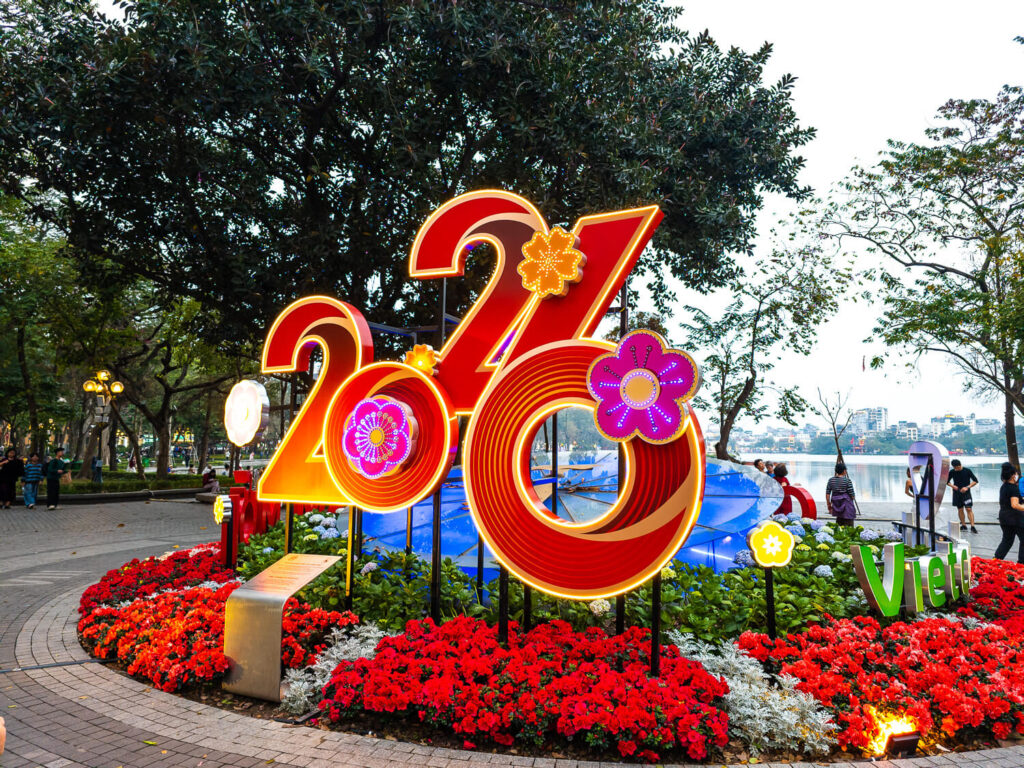
Tet (Vietnamese New Year): Usually late January or early February. The city is beautiful during Tet. Decorations everywhere. Festive atmosphere. But a lot of places close. Restaurants. Shops. Transport is limited. If you’re visiting during Tet, plan ahead or be prepared to adapt.
My recommendation: Visit in October–November or March–April for the best weather. Avoid summer unless you don’t mind heat and rain.
What to Expect: The Chaos, The Coffee, and Tet
Chaos. The traffic is intense. The Old Quarter is crowded. The sidewalks are packed with motorbikes. It’s loud. It’s messy. It’s overwhelming at first.
But after a few days, it becomes normal. You learn to cross streets without flinching. You stop being surprised by motorbikes on the sidewalk. You just adapt.
Energy. Hanoi moves. Always. Even at 6 a.m. there are vendors setting up. People eating breakfast on the street. Motorbikes everywhere. The city doesn’t stop.
Friendly locals. Most people are helpful. Even with the language barrier. I never felt unsafe. Never had a bad experience. People smile. They help if you look lost. And the street food vendors are always happy to serve you even if you can’t speak Vietnamese.
Heat and humidity. Depending on when you visit. January was cool. Comfortable. But summer in Hanoi is hot and humid. Factor that in.
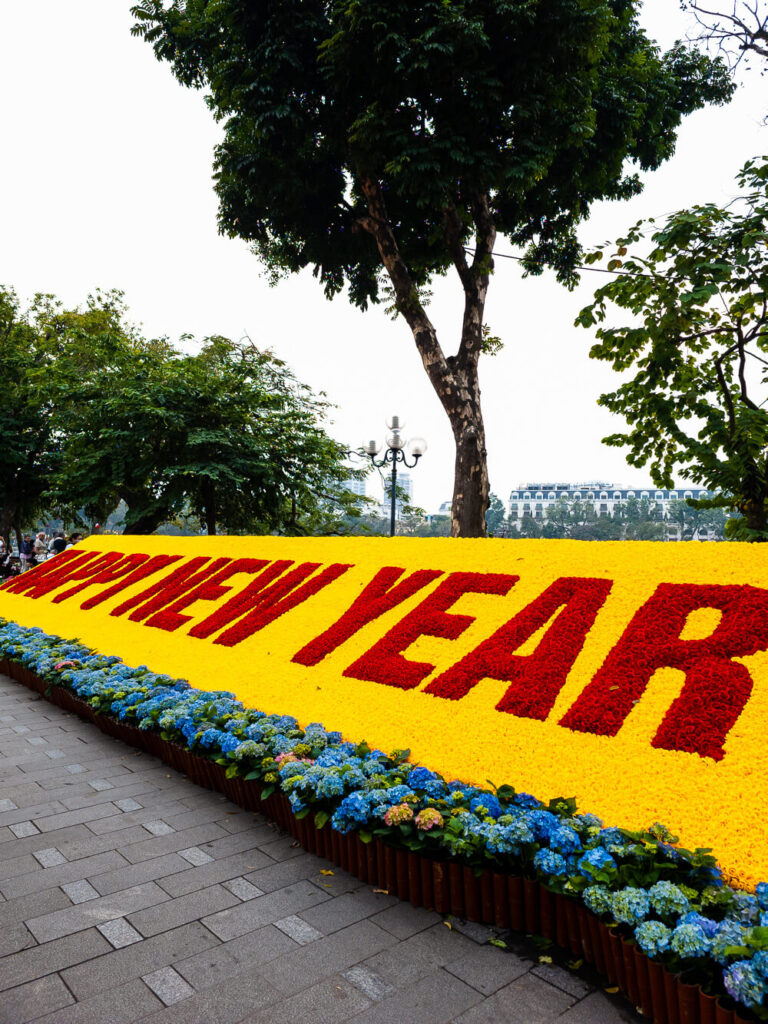
Tet changes everything. If you’re in Hanoi during Tet, expect closures. Restaurants shut down. Shops close. Transport is limited. But the atmosphere is incredible. The decorations. The energy. People dressed up. It’s worth seeing if you can time it right.
Who Is Hanoi Good For? (Nomads, Backpackers, & Slow Travelers)
Digital nomads. Good WiFi. Cheap accommodation. Cafés everywhere. Hanoi works as a base.
Backpackers. Budget-friendly. Good street food. Hostels in the Old Quarter. Easy to meet other travelers.
First-time Southeast Asia travelers. Hanoi is a good introduction. It’s chaotic but manageable. The infrastructure works. It’s not as overwhelming as Bangkok.
Slow travelers. If you don’t need to see ten things a day. If you’re okay with just walking around and eating and watching life happen. Hanoi is perfect for that.
Who Hanoi is NOT good for:
People who need quiet. The Old Quarter is loud 24/7. If you need peace, this isn’t the place.
People who need a packed itinerary. Hanoi doesn’t have endless attractions. You’ll run out of things to do if you’re the checklist type.
People who can’t handle chaos. The traffic. The crowds. The noise. If that stresses you out, skip Hanoi or stay near West Lake instead.
Crucial Survival Tips for First-Timers in Hanoi
Book accommodation in advance during Tet. Everything fills up fast. Prices go up. Book early or you’ll struggle to find a place.
Bring cash. A lot of street food vendors and small restaurants don’t take cards. ATMs are everywhere in the Old Quarter. Withdraw when you can.
Learn to cross the street. Seriously. Walk slowly and steadily. Don’t stop mid-crossing. The motorbikes will go around you. Trust the process.
Eat where locals eat. If a place is full of Vietnamese people, the food is good. If it’s full of tourists, it’s probably overpriced. Simple rule.
Don’t overthink it. Hanoi isn’t a city you need to plan heavily for. Just show up. Walk around. Eat. Explore. It works itself out.
My Honest Take: Why Hanoi Grows on You
I didn’t fall in love with Hanoi immediately. The first day was overwhelming. The traffic. The noise. The chaos. I wasn’t sure I liked it.
But by day three, something shifted. I found my rhythm. My breakfast spot. My evening walk around the lake. My favorite café.
Hanoi grows on you. It’s not a city that screams for attention. It’s a city that unfolds slowly. And if you give it time, it rewards you.
I came back to Hanoi twice during my 50 days in Vietnam. Once after Sapa. Once before leaving for Ninh Binh. And both times it felt like coming back to a place I knew. Not a tourist stop. A place I’d actually lived in.
That’s what Hanoi offers. Not highlights. Not Instagram moments. Just a city doing what it’s been doing for a thousand years. And if you slow down enough, you get to be part of it for a while.
Final Thoughts on the Hanoi Experience
Hanoi isn’t a city you “complete.” It’s not about seeing every temple or visiting every museum.
It’s about walking around Hoàn Kiếm Lake at sunrise. Eating phở on a plastic stool at 7 a.m. Sitting in a café for three hours watching motorbikes pass by. Crossing the street without getting hit. Finding your rhythm in the chaos.
If that sounds good to you, go. Stay in the Old Quarter. Eat street food. Walk. And let Hanoi show you what it’s actually like when you stop treating it like a checklist.
It grew on me. And I think it might grow on you too.
Frequently Asked Questions
How many days do I actually need in Hanoi?
If you just want to see the main highlights, 1–2 days is enough. 3–5 days is better to actually explore. But 7+ days is where Hanoi works best. You stop rushing. You find a routine. If you’re a slow traveler, give it a week.
Where is the best place to stay?
The Old Quarter. It’s central. You can walk everywhere, and the energy is good. If you absolutely cannot handle noise and chaos, look at West Lake or the French Quarter instead. But for your first time, stay in the Old Quarter.
How do I cross the street without getting hit?
Walk slowly and steadily. Do not stop mid-crossing. Do not speed up. Just keep moving at a constant pace. The motorbikes won’t stop for you, but they will go around you. It feels wrong at first, but trust the process.
Is Hanoi expensive?
No. It’s incredibly cheap. I spent around 250,000 to 300,000 VND ($10 to $12) a day. That covered a bed in a clean hostel, two meals of street food, and coffee.
Do I need to rent a motorbike to get around?
No. The traffic is intense. You don’t need the stress. Walk everywhere in the Old Quarter, and use the Grab app if you need to go further. A Grab ride across the city only costs about $1 to $2 anyway.
Can I pay for things with a card?
Bring cash. A lot of the best street food vendors and small local restaurants don’t take cards. There are ATMs everywhere in the Old Quarter, so just withdraw cash when you need it.
What is it like visiting during Tet?
The atmosphere is incredible. People dress up, families are out, and the city feels alive. But a lot of places close down. Restaurants, shops, and transport are limited. Also, book your accommodation well in advance because places fill up fast and prices go up.
Check out my Thailand Articles.
- Chiang Mai Budget Travel Guide (2026): Costs, Tips & Cheap Things to Do.
- Northern Thailand Budget Travel Guide (2026): Real Costs + Daily Budget.
- White Temple vs Blue Temple: Which One Is Worth Visiting in Chiang Rai?
- Chiang Rai Budget Travel Guide 2026: Slower Days & Why It Beats Chiang Mai.
- Living in Chiang Mai on a Budget: Real Costs, Daily Life & What It’s Actually Like.
