Discover the real city with this Hue travel guide for slow travel. An honest 5-day itinerary covering hidden beaches, abandoned parks, and local life.(CLICK HERE)
Table of Contents
Most travel guides for Hue spend 80 percent of their time on the Imperial City.
This one won’t. Not because the Imperial City isn’t worth seeing, it is, but because that section of every Hue travel guide already exists in abundance. What doesn’t exist is a guide for the version of Hue that opens up when you rent a scooter, ride out of the city center, and give the place more than two days.
This Hue travel guide for slow travel covers the essentials. But more importantly, it covers what I actually did during 5 days in the city in January 2025. The abandoned water park. A quiet beach nobody talks about. Hidden mangrove forests. And evenings beside the Perfume River where the locals gather and the city finally shows you who it really is.
That’s the Hue worth writing about.
Hue at a Glance
| Category | Details |
|---|---|
| Best Time to Visit | February to April (dry season) |
| Recommended Stay | 4–5 days minimum for slow travelers |
| Scooter Cost | 120,000 VND ($4.80) per day for automatic |
| Best Base | Near Perfume River or backpacker zone |
| Entry Fees | Imperial City: 200,000 VND ($8.50 USD) / Abandoned Water Park: 50,000 VND ($2) |
| Vibe | Quieter than Hoi An, slower pace, genuinely local atmosphere |
Is Hue Worth Visiting? (The Slow Travel Perspective)
Yes. Much more than most travelers realize.
Hue gets overshadowed on the central Vietnam route. Travelers rush through in a day or two. Imperial City in the morning. Lunch. Back on the bus. And in doing so, they miss everything that makes this city genuinely special.
For a Hue travel guide for slow travel specifically, the answer is a clear yes. This is not a city that reveals itself quickly. It opens slowly. The interesting places require effort to find. And the atmosphere that makes Hue memorable only becomes visible once you stop moving long enough to feel it.
Hue is slower than Hoi An. Less designed for tourists. Less curated. The streets run on their own schedule rather than a visitor’s one. And that difference is exactly what makes it a better destination if you’re the kind of traveler who values depth over distance.
If you want a city where you can sit in a local café, eat food that hasn’t been simplified for Western palates, and find places that feel genuinely undiscovered, Hue delivers. But only if you stay long enough to let it.
Your Hue Travel Guide for Slow Travel: Essential Tips Before You Arrive
A good Hue travel guide for slow travel starts with honest expectations. Here’s what you need to know before arriving.
Best time to visit: February to April is the ideal window. The dry season brings comfortable temperatures and clear skies. Hue receives more annual rainfall than almost anywhere else in Vietnam. The rainy season runs August to November and is worth avoiding. January can see cool, overcast days. February onwards is noticeably more reliable.
How many days to stay: Four to five days minimum. Two days is enough for the Imperial City and a brief impression of the city. But this guide requires more time. The places covered here are spread out. You need days to get there, explore, and absorb.
General atmosphere: Quieter than Hanoi. Less internationally-facing than Hoi An. Hue has a university city energy. Young locals. Good street food. Affordable cafés. It feels like a city running on its own terms rather than adapting itself to tourism.
What makes Hue ideal for slower travel: The best things here require a scooter and a willingness to ride beyond the center. They’re not on standard itineraries. They reward the effort of finding them. A Hue travel guide for slow travel is really about giving yourself the time and transport to reach them.
Where to Stay in Hue for a Local Experience
The area near the Perfume River is the most pleasant base for slow travelers. You’re close to the river walk area, within easy scooter distance of the Imperial City, and in a neighborhood that feels genuinely lived-in rather than built for visitors.
The backpacker zone sits south of the river, between the Perfume River and the train station. Budget hostels are concentrated here. Good transport connections. Local restaurants within walking distance. A solid base for riding out to the places covered in this guide.
For a quieter feel: look for accommodation a few streets back from the main tourist roads. Guesthouses in the residential side streets are cheaper, calmer, and give you more of a sense of living in Hue rather than passing through it.
Avoid the main tourist drag if atmosphere matters to you. The streets closest to the Imperial City entrance lean toward souvenir shops and tourist restaurants. Pleasant to visit. Less pleasant to sleep next to.
How to Get Around: Why You Need a Scooter
Every interesting place in this Hue travel guide for slow travel requires your own transport.
Thuan An Beach is 13 kilometers from the center. Rung Ru Cha is further out. Ho Thuy Tien abandoned water park sits on the outskirts of the city. None of these work by Grab, bicycle, or walking. A scooter is not optional for this itinerary. It’s the whole point.
I rented an automatic scooter for 120,000 VND ($4.80) per day. Well-maintained. Easy to ride. It handled city traffic, coastal roads, and the lagoon route to Rung Ru Cha without any issues across all 5 days.
Grab works within the city center if you need it for short hops between central tourist sites. But every time you need Grab to reach a destination, you’ve already limited yourself. The scooter removes that limitation entirely.
Bicycle is a viable option for city center exploration on rest days. But it won’t get you to the beach or the mangroves. Rent the scooter. Use it every day.
Things to Do in Hue: The Places Most Travelers Miss
The Imperial City (A Quick Overview)
The Imperial City, officially known as Đại Nội, is the UNESCO World Heritage-listed walled complex at the heart of Hue’s history. It was the political center of the Nguyen dynasty. The scale of it is impressive. The history running through it deserves time.
Go. Give it two to three hours. Read the information boards. Walk the grounds properly.
But this Hue travel guide for slow travel focuses on what comes after. Because the Imperial City is in every guide already. The places below are not.
Hue Abandoned Water Park (Ho Thuy Tien)
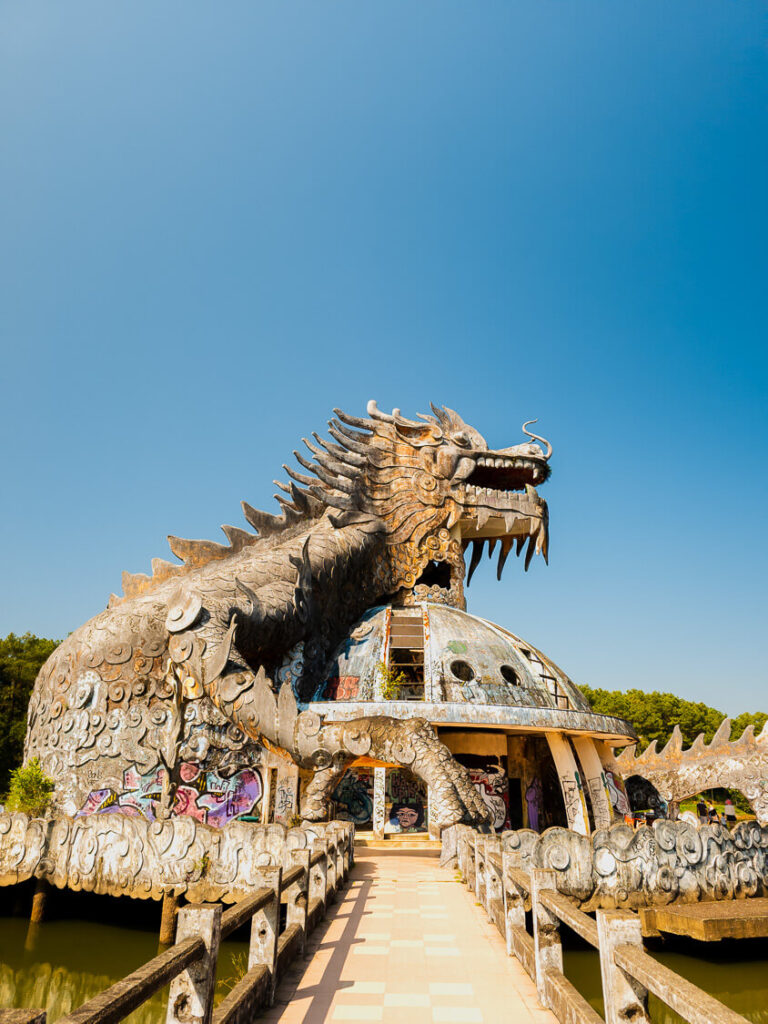
Entry fee: 50,000 VND ($2)
Ho Thuy Tien is one of the strangest and most memorable places I visited in all of Vietnam.
It was once a functioning water park. It opened in 2004, struggled financially, and closed not long after. What remains is a slowly decaying complex of waterslides, empty pools, overgrown pathways, and a three-story dragon structure rising from a drained lake.
That dragon is the centerpiece. You can climb it. Stand on its back. Look out over an abandoned landscape where vines and grass are reclaiming everything humans built. It feels surreal. Atmospheric. Like somewhere a film set got left behind.
Getting there: About 7 kilometers from the city center. A 15-minute scooter ride. Search Ho Thuy Tien on Google Maps.
What to expect: Bring water. No vendors inside. Some structures are clearly unsafe. Use judgment. The experience is wandering freely through a place that belongs to a different era.
Best time to visit: Early morning. You’ll have it mostly to yourself before other visitors arrive. The quiet makes it better.
Thuan An Beach
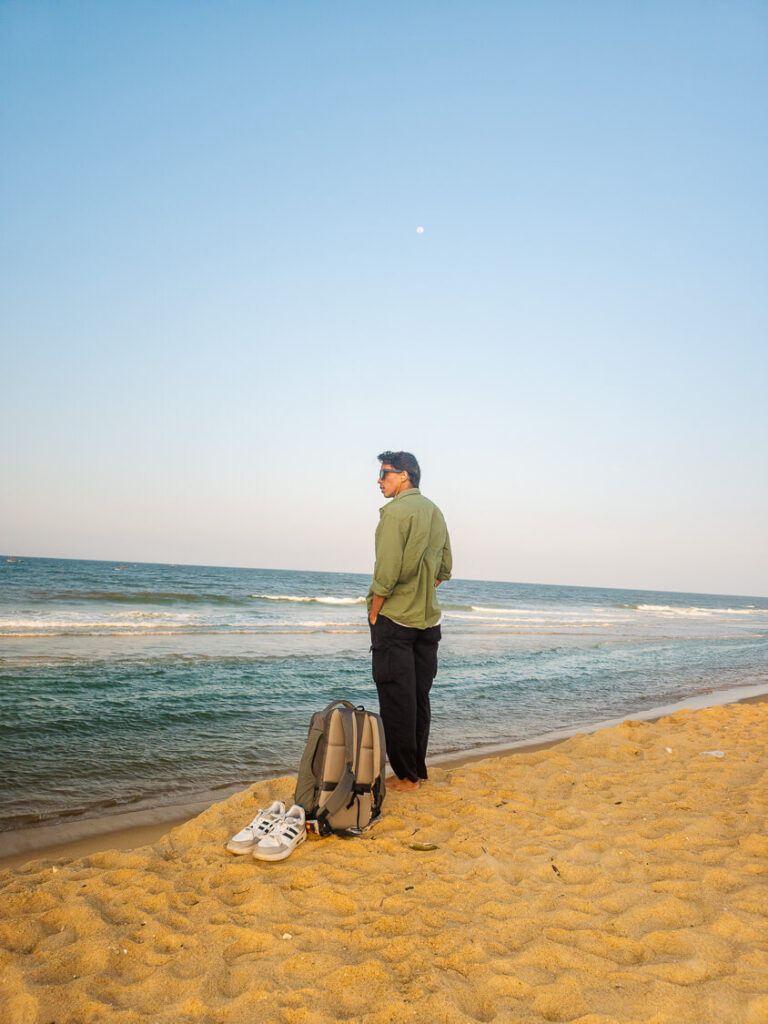
Thuan An Beach sits 13 kilometers northeast of Hue city center. About 25 minutes on a scooter through flat coastal wetland scenery that changes the entire atmosphere of the ride.
This is not a showpiece beach. It’s wide, flat, calm, and quiet. On the weekday morning I rode out, I had long stretches of it almost to myself.
The atmosphere felt completely different from the city. Slower. Emptier. More honest. Local families on weekends. A few fishermen. The occasional other traveler who made the effort to come out.
Why it’s worth including in a Hue travel guide for slow travel: Because 25 minutes from the Imperial City you find a beach that most tour groups never reach. The contrast alone makes the ride worthwhile.
Best time to visit: Weekday mornings. Weekends bring local day-trippers from Hue. Go early if you want quiet.
Rung Ru Cha: Hue’s Hidden Mangrove Forest
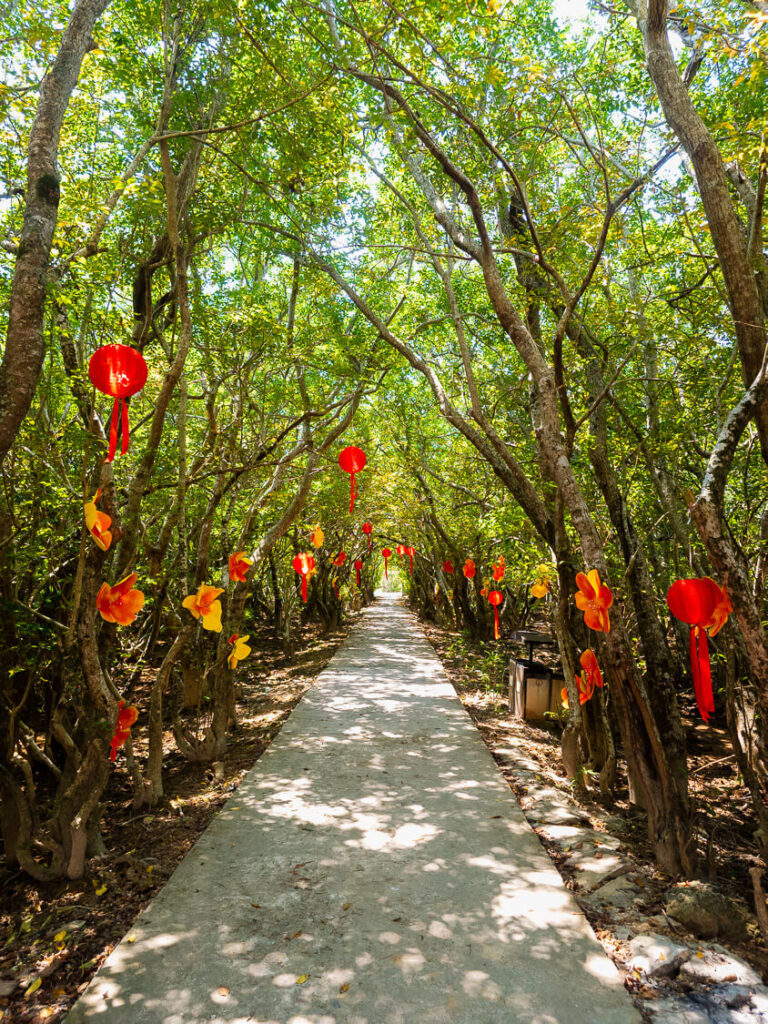
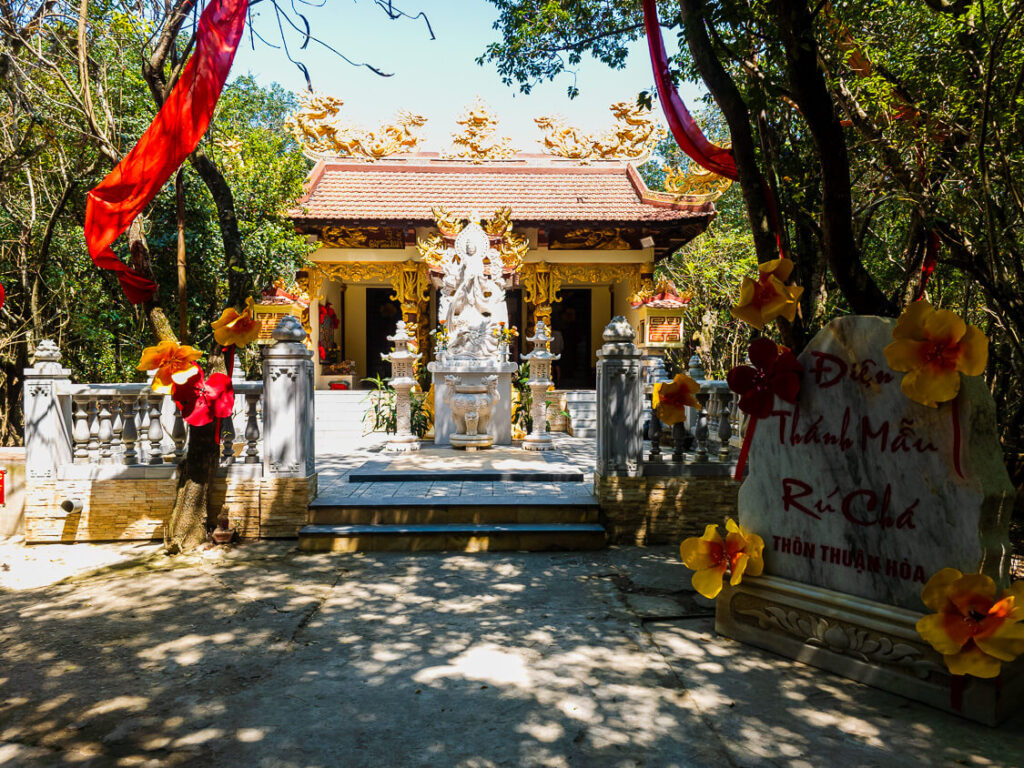
This was the discovery that surprised me most during my time in Hue. Rung Ru Cha is a mangrove forest on the edge of Tam Giang Lagoon, one of the largest lagoons in Southeast Asia. And the boat ride through the channels is one of the most peaceful things I did in all of Vietnam.
Getting there: Around 15 to 20 kilometers from the city center. Follow Route 49B northwest along the lagoon. Put Rung Ru Cha into Google Maps before you leave.
What to expect: Small wooden boats navigate narrow channels cut between mangrove trees. Light filters through the canopy. Water birds move through the reeds. City sounds disappear completely. The boat rides are run by local families. Cost around 100,000 to 150,000 VND ($4 to $6) for a ride through the forest.
This spot doesn’t appear in most standard Hue itineraries. You find it by having a scooter, a rough GPS pin, and the willingness to ride somewhere that doesn’t advertise itself. That’s exactly why it’s worth going.
Best time to visit: Morning or late afternoon. The light on the lagoon at golden hour is exceptional.
Dai Tuong Niem Chien and The Perfume River at Night
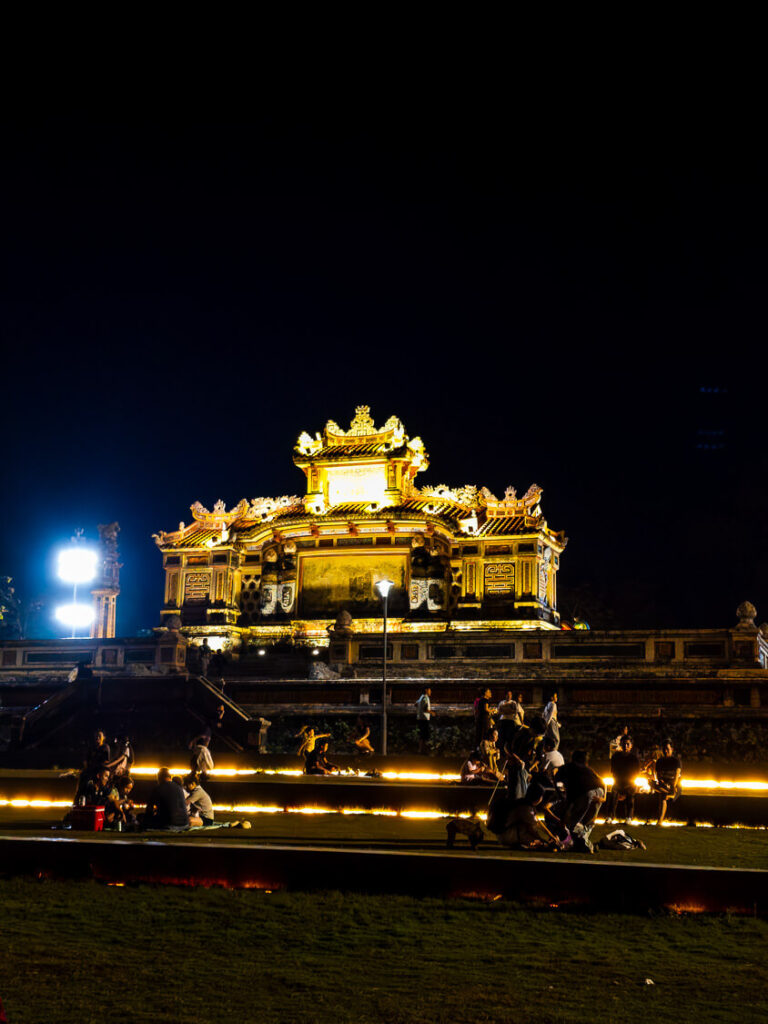
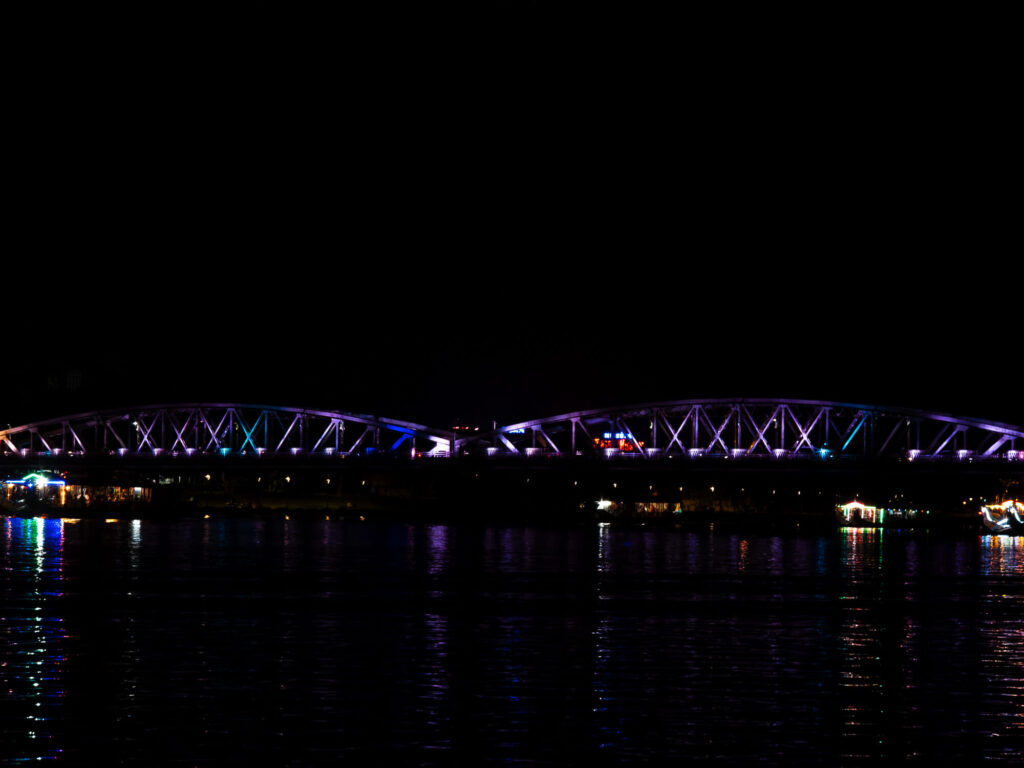
Dai Tuong Niem Chien is a memorial area beside the Perfume River. But what draws you back isn’t the monument. It’s what happens here after dark.
Every evening, locals come here. Families. Couples. Young people on scooters parked along the riverbank. Street food vendors setting up small stalls. The city does what Vietnamese cities do best at night, which is simply exist in a way that feels genuinely alive.
Nobody is performing for tourists here. Nobody is selling an experience. It’s just locals spending their evening beside the river the way they always have.
I went multiple times during my 5 days in Hue. Sat near the water. Watched the river reflect the city lights. Ate street food from a nearby vendor. And felt at home in a city I’d only just arrived in.
This is what this Hue travel guide for slow travel is really about. Staying long enough to stop being a stranger somewhere.
A 4-Day Hue Itinerary for Slow Travelers
Day 1: Arriving and Getting to Know the City
Arrive in Hue. Rent your scooter immediately. Spend the day without a specific destination. Ride through residential streets. Cross the Perfume River bridge and come back. Find a local café. Eat something unfamiliar. Let the city settle into you.
Evening: Dai Tuong Niem Chien at sunset. First visit. Get a feel for the river before it gets dark.
Day 2: The Imperial City and Hidden Neighborhoods
Morning: The Imperial City. Allow 2 to 3 hours. Don’t rush. Walk the grounds properly.
Afternoon: Ride through neighborhoods behind the center. Streets you haven’t seen yet. A local restaurant for lunch. Coffee somewhere without an English menu.
Evening: Back to the Perfume River. Different time of day, different light, different feeling.
Day 3: Ho Thuy Tien and Thuan An Beach
Early morning: Ride to Ho Thuy Tien. Arrive before 10 a.m. Spend 1 to 2 hours in the complex. Climb the dragon structure.
Late morning: Continue to Thuan An Beach. Around 25 minutes from the water park. Sit by the water. Have lunch at a small restaurant along the beach road.
Afternoon: Ride back slowly. Stop if the road offers something interesting.
Evening: Dai Tuong Niem Chien. Already feels familiar by day three.
Day 4: Rung Ru Cha Mangroves and Slow Departures
Early morning: Ride to Rung Ru Cha. Arrive before midday heat sets in. Book a boat through the channels. Spend the morning on the water.
Afternoon: Return to the city. Slow afternoon. Cafés. Wandering. No agenda.
Evening: Final Perfume River walk. Last look at a city that consistently gave more than expected.
What Makes Hue Different From Hanoi or Hoi An?
Hue moves at a different speed than almost anywhere else on the central Vietnam route.
Hanoi is relentless. Constant traffic. Constant noise. Energy that never switches off. Hue is calmer. The streets are quieter in the mornings. The cafés don’t aggressively seek your attention. The pace of daily life feels closer to how the city has always operated rather than how it has adapted for visitors.
Compared to Hoi An, the contrast is sharper. Hoi An is beautiful but it is a performance. The Old Town is carefully curated. The lanterns. The tailors. The restaurants. It is all designed for the visitor experience. Hue is not designed for anyone except the people who live here. And that, for a Hue travel guide for slow travel, is the whole point.
There is also the food. Hue is one of Vietnam’s great culinary cities. Bún bò Huế. Bánh bèo. Bánh khoái. Strong flavors that haven’t been simplified for Western palates. The street food scene in Hue rewards the traveler who eats where locals eat.
Conclusion
The Imperial City may be what brings travelers to Hue. But slowing down and going beyond it is what makes the city memorable.
The abandoned water park at 9 a.m. with no one else around. The drive to Thuan An Beach through flat lagoon landscape. Finding Rung Ru Cha without it being on anyone’s itinerary. The evenings at Dai Tuong Niem Chien where nothing was happening except local life, which turns out to be more than enough.
This Hue travel guide for slow travel exists because Hue deserves more time and more exploration than the standard two-day visit provides. The version of the city you find when you give it that time is worth every extra day.
Rent a scooter. Ride out. Stay longer than you planned.
Frequently Asked Questions About Hue
Is Hue worth visiting?
Yes. Particularly for slow travelers. Hue has a local atmosphere, an underrated food scene, and genuinely interesting places outside the city center that most visitors never reach. The standard two-day itinerary misses most of what makes it worthwhile. Give it at least four to five days.
How many days do you need in Hue?
For the typical tourist itinerary, two to three days covers the Imperial City and main temples. For the Hue travel guide for slow travel approach in this article, four to five days is the minimum. You need time to ride out to the beach, the abandoned water park, and the mangroves. Each deserves a half day at minimum.
Is Hue better than Hoi An?
Different rather than better. Hoi An is more visually polished and has a stronger food and café scene for visitors. Hue is quieter, less curated, and has a more authentic local atmosphere. For slow travelers specifically, Hue often feels more rewarding because it requires more effort and gives more back for that effort. For a quick visit, Hoi An is more immediately impressive.
Can you explore Hue without a scooter?
You can explore the city center without one. The Imperial City, local cafés, and riverside walks are all accessible on foot or by bicycle. But everything covered in this Hue travel guide for slow travel requires a scooter. Thuan An Beach, Rung Ru Cha, and Ho Thuy Tien are all outside the center and not practical by any other transport. Rent a scooter for at least three of your days.
What are the best hidden places in Hue?
The three best places most travelers miss in Hue are Ho Thuy Tien abandoned water park (50,000 VND / $2 entry), Rung Ru Cha mangrove forest (accessible by scooter from the city), and Thuan An Beach (25 minutes northeast of the center). None of these appear on standard tourist itineraries. All three require a scooter and a willingness to ride beyond the city center.
Planning the Rest of Your Vietnam Trip
If you’re building a bigger Vietnam itinerary, here’s what else I’ve written:
Getting From Ninh Binh to Hue: Complete Transport Guide 2026
Vietnam Itinerary for Slow Travel: My 50-Day Route Through the Real Vietnam
Vietnam Travel Budget: Exactly How Much I Spent in 50 Days
How to Spend One Day in Tam Coc, Vietnam (2026): A Relaxed Travel Itinerary
Ninh Binh Budget Travel Guide 2026: How I Spent 11 Days on $12 a Day


