Planning a trip to Sapa? This honest Sapa travel guide covers the best things to do, real trekking experiences, weather and fog realities, budgets, and where to stay. (CLICK HERE)
Table of Contents
This Sapa travel guide isn’t going to tell you that Sapa is always beautiful. Because it’s not. Half my week there was covered in fog so thick I couldn’t see the mountains everyone raves about.
But here’s the thing. Even with the fog. Even with the cold. Even with days where I couldn’t do anything I’d planned. Sapa was still one of the highlights of my Vietnam trip.
I spent 7 days in Sapa in January 2025. And this guide covers everything I learned. The trekking. The weather reality. The fog that changes all your plans. What it actually costs. And whether you should even go.
Quick Sapa Travel Guide:
- Best time to visit: October–November, March–April
- Ideal duration: 4–5 days
- Must-do: Trekking to Lao Chai & Ta Van
- Budget: $10–$20/day (budget travel)
- Getting there: Sleeper bus from Hanoi (6–7 hrs)
Sapa Travel Guide: What to Expect Before You Go
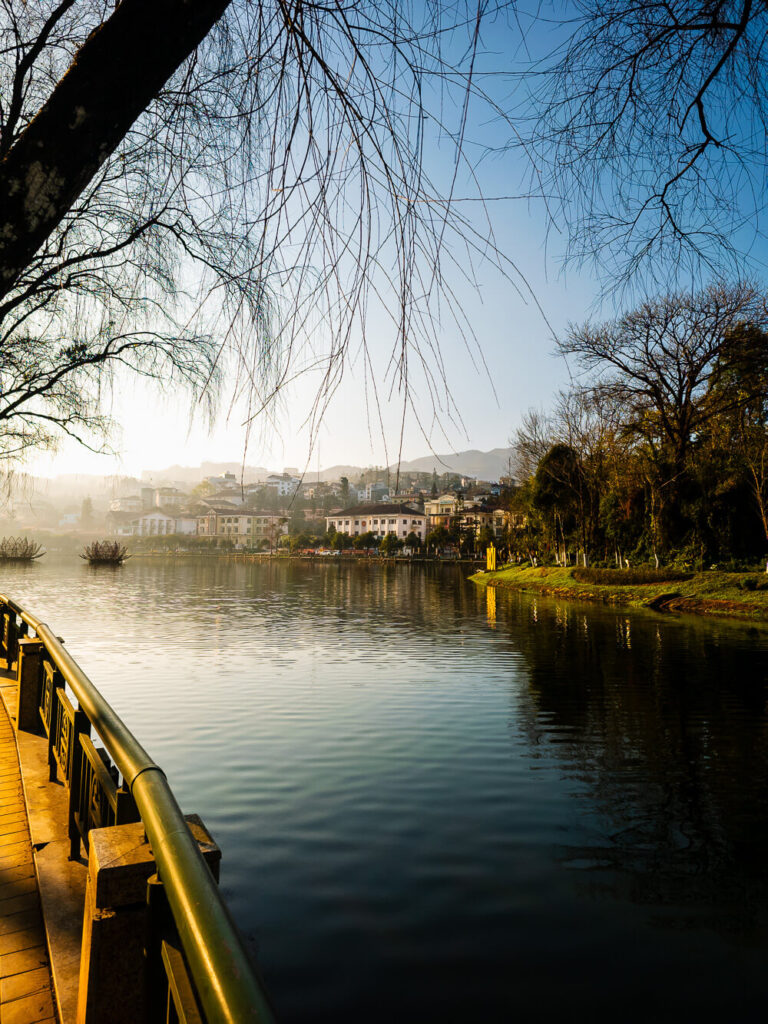
Let me set some expectations right away.
Sapa sits at around 1,500 meters elevation near the Chinese border. It’s known for mountains. Rice terraces stacked like stairs on hillsides. Trekking routes through local villages. And stunning views.
When the weather is clear.
I stayed 7 days. And out of those 7 days, maybe 3 had decent visibility. The rest? Fog. Thick, heavy fog that blocked everything. Some mornings I’d wake up and couldn’t see the building across the street.
The weather in Sapa is unpredictable. The fog is real. And your Instagram-perfect mountain views might not happen.
But if you can accept that? If you’re okay with flexible plans and backup days for when the weather doesn’t cooperate? Sapa is incredible.
The trekking alone makes it worth the trip. Walking through rice terraces. Seeing local life in hill tribe villages. Breathing mountain air. Those experiences don’t need perfect weather to be meaningful.
Just come prepared. Mentally and physically. Sapa rewards patience. It punishes rigid schedules.
My Experience in Sapa (7 Days in the Mountains)
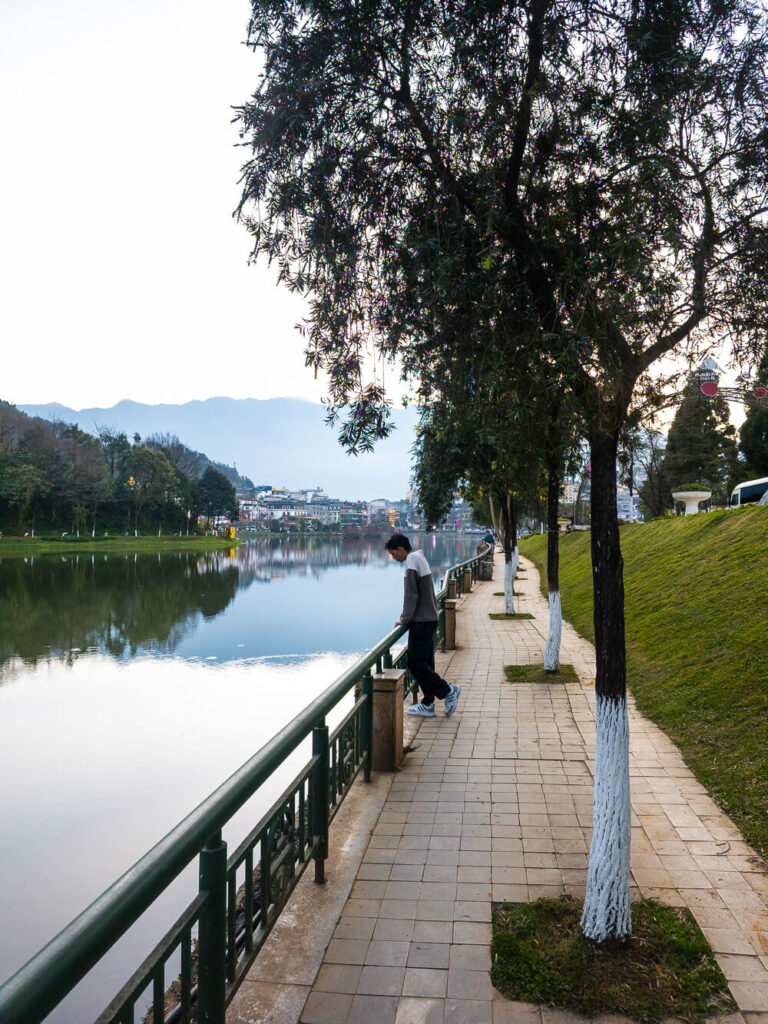
Here’s how my week actually broke down:
Day 1: Arrived from Hanoi on a night bus around 5 a.m. Checked into Saparis Station Hostel. Slept. Walked around town in the afternoon to get my bearings.
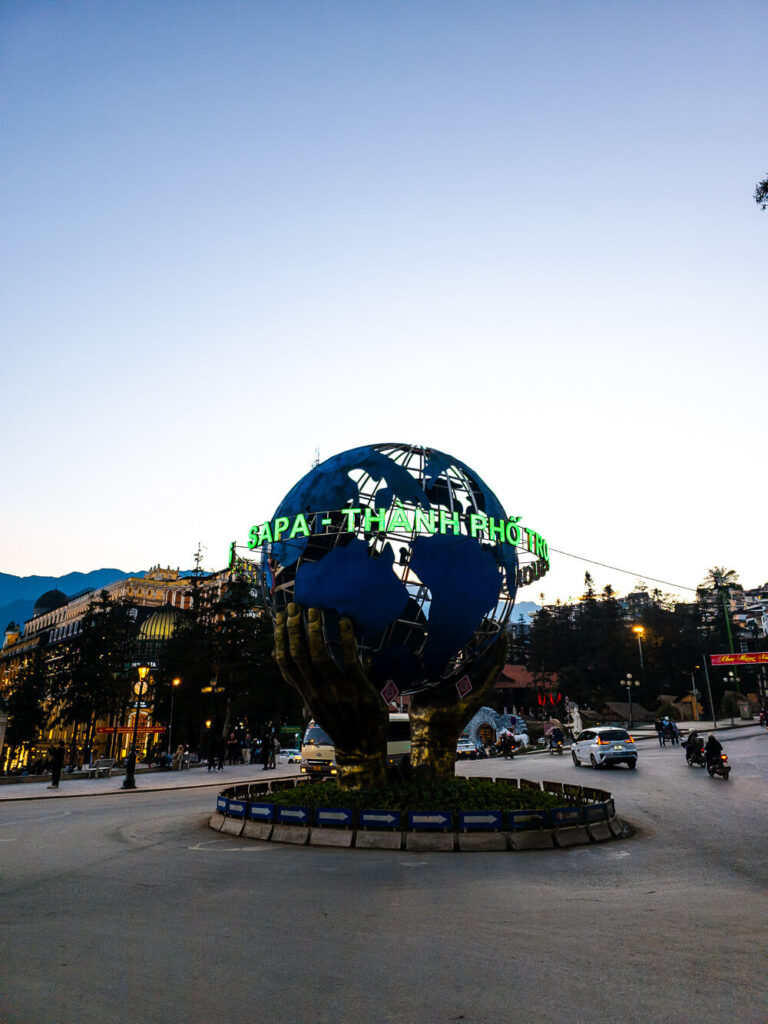
Day 2–3: Explored Sapa town. Walked around Sapa Lake every morning. Checked out the town center. Found the globe statue everyone takes photos with. Mapped out where cafés and restaurants were. Got used to the cold.
Day 4: Rest day. Worked from the hostel common area. Caught up on emails and writing. Did absolutely nothing tourism-related. Needed it.
Day 5: Trek to Lao Chai village. This was the highlight of the entire week. Weather cleared enough to see rice terraces. Local villages. Kids playing outside. Everything Sapa is supposed to be.
Day 6: Rented a manual scooter planning to ride to Ta Van village. Got 30 minutes into the ride. Fog rolled in so thick I couldn’t see the road. Freezing cold. Only wearing a hoodie. Turned back. Wasted rental money.
Day 7: Worked all day from a café. Packed my bag. Took the night bus back to Hanoi around 9 p.m.
That’s the reality. Not every day was perfect. Some days the weather ruined plans. But the good days made up for the foggy ones.
I’m saving the full detailed story for a separate article. This guide focuses on logistics. What to do. Where to stay. What to expect when you arrive.
Best Things to Do in Sapa
Trekking Through Villages (The Must-Do Sapa Trekking Experience)
This is why you come to Sapa. Not for the town. For the trekking.
I did the trek to Lao Chai village on day 5. It’s about 8–10 kilometers round trip depending on your exact route. Moderate difficulty. Nothing extreme. Just a lot of walking and some steep sections.
The Sapa trekking experience is incredible when the weather cooperates. You walk through terraced rice fields that climb the hillsides. Pass wooden houses where local families live. See water buffalo moving through paddies. Kids playing outside. Women working in the fields wearing traditional clothing.
It’s not touristy in a bad way. Yes, you’ll see other trekkers. But it still feels real. People aren’t performing for you. They’re just living. And you’re walking through their daily life.
Start early. 7 or 8 a.m. The light is better. It’s cooler. And you avoid the bigger tour groups that leave around 10 a.m.
Bring water. Wear good shoes. The paths get muddy. And some sections are steep enough that you’ll want grip.
You don’t need a guide for Lao Chai. The route is well-marked. Just follow the main path and other trekkers. But if you want to go deeper into more remote villages, a local guide helps. They cost around 300,000–500,000 VND ($12–$20) per day.
The trek took me about 4 hours total including stops. I sat by the rice terraces for a while. Watched the scenery. Didn’t rush. That’s the whole point.
This is the number one thing to do in Sapa. If you only do one activity, make it this.
Exploring Sapa Town
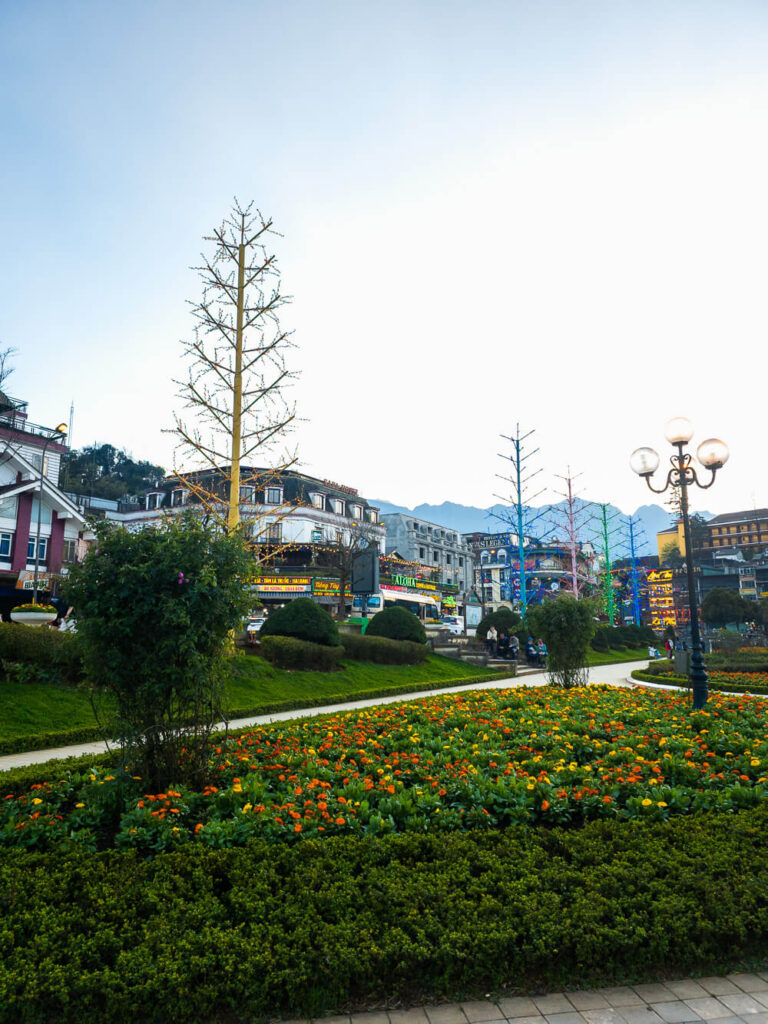
Sapa town itself is small. You can walk from one end to the other in 20 minutes.
Sapa Lake sits in the center. It’s nice for walking around. Especially in the mornings when it’s quiet and the fog is still lifting. There’s a path that loops the lake. Takes about 15 minutes. I walked it most mornings just to get out of the hostel.
The town center has the main market. Restaurants. Cafés. Small shops selling warm clothes and trekking gear. And the big globe statue that everyone photographs. It’s functional. But nothing exciting.
The streets have a mountain-town vibe. Buildings stacked on hillsides. Narrow roads. Scooters weaving through. Vendors everywhere. It feels touristy but not overwhelmingly so.
I spent a lot of time in cafés. Working. Drinking Vietnamese coffee. Watching the fog roll in and out. Sapa is good for that. Quiet. Slow. Perfect for remote work when the weather doesn’t let you trek.
Viewpoints & Mountain Views (When the Weather Lets You See Them)
Sapa has viewpoints scattered around town and on the trekking routes. Places where you can see the entire valley. Mountains stretching in every direction. Rice terraces cascading down hillsides.
When it’s clear.
I got maybe 2 days of decent views out of 7. The rest was fog. Some viewpoints I walked to and couldn’t see anything beyond 10 meters.
This is the reality of things to do in Sapa. Everything visual depends on weather. And the weather is unpredictable.
If you get clear days, the views are stunning. Worth every minute of the bus ride from Hanoi. If you don’t, you’re staring at white fog hoping it clears. Which it might. Or might not.
Don’t plan your entire trip around viewpoints. Plan around trekking. The villages. The cultural experience. The views are a bonus when they happen.
Other Things to Do in Sapa (If You Have More Time)
I didn’t personally do all of these. But they’re popular and worth mentioning if you have more than a week or better weather luck than I did.
Visit Fansipan Mountain
Fansipan is the highest peak in Vietnam. Around 3,100 meters. You can take a cable car to the top. It’s one of the longest cable car rides in the world.
Entry and cable car cost around 700,000 VND ($28). Not cheap for a budget traveler.
The views from the top are supposed to be incredible. Panoramic. You can see Vietnam, Laos, and China on a clear day. But only if it’s clear. If it’s foggy, you’re paying $28 to ride a cable car through clouds and see nothing.
I skipped it. The weather wasn’t good enough during my week to justify the cost. But if you get a clear day and you have the budget, people say it’s worth it.
Explore Cat Cat Village
Cat Cat is one of the closest villages to Sapa town. About 3 kilometers. You can walk there in 30–40 minutes or hire a motorbike taxi.
It’s more developed than Lao Chai. More touristy. There’s an entrance fee of 70,000 VND ($2.80). The village has traditional houses. Small waterfalls. Local handicrafts for sale.
It’s a good option if you want a shorter, easier walk than Lao Chai. But expect more tourists. More vendors selling things. Less authentic village feel.
Visit Ta Van Village
Ta Van is further out. About 15 kilometers from Sapa town. Known for rice fields and a peaceful setting. One of the more popular trekking routes for people who want to go beyond Lao Chai.
I tried to go here on day 6. Rented a manual scooter for 100,000 VND ($4) for the day. Started riding. Got about 30 minutes in. The fog rolled in so thick I couldn’t see the road ahead. Plus I was freezing. No proper jacket. Just a hoodie. Terrible planning on my part.
Turned back. Returned the scooter. Wasted the rental money. Lesson learned: Check weather before renting a scooter in Sapa. And bring a real jacket.
If the weather is good and you’re comfortable on a scooter or willing to trek the distance, Ta Van is worth it. Just don’t go in heavy fog like I stupidly did.
Sapa Cable Car Experience
There’s a cable car that goes from Sapa town to Fansipan. It’s the same one I mentioned earlier. Scenic. Long ride. Good views if the weather cooperates.
But again, weather-dependent. And expensive if you’re on a tight budget.
Visit Local Markets
Sapa has a main market in town. But there are also smaller markets in surrounding villages. Some happen on specific days of the week. Saturday and Sunday are big market days when people from nearby villages come to trade.
If you’re interested in local culture, traditional clothing, and seeing how people actually shop and barter, the markets are worth visiting.
I didn’t go out of my way for this. But I walked through the main market a few times. It’s real. Locals buying vegetables and meat. Not set up for tourists. Just daily life happening in front of you.
Sapa Travel Itineraries (For 3–4 Days & 5–6 Days)
Most itineraries online pack every hour with activities. That doesn’t work here. The fog will destroy a tight schedule.
Here are two realistic itineraries based on my time there. The golden rule for both? Treat them as a menu, not a strict schedule. If you wake up on Day 1 and the sky is clear, drop everything and do the Lao Chai trek immediately. Save the town exploration for the foggy days.
The 3 to 4-Day Itinerary (The “Fingers Crossed” Route)
If you only have a few days, you are gambling with the weather. Keep your plans loose and prioritize the trekking.
- Day 1: Arrival & Sapa Town. Arrive at 5 a.m. on the sleeper bus. Check into your hostel and sleep. In the afternoon, walk around Sapa Lake. Check out the Stone Church and the town square. Find a good local spot for phở and get used to the cold.
- Day 2: The Must-Do Trek. Assuming the weather is decent, do the Lao Chai village trek today. Start early (around 7 or 8 a.m.) to avoid the tour groups. Walk through the rice terraces. Watch the local life. Take your time. This will take about 4 hours.
- Day 3: The Backup Day (Or Fansipan). If Day 2 was ruined by fog, do the Lao Chai trek today. If you already hiked and the sky is clear, spend the $28 and take the cable car up Fansipan Mountain for the panoramic views. If it’s foggy again? Walk to Cat Cat village instead since it’s closer to town.
- Day 4: Markets & Departure. If you have a fourth day, use it to walk through the main market in the morning. Sit in a café. Drink Vietnamese coffee. Pack your bags and catch the night bus back to Hanoi.
The 5 to 6-Day Itinerary (The Realistic / Slow Travel Route)
This is the sweet spot. It gives you enough buffer days that a thick wall of fog won’t ruin your entire trip.
- Day 1: Arrival & Adjusting. Get off the night bus. Rest. Walk the town loop. Buy any warm clothes you stupidly forgot to pack (like I did).
- Day 2: Trek to Lao Chai. Your main trekking day. Walk the 8–10 kilometers through the terraces. Sit by the paddies. Don’t rush it.
- Day 3: Deeper Exploration. If the weather is perfectly clear, rent a scooter for 100,000 VND and ride out to Ta Van village. If there’s even a hint of heavy fog, skip the scooter. Hire a local guide for $12–$20 instead and trek deeper into the less touristy villages.
- Day 4: The Mandatory Fog Buffer. Expect bad weather at least once. Use this day to do nothing. Sit in a café. Work, read, or edit photos. Watch the fog roll through the streets. Sapa is perfect for this.
- Day 5: Fansipan or Cat Cat. Your last full day. If the mountains are visible, take the long cable car ride up Fansipan. If the visibility is zero, don’t waste the money. Walk down to Cat Cat village for a shorter, cultural (though slightly more touristy) experience.
- Day 6: Final Views & Night Bus. Walk around the lake one last time. Eat your favorite cheap local meal. Catch the evening sleeper bus back to Hanoi.
Sapa Weather & Best Time to Visit: The Truth About Sapa Fog
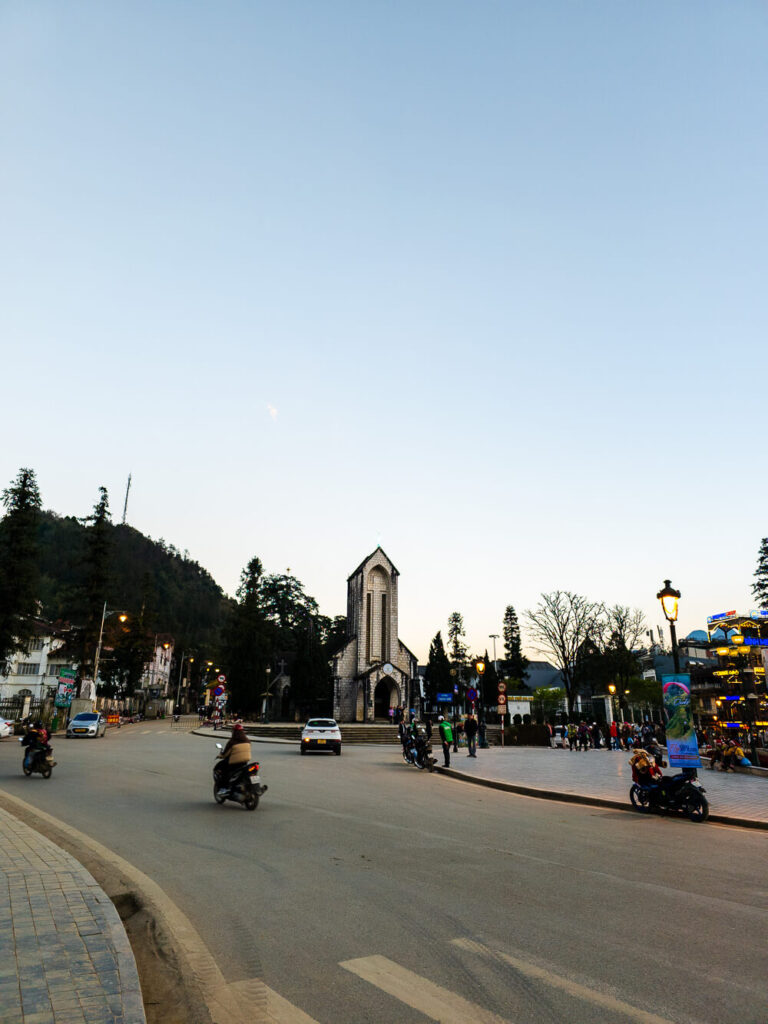
Let’s talk about the weather. Because this is the most important part of planning a Sapa trip.
Best time to visit Sapa according to most guides: September to November or March to May. Mild temperatures. Clear skies. Good trekking weather.
Reality: Weather in Sapa is unpredictable year-round. You can’t guarantee anything.
I went in February. Winter. And here’s what that actually meant:
Temperature: 10–15°C (50–59°F) during the day. Colder at night. Around 5–10°C (41–50°F). You need a jacket. Long pants. Maybe even a beanie and gloves. This isn’t tropical Vietnam. This is mountain weather.
Sapa weather fog: Constant. Some days it lifted by midday. Some days it didn’t. The fog is thick. Heavy. It blocks everything. Mountains. Views. Even buildings 20 meters away. Some mornings I woke up and thought it was nighttime because the fog was so dense.
Rain: I didn’t get much rain in February. But February is the dry season. If you go during monsoon season (May–September), expect rain. Lots of it. Trails get muddy. Trekking becomes harder. Visibility drops even more.
Clear days: Out of 7 days, I got maybe 3 with decent visibility. And even those had fog in the mornings that cleared by afternoon. The fog doesn’t follow a schedule. It just happens.
Here’s my honest take on the best time to visit Sapa:
October to November: Post-monsoon. Rice terraces are still green from the rains. Less rain than monsoon season. Better visibility overall. Temperatures are mild. This is probably the best window if you can time it.
March to April: Pre-monsoon. Warming up but not too hot yet. Flowers blooming. Decent weather overall. Good trekking conditions.
December to February: Cold. Foggy. But fewer tourists. Quieter trails. Good if you don’t mind cold weather and you’re okay with flexibility. This is when I went. It worked. But you need patience.
May to September: Monsoon season. Rain. Mud. Slippery trails. Low visibility. Skip this unless you love rain and don’t care about mountain views.
The truth? You can’t predict Sapa weather. Even in the “best” months, you might get fog. Even in the “worst” months, you might get clear days.
So plan for flexibility. Don’t lock yourself into “I must see Fansipan on Tuesday.” Give yourself buffer days. Accept that some days will be foggy. And when the weather clears, drop everything and go trek.
How Many Days Do You Need in Sapa?
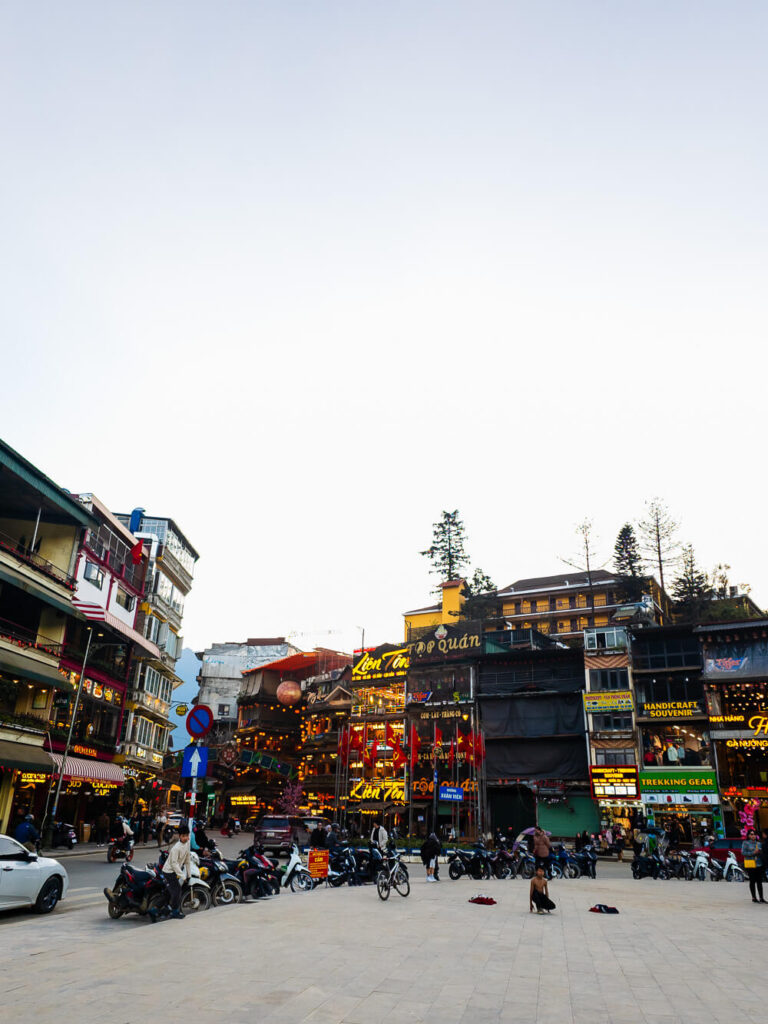
How many days in Sapa depends on what you want and how much weather buffer you can afford.
2–3 days (Quick Visit): Enough to do one trek. See the town. Get a feel for Sapa. But if the weather is bad for 2 days straight, you’ve wasted your trip. This is the bare minimum. Not ideal.
4–5 days (Relaxed Pace): Better. You have time for multiple treks. Rest days. Weather buffer. If it’s foggy on day 2, you still have day 3, 4, 5 to try again. This is the sweet spot for most travelers who have limited time.
7 days (Slow Travel): What I did. Overkill for some people. Perfect for others. I worked remotely. So I needed the extra days anyway. Plus the weather buffer meant I didn’t stress when fog ruined my plans. I just waited it out. Read. Worked. Rested. Then tried again when conditions improved.
My recommendation: Plan for at least 4 days. That gives you 2 potential trekking days. 1 rest day. And 1 buffer for bad weather. If you only have 2–3 days, you’re gambling with weather. And in Sapa, the weather usually wins.
Getting to Sapa (From Hanoi)
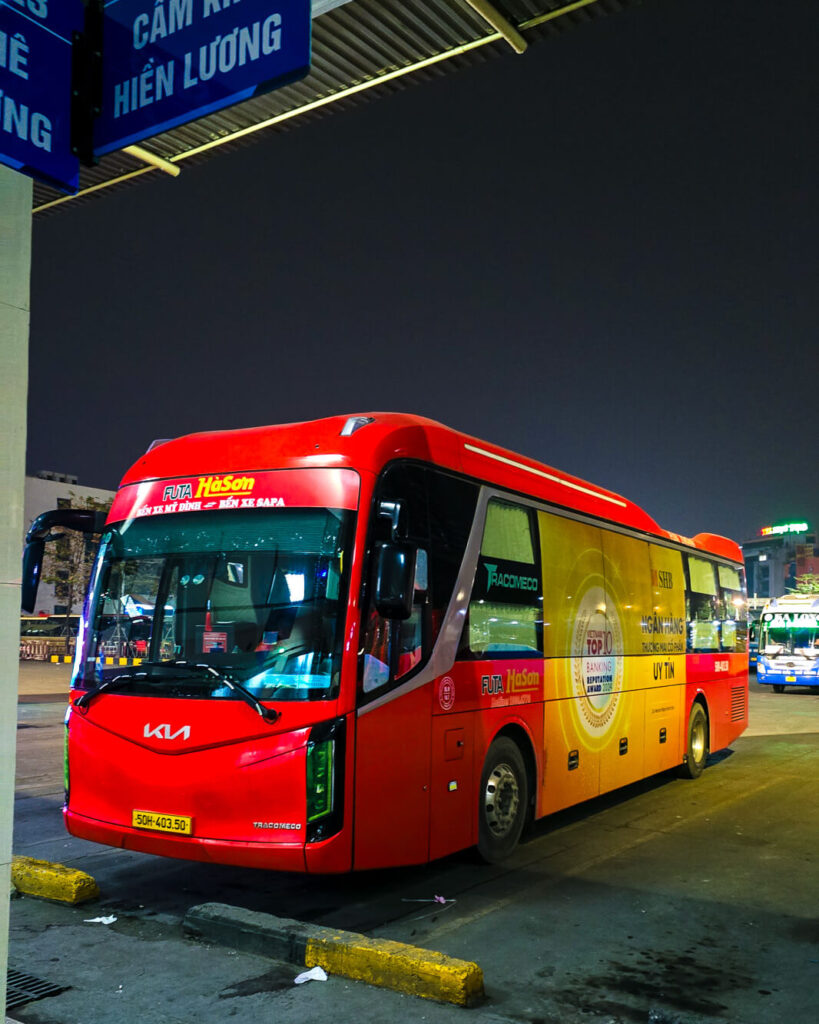
Almost everyone gets to Sapa from Hanoi. It’s the closest major city and the main transport hub for northern Vietnam.
I took a sleeper bus with FUTA HA SON Company. I booked it on Vexere app
Cost 330,000 VND ($13.20) one way. Night bus. Left Hanoi around 9 p.m. Arrived in Sapa around 5 a.m.
Travel time: 6–7 hours depending on traffic and how many stops the bus makes.
Comfort level: It’s a sleeper bus. You get a bunk. Narrow. Can’t sit up. Just lie down and try to sleep. Blanket provided. Small pillow too. It’s not comfortable. Your legs will cramp. Your back will ache. But it works. And it saves you a night of accommodation which matters on a budget.
The bus drops you in Sapa town center near the market. From there you walk to your hostel. Most places are within 10–15 minutes walking distance. I walked to Saparis Station Hostel at 5:30 a.m. in the dark. Wasn’t fun. But manageable.
You can also take a train from Hanoi to Lao Cai (the nearest train station to Sapa). Then take a bus or taxi from Lao Cai to Sapa (another 1 hour). But the direct sleeper bus is easier and cheaper. I’d recommend the bus.
Getting Around Sapa
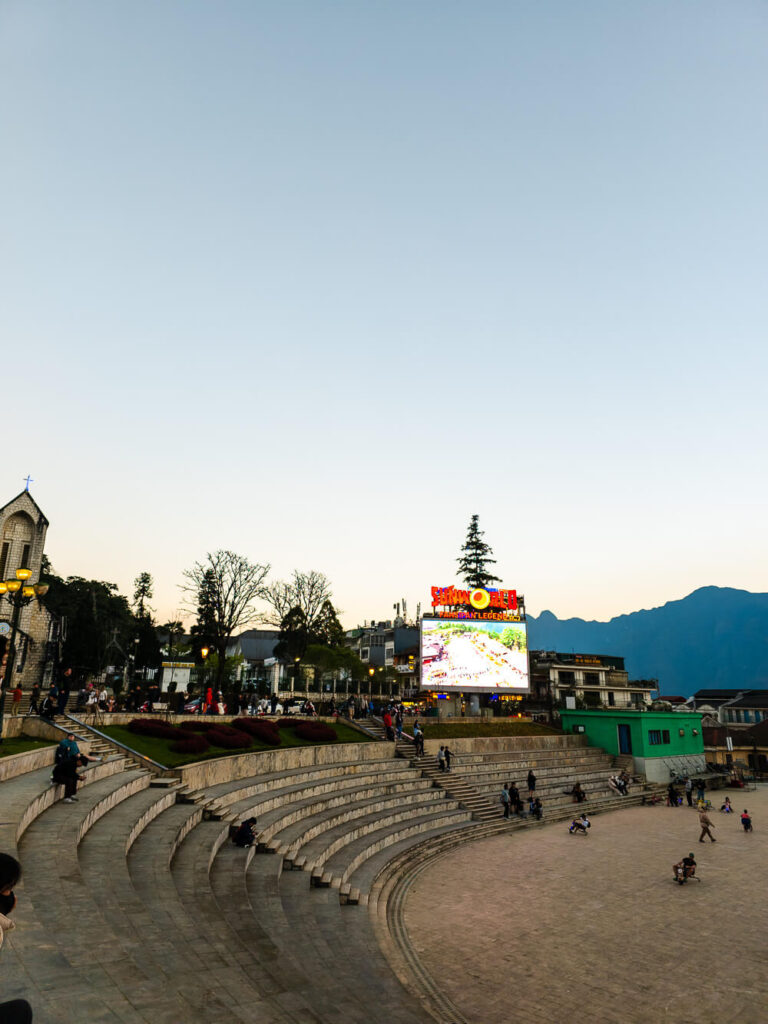
Walking: Sapa town is small. You can walk everywhere. The lake. The market. Cafés. Restaurants. The trekking trail starting points. All within 20 minutes walking distance from each other.
Scooter rental: Available. Manual scooters cost around 100,000–120,000 VND ($4–$5) per day. Automatic scooters cost more, around 150,000 VND ($6) per day.
But here’s the reality: Scooters in Sapa are tricky. The roads are steep. Winding. Fog is common. If you’re not experienced on a scooter, don’t rent one here. And even if you are experienced, check the weather first.
I rented a manual scooter once. Tried going to Ta Van. Fog rolled in within 30 minutes. Couldn’t see. Turned back. Wasted money. Learned my lesson.
For trekking: You walk. That’s it. The villages aren’t accessible by scooter unless you’re very confident and the weather is perfect. Most people just walk the routes. It’s safer. And you see more.
Cost of Travel in Sapa
Here’s what I actually spent during my 7 days in Sapa.
Accommodation: I stayed at Saparis Station Hostel for 6 nights. Cost 550,000 VND total ($22, which works out to about $3.60 per night). Free breakfast included every morning. Clean beds. Good location in the town center. WiFi worked well for remote work.
One important thing to note: They don’t have lockers in the rooms. So keep valuables with you or ask the front desk if they have storage. I kept my laptop and phone with me at all times.
Food: I ate at local restaurants only. Small spots where locals eat. Plastic stools. No English menus. Each dish cost around 40,000–50,000 VND ($1.60–$2).
I ate bánh mì for breakfast sometimes when the hostel breakfast wasn’t filling enough. Chicken phở for lunch. Bún chả for dinner. Fried rice when I wanted something different. All cheap. All good. I never spent more than 50,000 VND on a single meal.
Daily food cost: Around 120,000–150,000 VND ($4.80–$6) for two meals plus snacks or coffee.
Transport within Sapa: Minimal. I walked everywhere except that one failed scooter rental to Ta Van. Total transport cost within Sapa: 100,000 VND ($4) for the wasted scooter day.
Total daily cost in Sapa: Around 250,000–300,000 VND per day ($10–$12). This includes accommodation, food, and occasional expenses.
For 7 days total: Roughly 1,750,000–2,100,000 VND ($70–$85).
Add the bus from Hanoi (330,000 VND / $13.20 each way, so 660,000 VND round trip) and you’re looking at around 2,400,000–2,800,000 VND ($95–$112) for the entire Sapa portion of your trip.
That’s incredibly affordable for a week in the mountains. Cheaper than most people spend on 3 days in a European hostel.
I’ll break down my full Vietnam travel budget in a separate comprehensive guide.
Where to Stay in Sapa
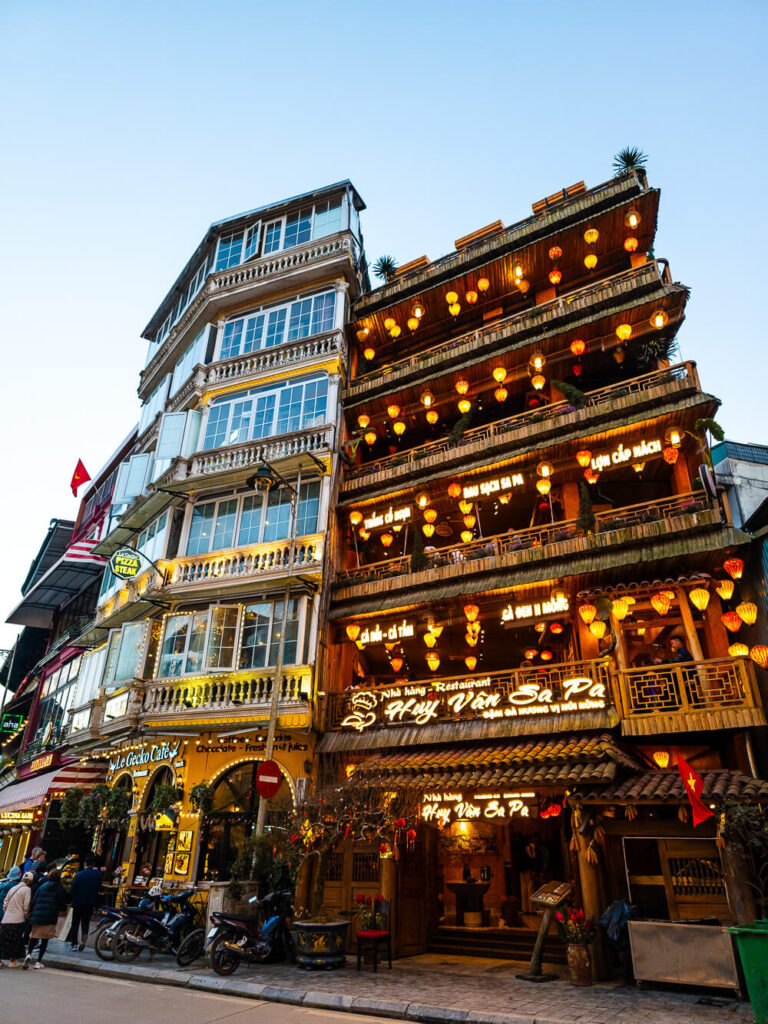
You have two main options for accommodation.
Sapa town (Where I stayed): Convenient. Everything is close. Restaurants. Cafés. Market. Trekking routes start from town. Easy access to everything. Most hostels and guesthouses are here. WiFi is reliable. You can work remotely if needed.
Good for: People who want convenience. Digital nomads who need reliable internet. Solo travelers who want to meet other backpackers in hostel common areas. Anyone doing short trips (2–4 days) who wants to maximize time.
I stayed at Saparis Station Hostel. It worked perfectly for my needs. Central location. Free breakfast. Clean. Around 90,000 VND per night ($3.60). Only downside: no lockers in rooms. So keep valuables with you.
Villages (Like Ta Van or Lao Chai): Peaceful. Quiet. You’re staying in a local homestay. Surrounded by rice fields. More immersive cultural experience. You wake up to mountain views and roosters instead of scooter traffic.
Good for: People who want to disconnect completely. Trekkers who want to start hikes early directly from the village without walking from town. Anyone okay with basic facilities, limited WiFi, and squat toilets.
Homestays cost around 100,000–200,000 VND ($4–$8) per night. Usually includes meals cooked by the host family.
My recommendation: Stay in Sapa town for your first visit. It’s easier. You have options for food and activities. And you’re not stuck in a village if the weather turns bad and you can’t trek. If you come back to Sapa again, try a homestay for the cultural experience.
Important Tips Before Visiting Sapa
Check the weather before planning daily activities. But don’t trust it completely. Weather in Sapa changes fast. Use forecasts as a rough guide. Not gospel.
Fog can and will ruin your plans. Accept this before you arrive. Have backup activities ready. Work. Read. Sit in a café. Write. Don’t stress when visibility drops to zero. It’s just part of Sapa.
Pack warm clothes. Jacket. Long pants. Warm socks. Beanie if you have one. Even in “warmer” months it gets cold in the mountains. January was freezing in the mornings and evenings. I wasn’t prepared. I spent the first two days shivering. Learn from my mistake.
Don’t over-plan your days. The weather will change your plans anyway. Just have a rough idea of what you want to do. Then adapt day by day based on conditions.
Bring cash. Not all places take cards. Especially smaller restaurants and homestays. ATMs exist in Sapa town center. Withdraw enough for a few days. I usually carried 1,000,000–1,500,000 VND ($40–$60) in cash.
Book accommodation in advance if you’re going during peak season (September–November or around Tet holiday). The town is small. Good hostels fill up fast. I went in January (low season) and found a place easily. But peak season is different.
Start treks early in the morning. The light is better for photos. It’s cooler for walking. And you avoid the tour groups that leave around 10 a.m.
My Honest Take on Sapa
Sapa was one of the highlights of my entire Vietnam trip. Even with the fog. Even with the cold. Even with the wasted scooter rental day and plans that fell apart.
The Lao Chai trek alone made the whole week worth it. Walking through rice terraces. Seeing local villages where people actually live and work. Breathing mountain air. That experience stuck with me more than most things I did in Vietnam.
But Sapa isn’t always perfect. The weather is genuinely frustrating. The fog blocks views you traveled all this way to see. And if you only have 2–3 days and the weather doesn’t cooperate, you’ll leave disappointed. I’ve heard stories of people spending 3 days in Sapa and seeing nothing but fog. That’s a real risk.
So here’s my advice: Give Sapa time. At least 4 days. Preferably a week if your schedule allows. Don’t rush it. Don’t expect perfect weather every day. And when the fog clears, drop everything you’re doing and go outside immediately.
Sapa rewards patience. It punishes rigid schedules. And if you approach it with flexibility, you’ll love it.
Conclusion
Sapa is beautiful. The rice terraces are real. The mountain villages are authentic. The trekking is incredible.
But only if the weather lets you see it.
That’s the harsh reality of this Sapa travel guide. You can plan the perfect trip. Book the best hostel. Schedule the ideal treks. Research everything. And then wake up to fog that blocks everything.
But if you accept that? If you build in buffer days and don’t stress when plans change? If you can sit in a café on a foggy day and call it part of the experience? Sapa becomes one of the best parts of Vietnam.
Go. Trek through the rice terraces when you can. Eat cheap phở. Work from mountain cafés. And hope for clear weather.
And when the fog clears, even for just one afternoon, you’ll understand why everyone talks about Sapa.
Sapa Travel Guide FAQs
Is Sapa worth visiting if it’s foggy?
Yes. The fog is frustrating. But the Sapa trekking experience, the local villages, and the mountain vibe are still worth it. Just adjust your expectations. Don’t expect perfect views every day. Focus on the cultural experience and the trekking itself rather than just the views.
Do I need a guide for a Sapa trekking experience?
No for basic routes like Lao Chai. The path is clear and well-traveled. Just follow other trekkers and you’ll be fine. But yes for deeper village treks or if you want detailed cultural context and history. Local guides cost 300,000–500,000 VND ($12–$20) per day and can take you to more remote areas safely.
Can you do a day trip to Sapa from Hanoi?
Technically yes. But it’s a terrible idea. The bus from Hanoi takes 6–7 hours each way. You’d spend 12–14 hours traveling for maybe 4–5 hours actually in Sapa. Not worth it at all. Stay at least 2 nights. Ideally 4 or more. Sapa deserves time.
What should I pack for Sapa?
Warm jacket (essential). Long pants. Good walking shoes with grip for muddy trails. Rain jacket if visiting during monsoon season (May–September). Layers because temperature changes throughout the day. Cash (not everywhere takes cards). Water bottle for trekking. Sunscreen even in winter because you’re at high elevation.
Is Sapa safe for solo travelers?
Yes. I went solo and felt completely safe the entire time. The town is small. People are friendly and helpful. Trekking routes are well-traveled during daylight hours. Just use common sense. Don’t trek alone to very remote villages at night. Keep valuables secure (especially since hostels might not have lockers). Standard solo travel precautions apply.
How much does it cost to visit Sapa for a week?
Around 2,400,000–2,800,000 VND ($95–$112) total including round-trip transport from Hanoi. Daily costs in Sapa are 250,000–300,000 VND ($10–$12) for accommodation, food, and occasional transport. This is budget backpacker style (hostels, street food, walking everywhere). You can spend more if you want nicer hotels and restaurants.
What’s the best time to visit Sapa?
October–November for post-monsoon green terraces and clearer skies. March–April for pre-monsoon spring weather. Avoid May–September (monsoon/heavy rain). December–February is cold but has fewer tourists. But honestly, weather is unpredictable year-round. No season guarantees clear skies. Plan for flexibility regardless of when you go.
Planning Your Vietnam Trip?
If you’re building a bigger Vietnam itinerary, here’s what else I’ve written that might help: