Forget the tourist checklist. Discover what living in Hanoi for a week is really like, from daily phở routines and cafe work to navigating the Old Quarter. (CLICK HERE)
Table of Contents
Living in Hanoi for a week taught me something most travel guides won’t tell you. You don’t need to see everything to experience a place deeply.
I woke up on day three and realized I hadn’t done anything. No temples. No museums. No tour of the Old Quarter. Nothing that would make it into a typical travel blog’s “best of Hanoi” list.
What I had done was walk around Hoàn Kiếm Lake four times. Eat phở three mornings in a row from the same street vendor. Sit in cafés for hours working on my laptop. And cross the street without dying.
This is what living in Hanoi for a week actually looks like. Not the highlight reel. The real version. Where most days feel slow. Where productivity happens in random cafés. Where the best moments aren’t planned.
Living in Hanoi for a Week: Quick Summary
What to expect when living in Hanoi for a week:
- Daily routine centers around Hoàn Kiếm Lake and the Old Quarter
- Budget: 250,000–300,000 VND ($10–$12) per day for accommodation, food, and transport
- Best for digital nomads and slow travelers working remotely
- Mornings are calm, evenings are chaotic
- Street food costs 25,000–40,000 VND ($1–$1.60) per meal
- Café culture is perfect for remote work (30,000–50,000 VND / $1.20–$2 per coffee)
- You’ll walk the same routes daily and that’s exactly the point
- Not ideal for travelers who need packed itineraries or constant sightseeing
What It’s Like Living in Hanoi for a Week
This isn’t a typical travel guide. I’m not telling you what to see or where to go. I already wrote that in my Hanoi travel guide. This is about the real experience of living in Hanoi for a week. Working. Existing. Letting the city unfold at its own pace.
I stayed in Hanoi for seven days initially. Then came back for three more days after visiting Sapa.
The first stay was about settling into Vietnam. Finding my rhythm. Working remotely from cafés. Using Hanoi as a base before heading north.
The second stay was different. I arrived just before Tet celebrations started. The city was preparing. Getting dressed up. And I already knew where things were. Which streets to avoid. Which café had the fastest WiFi. It felt less like visiting and more like returning.
What it’s like to live in Hanoi depends entirely on how you approach it. If you’re rushing to see ten things a day, Hanoi will stress you out. The chaos. The noise. The lack of obvious “attractions.” You’ll feel like you’re missing something.
But if you let go of the checklist? Hanoi works. It becomes a place you actually live in for a week. Not a place you conquer.
This is slow travel Hanoi. Where the goal isn’t to see everything. It’s to feel something. And that shift changes everything.
First Impressions of Hanoi
Day one was overwhelming.
I stepped out of the train station and immediately got hit by the noise. Motorbikes everywhere. Horns. Voices. Vendors calling out. The kind of chaos that makes you question whether you made the right decision coming here.
The Old Quarter felt like a maze designed to confuse tourists. Narrow streets. No logic to the layout. Sidewalks packed with parked scooters. I got lost three times trying to find my hostel. And it was only 500 meters from the station.
Crossing the street was terrifying. Motorbikes don’t stop. They just go around you. And you’re supposed to just walk into traffic and trust they’ll avoid you. It felt wrong. Like a game I didn’t know the rules to.
But by day two, something shifted. The noise became background. I stopped flinching at motorbikes. And crossing the street became automatic. Walk slow. Don’t stop. They go around you. Simple.
By day three, I had a routine. Breakfast at the same street stall. Morning walk around the lake. Afternoon in a café. Evening wandering through the Old Quarter. Hanoi stopped feeling foreign. It started feeling normal.
That’s the Hanoi travel experience. It doesn’t welcome you immediately. But once it does, it sticks.
My Daily Routine in Hanoi (Digital Nomad Life)
Living in Hanoi as a digital nomad is easy. The infrastructure works. The WiFi is good. The cost is low. And the café culture is perfect for remote work.
Here’s what my days looked like.
Mornings Around Hoàn Kiếm Lake
I woke up around 7 or 8 a.m. No alarm. Just when my body felt ready.
First thing I did was walk to Hoàn Kiếm Lake. It’s a 10-minute walk from most hostels in the Old Quarter. And mornings at the lake are the best part of Hanoi.
The energy is calm. Locals doing tai chi. People walking. Vendors setting up breakfast stalls. Motorbikes passing by but not aggressively. Everything feels slower.
I’d walk the full loop. Takes about 20 minutes at a relaxed pace. Sometimes I’d stop and sit on a bench. Watch people. Do nothing. Just exist for a while before the day started.
Then I’d grab breakfast. Usually phở from a street vendor near the lake. 40,000 VND ($1.60). Plastic stool. No English menu. Just point and eat. The same vendor recognized me by day four. She’d smile and start making my bowl before I even sat down.
That small recognition, that shift from tourist to regular customer, is what makes living somewhere different from visiting.
Working from Cafés in Hanoi
After breakfast I’d find a café. Hanoi has cafés everywhere. Modern ones with air conditioning. Tiny sidewalk setups with plastic stools. All of them work.
I’d pick one. Order an iced coffee. 30,000 to 50,000 VND ($1.20 to $2). Open my laptop. And work for three to four hours.
The Hanoi digital nomad life is exactly what you’d expect. Good WiFi. Cheap coffee. Quiet corners where you can focus. And enough ambient noise that you don’t feel isolated.
Some days I’d stay in the same café all afternoon. Other days I’d move after a few hours. Try a different spot. Different vibe. It didn’t matter. The goal was just to get work done without being stuck in a hostel room.
And honestly? Working from cafés in Hanoi felt more productive than working from home ever did. Maybe it was the change of environment. Maybe it was knowing I could take a break and walk through the Old Quarter. Either way, it worked.
Evenings in the Old Quarter
Evenings I stopped working. Closed the laptop. And just walked.
The Old Quarter at night is alive. Street food stalls everywhere. Locals sitting on plastic stools eating. Tourists wandering around looking slightly lost. Motorbikes weaving through crowds. It’s chaotic but in a way that feels energetic instead of stressful.
I’d walk with no destination. Turn down random streets. Stop if something looked interesting. A food stall. A quiet alley. A small temple tucked between buildings.
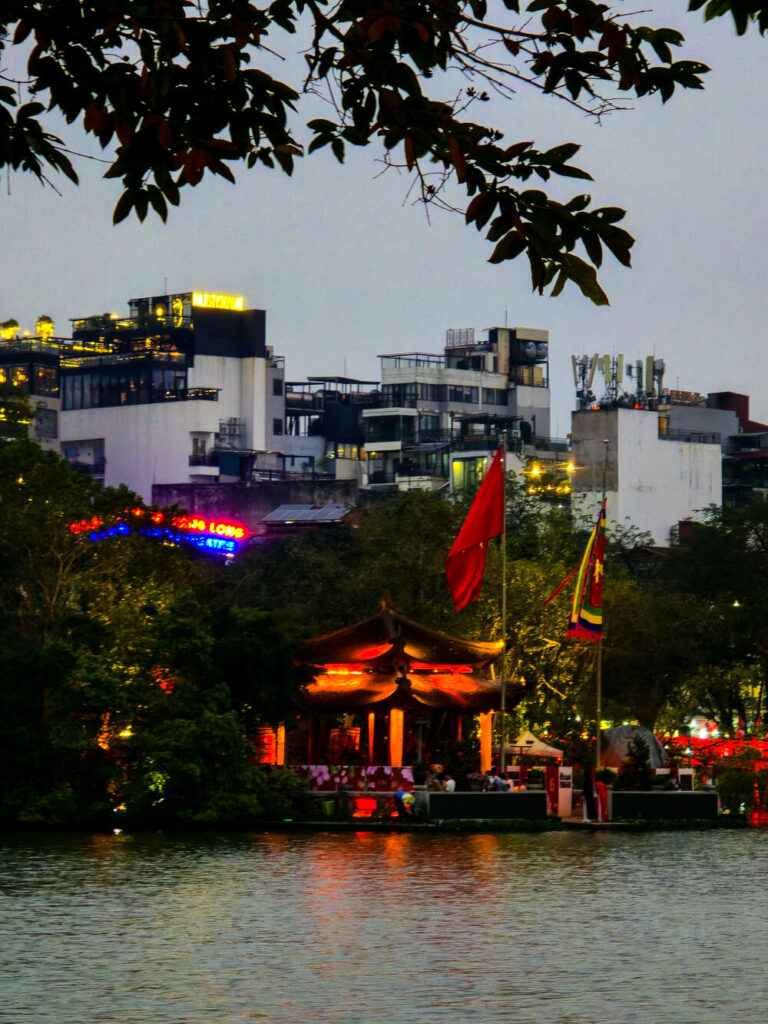
Most nights I’d end up back at Hoàn Kiếm Lake. It’s lit up in the evenings. People hanging out. Couples walking. Families eating ice cream. The energy is completely different from the morning but equally good.
Then I’d grab dinner. Another street stall. Bánh mì or bún chả. 25,000 to 40,000 VND ($1 to $1.60). Eat. Walk back to the hostel. Sleep. Repeat.
That was the routine. And it was exactly what I needed.
Life Around Hoàn Kiếm Lake
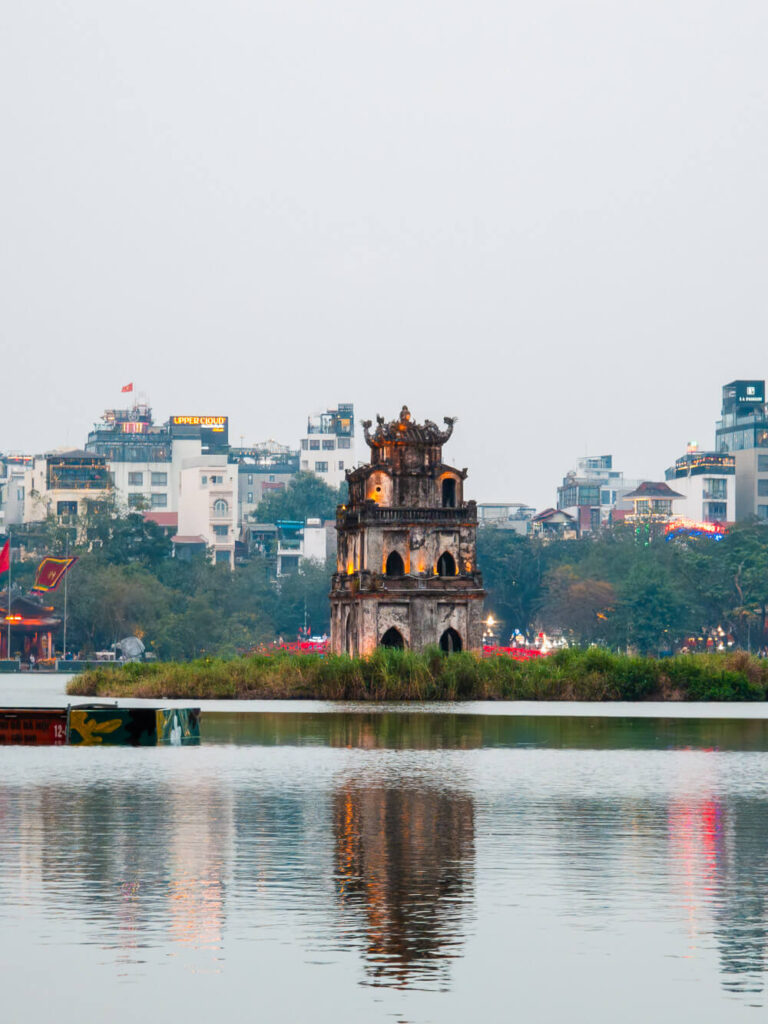
Hoàn Kiếm Lake is the center of everything in Hanoi. If you’re staying in the Old Quarter, you’ll end up here. Multiple times. Every single day.
It’s not a big lake. You can walk the full loop in 20 minutes. But it’s the heartbeat of the city. The place where everything converges.
The lake is surrounded by a walking path. Trees. Benches. Small gardens. And it’s always busy. Morning. Afternoon. Evening. Night. People are always there.
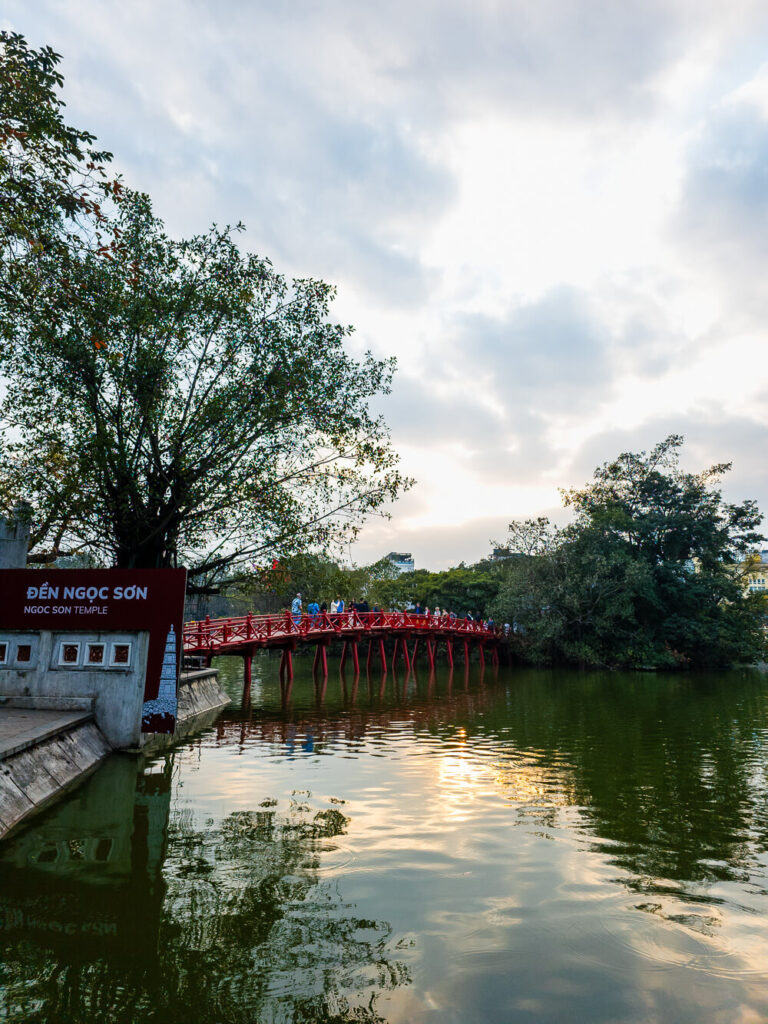
On the lake itself sits Ngoc Son Temple. You reach it by crossing the red Huc Bridge. The bridge is beautiful. Bright red. Curved. The kind of thing that looks like it was designed for photos. The temple entry costs 30,000 VND ($1.20). I went once. It’s small. Peaceful. Worth seeing but not something you need to visit multiple times.
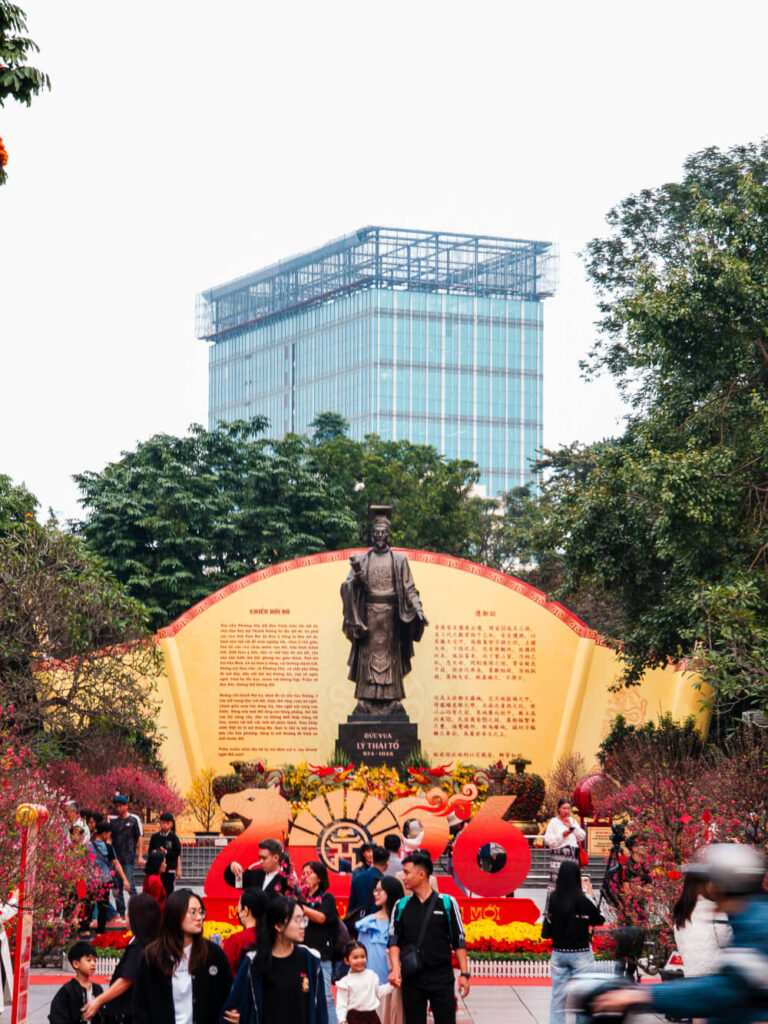
Near the lake is a statue of Chiêu Dời Đỏ surrounded by a garden. The garden is quiet. Well-maintained. A good place to sit if you want a break from the crowds.
But the real value of the lake isn’t the temple or the statue. It’s just being there. Watching locals hang out. Seeing the same vendors every day. Walking the loop and noticing something different each time. A new food stall. A group of students. An old man feeding fish.
That repetition, that familiarity, is what turns a week in Hanoi into living there instead of just visiting.
Hanoi Just Before Tet (A Different Side of the City)
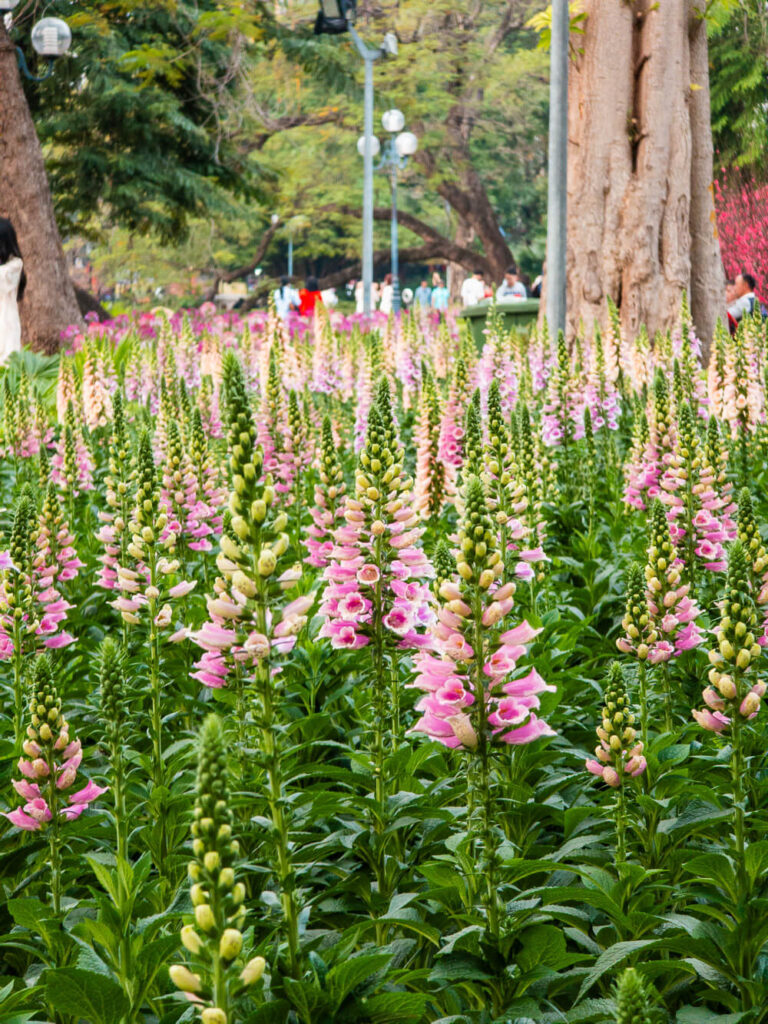
When I came back to Hanoi for three days after Sapa, I arrived just before Tet celebrations officially started.
Tet is the Vietnamese New Year. And Hanoi in the days leading up to Tet is completely different from regular Hanoi.
The city was preparing. Decorations going up everywhere. Red lanterns. Flowers. Banners. The whole place felt festive in a way it didn’t during my first week.
Around Hoàn Kiếm Lake, people were already out in their best clothes. Especially young women in áo dài, the traditional Vietnamese dress. Families taking photos before the main celebrations started. Couples posing by the lake. Professional photographers setting up shoots.
The energy was lighter. More celebratory. Even the chaos felt less aggressive.
But I could already see Tet starting to shut things down. Some restaurants were closing. Shops putting up notices about holiday closures. Transport schedules changing. If you’re in Hanoi during Tet, you need to plan ahead. Stock up on food. Book accommodation early. And be prepared to adapt.
I left for Ninh Binh before Tet fully hit. But even those few days of preparation felt special. Like I was seeing a side of Hanoi that most travelers miss.
The pre-Tet atmosphere is worth experiencing. The city dressed up. People excited. Everything building toward something bigger. And if you can time your trip to catch it, do.
Food in Hanoi (From My Experience)
I didn’t explore Hanoi’s food scene deeply. I just ate.
Breakfast was always phở. 40,000 VND ($1.60). Same vendor near the lake. By day four she knew my order. That routine felt good.
Lunch was usually bánh mì. 25,000 VND ($1). Quick. Easy. I’d grab it from a street vendor and eat while walking.
Dinner varied. Bún chả. Phở again. Sometimes just bánh mì if I wasn’t very hungry. All from street stalls. Plastic stools. No English menus. Just pointing and hoping.
The food in Hanoi is cheap. Really cheap. And good. I never had a bad meal. Even when I had no idea what I was ordering.
Street food is everywhere. You don’t need to search for it. You just walk and it’s there. Vendors set up on corners. In alleys. Next to the lake. And the turnover is high which means the food is fresh.
I ate the same dishes multiple times. Not because I was limited. But because I found what I liked and stuck with it. That’s the beauty of staying somewhere for a week. You don’t have to try everything. You can just eat what works.
Chaos vs Comfort in Hanoi

Hanoi is chaotic. There’s no avoiding that. The traffic. The noise. The crowds. It never stops.
But after a few days, the chaos becomes comfortable. You learn to navigate it. You know which streets are quieter. Which times of day are less crowded. Which cafés have space to sit and work.
The Old Quarter is loud. Always. Motorbikes pass by constantly. Vendors call out. Construction happens at random hours. If you need silence, you won’t find it here.
But the noise is part of the rhythm. It becomes background. And once it does, Hanoi opens up.
I found pockets of calm. A café tucked down a quiet alley. A bench by the lake early in the morning. A side street where tourists don’t go. Those moments of quiet felt more valuable because they were rare.
This is slow travel Hanoi. You don’t fight the chaos. You find your rhythm within it. And once you do, the city works.
Cost of Living in Hanoi for a Week
Living in Hanoi for a week is incredibly affordable. Here’s what I actually spent during my seven days.
Accommodation: 135,000 VND per night ($5.50) at Hanoi Capsule Station Hostel in the Old Quarter. Included free breakfast. Clean capsule beds. Good WiFi. Nothing fancy but perfectly functional.
Food: I ate two meals a day. Sometimes just one if breakfast was filling.
Breakfast: Phở – 40,000 VND ($1.60)
Lunch: Bánh mì – 25,000 VND ($1)
Dinner: Bún chả or phở – 40,000 VND ($1.60)
Daily food cost: 65,000 to 105,000 VND ($2.60 to $4.20)
Coffee and cafés: I worked from cafés most afternoons. Vietnamese iced coffee cost 30,000 to 50,000 VND ($1.20 to $2). If I stayed for three to four hours, I’d order two drinks. Total café cost per day: 60,000 to 100,000 VND ($2.40 to $4).
Transport: Minimal. I walked everywhere in the Old Quarter. Used Grab twice for 30,000 VND ($1.20) per ride. Total transport for the week: maybe 100,000 VND ($4).
Daily total: 250,000 to 300,000 VND per day ($10 to $12). That includes accommodation, food, cafés, and occasional transport.
For seven days: Around 1,750,000 to 2,100,000 VND ($70 to $85).
That’s cheaper than most hostels in Europe cost per night. And I wasn’t suffering. I ate well. Worked comfortably. Had my own space. And explored the city at my own pace.
Living in Hanoi for a week on a budget is not just possible. It’s easy.
Tips for Living in Hanoi for a Week
Here’s what I learned from my week in Hanoi that actually made a difference.
Stay in the Old Quarter. Everything is walkable. Hoàn Kiếm Lake is five minutes away. Cafés are everywhere. Street food is on every corner. You save time and transport costs by being central.
Walk the same route daily. It sounds boring. But walking around Hoàn Kiếm Lake every morning became my favorite part of the day. You notice things. You see changes. You start to feel like you know the place.
Find your regular spots. One breakfast vendor. One café. One evening walk route. That repetition turns a week from visiting into living.
Bring cash. Most street food vendors don’t take cards. ATMs are everywhere in the Old Quarter. Withdraw 1,000,000 to 2,000,000 VND ($40 to $80) at a time and you’ll be fine for several days.
Learn to cross the street early. First day is terrifying. By day three it’s automatic. Walk slow and steady. Don’t stop mid-crossing. Motorbikes go around you. Trust it.
Work in the mornings. Cafés are quieter before noon. You get more done. Afternoons get busier and louder but the energy is good for people watching.
Eat where locals eat. If a place is full of Vietnamese people at 7 a.m., the food is good. If it’s full of tourists, it’s probably overpriced. Simple rule.
Don’t overthink your itinerary. Hanoi rewards slowing down. If you have nothing planned for an afternoon, that’s perfect. Walk. Sit. Observe. That’s the whole point of living in Hanoi for a week.
Book accommodation before Tet. If you’re visiting in late January or early February, book early. Everything fills up and prices increase. I learned this the hard way.
Give it three days minimum. Day one is overwhelming. Day two you’re adjusting. Day three is when it clicks. A week is ideal. But if you only have three days, it’s enough to feel the rhythm.
What Living in Hanoi for a Week Taught Me
Living in Hanoi for a week taught me something I’d forgotten. You don’t need to do a lot to experience a place.
I didn’t visit every temple. I didn’t see every museum. I didn’t follow a guidebook or a top-ten list. And I still had a great week.
What I did was slow down. I walked the same loop around the lake multiple times. I ate at the same vendors. I worked from the same cafés. And those repetitions, that routine, made Hanoi feel real.
Travel doesn’t have to be about seeing everything. Sometimes it’s about staying long enough to stop seeing and start living. Even if just for a week.
Hanoi rewards patience. It rewards people who don’t need constant stimulation. Who can sit in a café for three hours and call that a productive day. Who can walk the same street five times and notice something different each time.
If you’re the type of traveler who needs a packed itinerary, living in Hanoi for a week will frustrate you. But if you can let go of that? Hanoi becomes one of the best cities to just exist in.
My Honest Hanoi Travel Experience
My Hanoi travel experience wasn’t dramatic. There were no big moments. No life-changing realizations. No epic stories to tell.
It was just a week of living. Working from cafés. Eating street food. Walking around the lake. Crossing streets without getting hit. Finding a rhythm.
Hanoi isn’t a city you “do.” It’s a city you experience. And that experience depends entirely on how you approach it.
If you come here looking for highlights, you’ll be disappointed. Hanoi doesn’t have one massive attraction that defines it. It’s not Angkor Wat or Ha Long Bay. It’s just a city doing what it’s been doing for a thousand years.
But if you come here willing to slow down? To let the city unfold at its own pace? To find value in repetition instead of novelty? Then Hanoi works.
I came back to Hanoi twice during my 50 days in Vietnam. And both times it felt like coming home. Not because I’d seen everything. But because I’d lived there long enough to feel like I knew it.
That’s what a week in Hanoi gives you. Not a checklist. A feeling.
Planning a Trip to Hanoi?
If you’re planning your first trip to Hanoi, I’ve written a full Hanoi travel guide that covers everything practical. Where to stay. How to get around. What to see if you actually want a checklist. Budget breakdowns. All of it.
This article is about the experience. That guide is about the logistics. Read both. They complement each other.
And if you’re planning a longer trip through Vietnam, check out my Vietnam slow travel guide. It covers my full 50-day route. Hanoi. Sapa. Ninh Binh. Hoi An. All the places I stayed and what it was like moving slowly through the country.
Final Thoughts
Living in Hanoi for a week isn’t about seeing the city. It’s about feeling it.
It’s about mornings at the lake. Afternoons in cafés. Evenings walking with no destination. It’s about finding your breakfast vendor. Your coffee spot. Your rhythm.
Hanoi doesn’t reveal itself all at once. It unfolds slowly. And if you give it time, if you stay long enough to stop being a tourist and start being a person who lives there, it rewards you.
I didn’t fall in love with Hanoi immediately. But by day seven, I didn’t want to leave. And when I came back after Sapa, it felt like coming home.
That’s what living in Hanoi for a week can give you. Not a travel experience. A life experience. Even if just for seven days.
Frequently Asked Questions
Is one week too long to stay in Hanoi?
If you treat travel like a checklist, yes, you’ll be bored in three days. But if you’re a slow traveler or working from your laptop, a week is the perfect amount of time. It takes a few days just to get used to the noise and the traffic. Staying a week lets you actually find a routine and get comfortable with the chaos instead of just surviving it.
How much money do I need for a week in Hanoi?
I lived comfortably on about $10 to $12 a day (250,000 to 300,000 VND). That covered my hostel bed in the Old Quarter, two solid street food meals, a couple of iced coffees during my afternoon work sessions, and the occasional Grab ride. You don’t need a huge budget to make Hanoi work.
Is the WiFi actually good enough to work remotely?
Yes. Hanoi is incredibly easy for digital nomads. Almost every café I walked into had fast, reliable WiFi. You just buy a 30,000 VND coffee, pull out your laptop, and no one bothers you if you sit there for three hours.
Do I need to carry cash, or are cards accepted?
You absolutely need cash. The street food vendors around the lake and the tiny sidewalk coffee shops don’t take cards. There are ATMs everywhere in the Old Quarter though. I just used my Niyo DCB card to pull out 1,000,000 to 2,000,000 VND at a time, and that easily lasted me a few days.
How do you cross the street without getting hit?
You just walk. Slowly and predictably. It feels terrifying on day one, but the rule is simple: keep a steady pace and do not stop in the middle of the road. The motorbikes expect you to keep moving, and they will naturally weave around you.
Does the city shut down during Tet?
Yes and no. The days leading up to Tet are incredibly festive, and the city is beautiful. But once the holiday actually hits, a lot of normal restaurants, street vendors, and shops close up. If you’re going to be in Hanoi during the Lunar New Year, book your accommodation well in advance and be ready to eat a lot of instant noodles.