Trade the crowds of Hoi An for quiet rice paddies and local villages. Here is everything you need to know to cycle Cam Kim Island without a schedule.(CLICK HERE)
Table of Contents
Most visitors to Hoi An never leave the Ancient Town. They walk the lantern streets, cross the Japanese Covered Bridge, eat at a riverside restaurant, and consider the town seen.
Just across the river from Hoi An, a short bridge ride away, lies Cam Kim Island. Almost nobody goes there. And it ended up being one of my favorite places near Hoi An during my entire nine-day stay.
This Cam Kim Island guide covers everything you need to experience a quieter, slower side of Hoi An, one that most travelers never even know exists.
What Is Cam Kim Island?
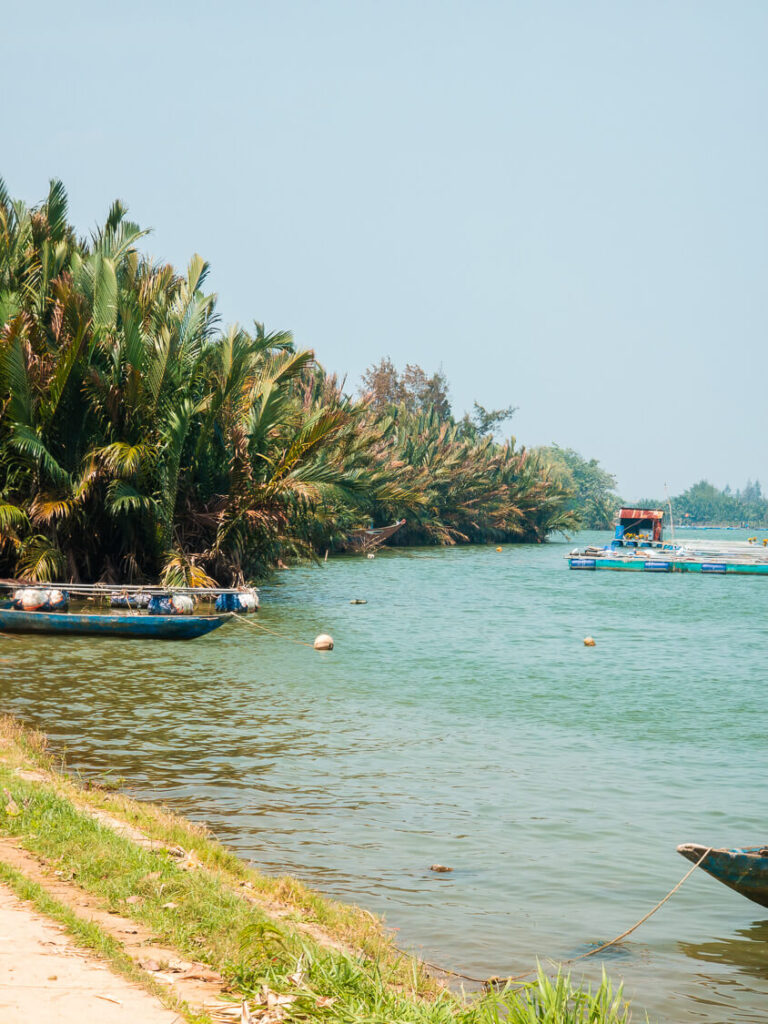
Cam Kim Island sits directly across the river from Hoi An’s Old Town, connected by a bridge that takes only a few minutes to reach by bicycle or scooter. Despite being this close to one of Vietnam’s most visited towns, it feels like an entirely different pace of life.
The island is known locally for traditional carpentry villages, small-scale farming, and fishing communities that have operated largely unchanged for generations. There’s no lantern-lit main street here. No souvenir shops lined up for tourists. Just narrow roads, rice paddies, and villages going about their day.
What makes Cam Kim Island worth visiting is exactly that contrast. A few minutes from Hoi An’s crowds, you’re suddenly cycling through farmland with almost nobody else around. For slow travelers, that gap between the busy and the quiet is the whole appeal.
Where Is Cam Kim Island?
Cam Kim Island sits in the Thu Bon River, directly across from Hoi An’s Ancient Town. In a straight line, it’s barely more than a kilometer from the center of Hoi An, and by bicycle the ride from the Old Town to the bridge crossing takes well under fifteen minutes.
That short distance is part of what makes the island so worth including on a Hoi An itinerary. It requires almost no effort to reach, yet very few travelers actually make the trip. Most people staying in Hoi An spend their entire visit within the Ancient Town’s boundaries without realizing an entirely different pace of life sits just across the water.
How to Get Across the River from Hoi An
Bicycle: The best way to explore Cam Kim Island properly, and the way I did it myself. Rent one anywhere in Hoi An, cross the bridge, and you’re on the island within minutes. I paid 90,000 VND ($3.60) for a two-day rental, which covered my entire cycling exploration of the island plus a second day riding around Hoi An’s outskirts.
Scooter: Also an option if you want to cover more ground quickly or combine the island with a further destination like Khe Tan reservoir on the same day. Less necessary for the island itself, since distances here are short and roads are flat, which is exactly why cycling works so well.
Walking: Technically possible to walk from Hoi An to the bridge, but not practical once you’re actually on the island. Distances between villages and points of interest are too spread out for walking to make sense.
Travel time from Hoi An: The bridge crossing itself takes just a few minutes from the edge of the Old Town. Once on the island, plan for a full morning or afternoon of cycling to properly explore it.
Best Time of Day to Visit
Early morning: The best time to ride out from Hoi An. Villages are active, farmers are already working the fields, and the temperature is still manageable for cycling.
Late afternoon: A good second option if mornings don’t work for your schedule. The light softens toward evening and the island empties out even further as the day winds down.
Weather considerations: I visited during a stretch of heavy, sudden rain, the kind that soaks you within minutes without much warning. It didn’t ruin the experience. If anything, cycling through rice paddies and fishing villages in the rain, with nowhere to be and nobody expecting you, added to it. Just be prepared for Vietnam’s unpredictable central coast weather and don’t let a forecast stop you from making the trip out from Hoi An.
Top Things to Do and See in the Villages
Cycle Through the Quiet Countryside
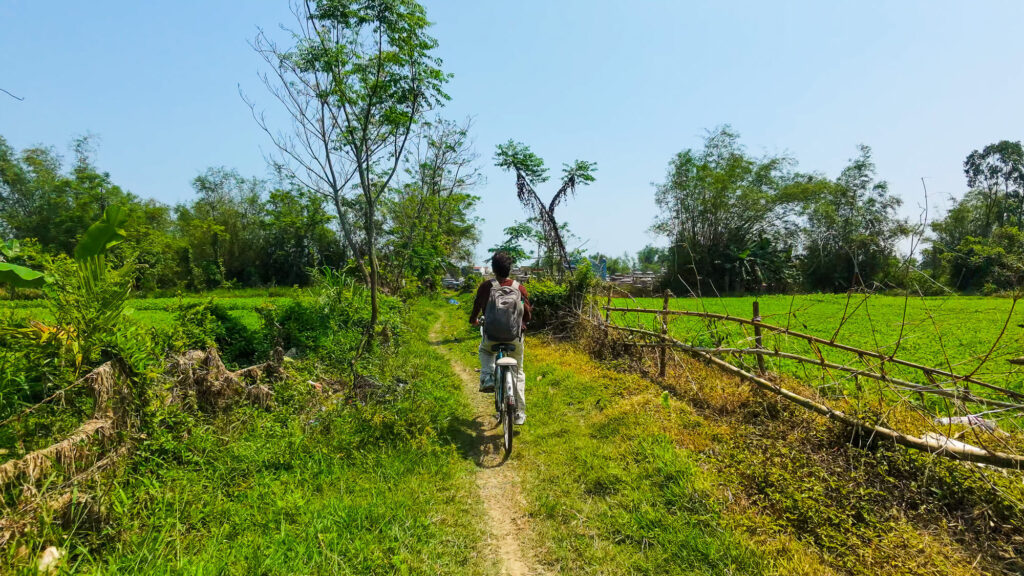
This is the core experience of Cam Kim Island. Peaceful roads with almost no traffic, small villages appearing every few minutes, and rice fields stretching out on either side. There’s no fixed route required. Cycling without a specific destination is honestly the best way to see it, and a sharp contrast to how most people move through Hoi An itself.
Visit the Boat Temple (Bon Van Duy Vinh)
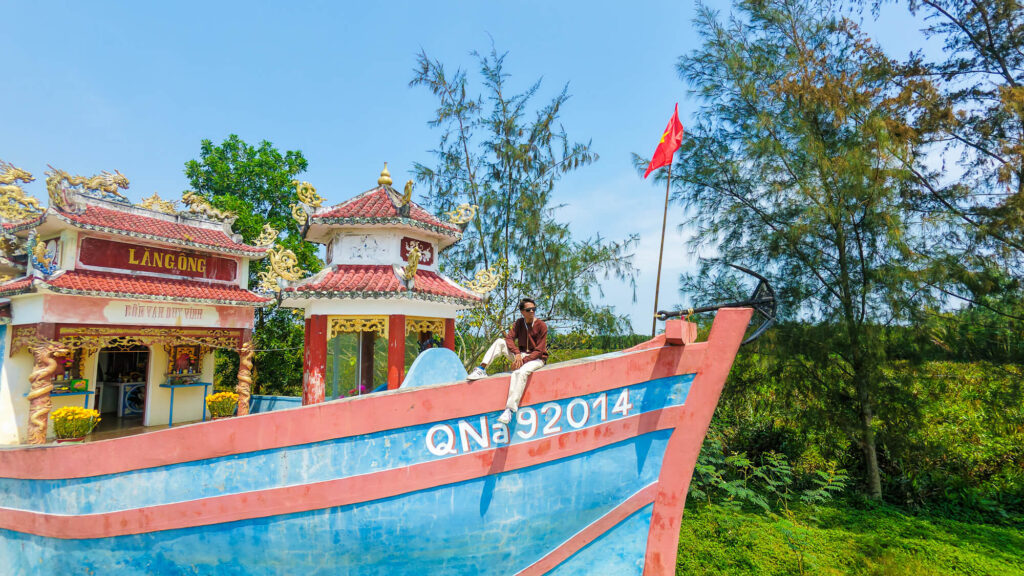
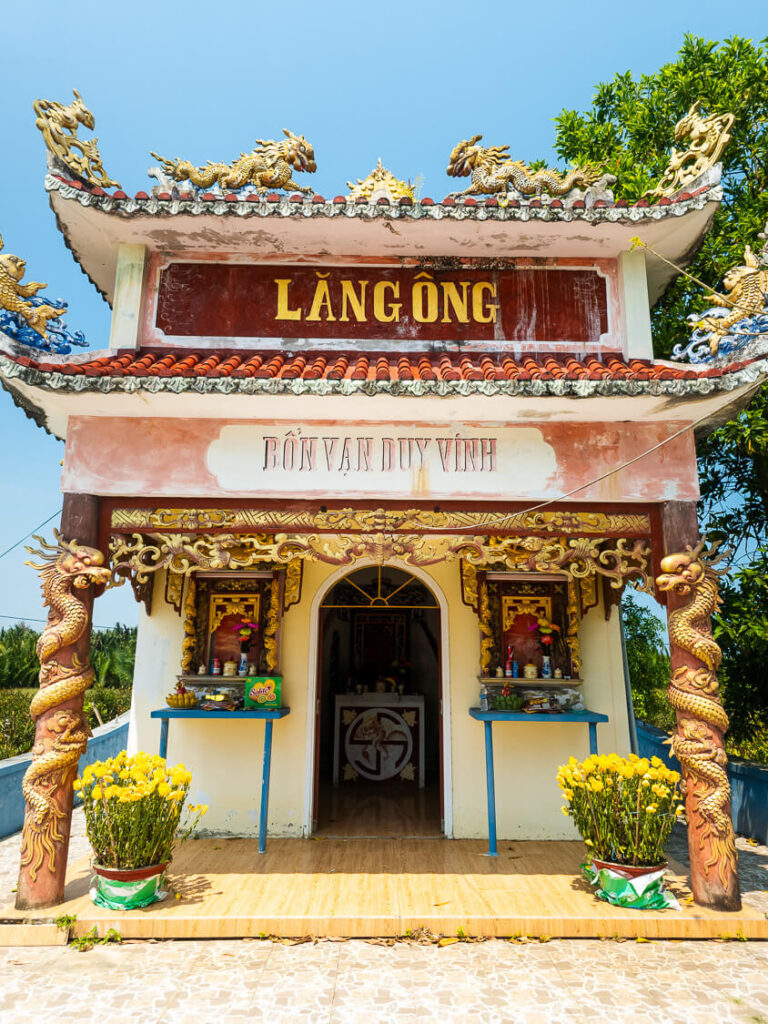
Tucked into one of the island’s fishing villages is a small shrine called Bon Van Duy Vinh, known locally as the boat temple. It’s built to bless fishing boats and protect the families who rely on them.
The atmosphere here is quiet and unpolished. No ticket booth, no English signage, incense still burning from recent visits by local families. It’s worth stopping simply because it represents a piece of daily life on the island rather than something built for visitors. I’ve covered it in more detail in my Hidden Places in Hoi An guide if you want the full story of finding it.
Cross the Scenic Bridge (Cầu máng Duy Phước)
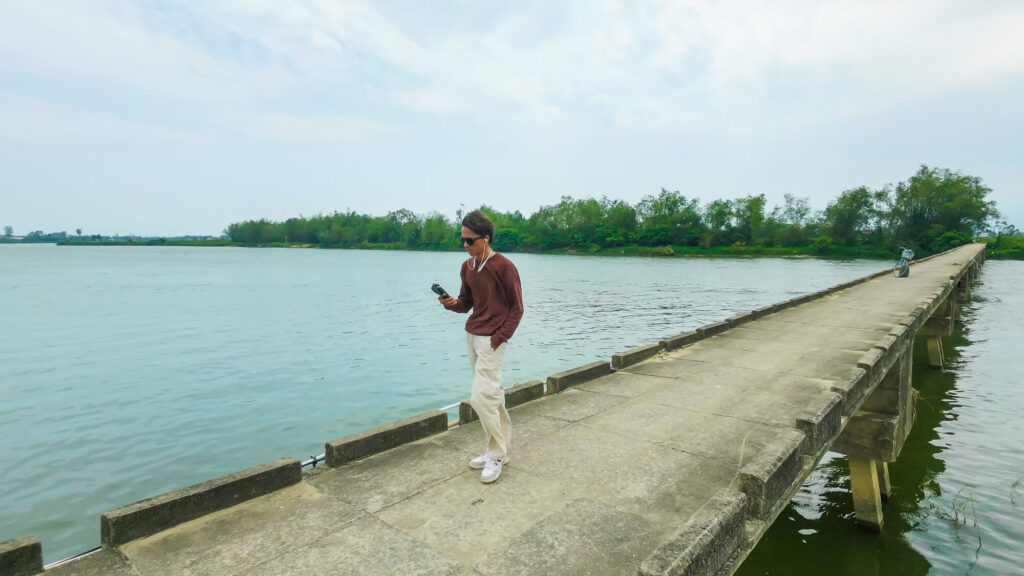
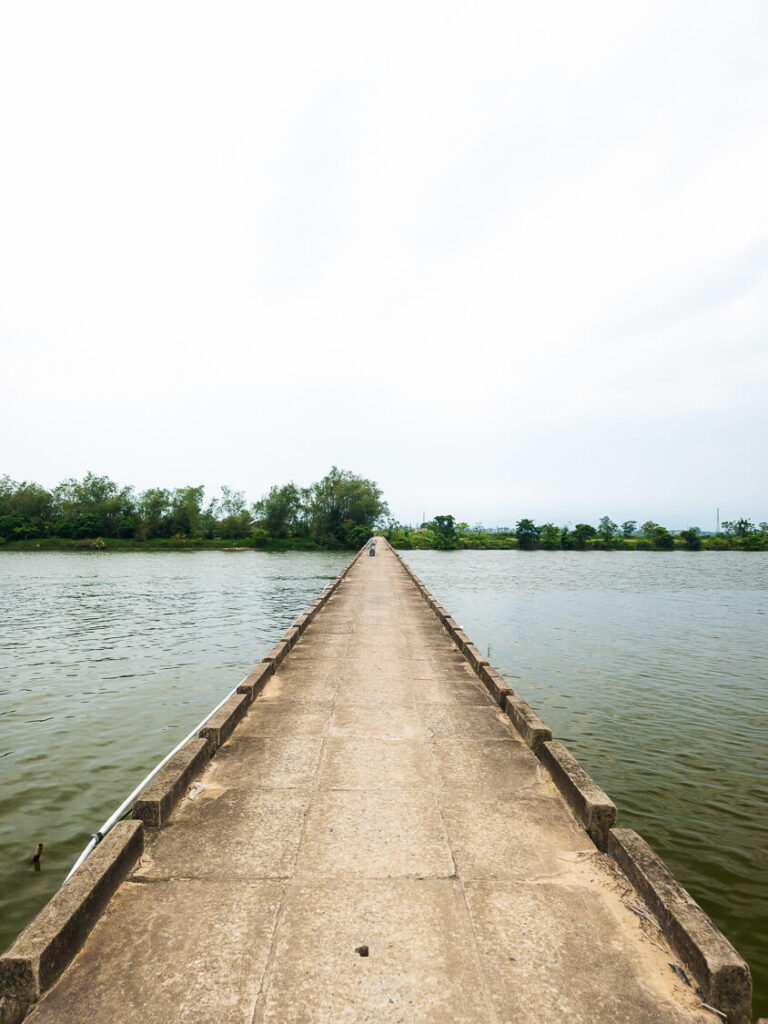
Cầu máng Duy Phước is the narrow bridge connecting Cam Kim Island to the neighboring landmass. Built for local access rather than sightseeing, it still offers genuinely good views over the water and surrounding farmland.
It’s a solid photography stop, and more importantly, it’s the clearest physical symbol of the connection between Hoi An’s busy center and the quieter countryside around it. I’ve also written more about this bridge in my Hidden Places in Hoi An guide.
Experience Everyday Local Life
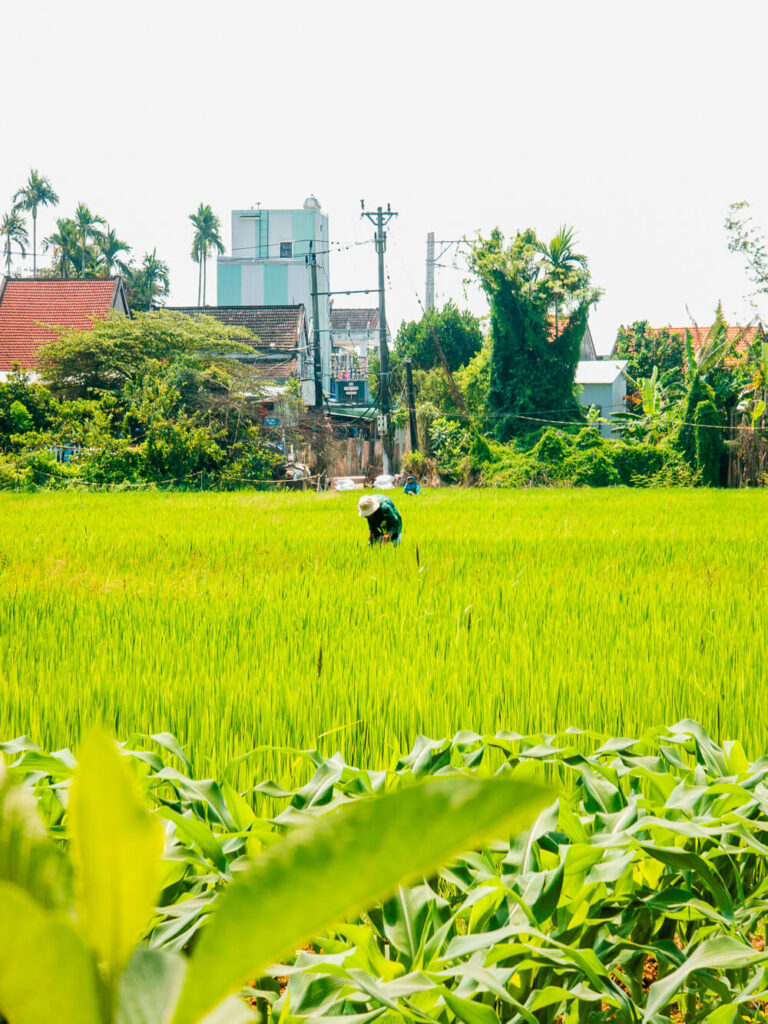
Farmers working rice paddies. Fishing boats docked along the water. Small cafés that see maybe a handful of visitors a week rather than the constant stream you’d find in Hoi An’s center. Quiet residential streets where daily life continues exactly as it has for years.
This is where Cam Kim Island earns its reputation as a countryside escape from Hoi An. You’re not observing a tourist attraction. You’re cycling directly through people’s actual lives.
Enjoy the Rice Fields
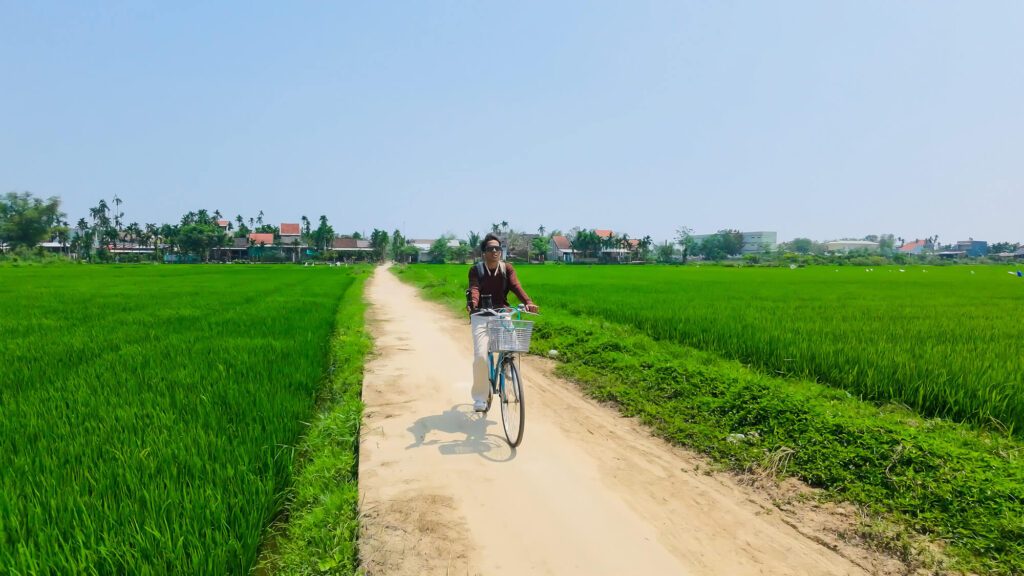
Some of the best, least crowded photo opportunities near Hoi An are simply the rice paddies scattered across Cam Kim Island. No competition for the shot, no crowd to navigate around.
The best viewpoints are usually just wherever the road opens up next to a field. There’s no need to seek out a specific spot. They became one of my favorite parts of the island precisely because they were everywhere and I didn’t have to work to find them while cycling.
My Experience Exploring the Island
I decided to cross the bridge from Hoi An with no fixed plan. Rented a bicycle for 90,000 VND covering two days, and started cycling around 9 a.m. on the first morning.
My first impression crossing onto the island was how immediate the shift felt. One minute I was in the edges of Hoi An’s more built-up streets. A few minutes later, crossing the bridge, everything opened into farmland and quiet roads.
I spent most of that first day just cycling, no destination in mind. That’s how I found the boat temple, tucked into a village I hadn’t planned to visit, and how I ended up crossing Cầu máng Duy Phước simply because the road leading to it looked interesting.
I spent a full day exploring the island properly, with a second day of cycling covering more of Hoi An’s outskirts beyond just the island itself.
It felt completely different from Hoi An’s Ancient Town. Where the Old Town is dense, curated, and full of people, Cam Kim Island was open, quiet, and almost entirely local. It didn’t feel like a tourist stop at all. It felt like riding into a part of Vietnam that exists whether or not anyone visits it.
What I Loved Most About This Escape
No crowds. In an entire day of cycling, I barely saw another traveler. That kind of quiet is genuinely rare this close to a major tourist town like Hoi An.
Peaceful cycling. Flat roads, light traffic, and enough winding paths to keep things interesting without ever feeling difficult.
Local atmosphere. Everything on the island felt like it existed for the people living there, not for visitors passing through from Hoi An.
Slower pace. Nothing on Cam Kim Island rushes you. It’s the kind of place that rewards cycling without a plan and stopping whenever something looks worth stopping for.
Should You Add It to Your Itinerary?
Yes, particularly if you’re already spending more than a couple of days in Hoi An.
Who will enjoy it: Slow travelers, cyclists, photographers, and anyone who prefers quiet countryside over curated tourist streets.
Who might skip it: Travelers on a tight one or two-day Hoi An itinerary who only have time for the Ancient Town’s main sights. Cam Kim Island rewards time, and if you don’t have a spare half day or more, it’s easy to miss.
Why slow travelers should make time for it: Because it’s one of the clearest examples of Hoi An’s quieter side, reachable in minutes by bicycle but worlds away in pace. If you’re already committing to slow travel through Vietnam, this is exactly the kind of place that approach is designed to find.
Essential Advice Before You Go
Rent a bicycle or scooter in Hoi An. Neither the island nor its points of interest are realistic on foot.
Visit in the morning. Villages are more active, the temperature is manageable for cycling, and you’ll have more of the day ahead to explore without a fixed schedule.
Bring water. Once you’re out among the villages and rice fields, shops and cafés are far less frequent than in central Hoi An.
Don’t rush your visit. Cam Kim Island doesn’t reward a quick loop and a return trip. Give it a half day at minimum and let yourself get a little lost while cycling.
Conclusion
Cam Kim Island isn’t about famous attractions. There’s no major landmark drawing crowds, no ticket booth, nothing designed for a quick photo and a return to Hoi An.
What it offers instead is the chance to slow down, cycle through genuine countryside, and see a side of Hoi An that most visitors never even know exists. For me, it turned into one of the most memorable parts of my entire stay, simply by crossing a bridge most tourists never think to cross.
Frequently Asked Questions
Is Cam Kim Island worth visiting?
Yes, especially for slow travelers with more than a couple of days in Hoi An. It offers quiet countryside, local villages, and points of interest like the boat temple and connecting bridge that most short-stay visitors never see.
How do you get there?
By bicycle or scooter, crossing the bridge from the edge of Hoi An’s Old Town. The island sits barely more than a kilometer from central Hoi An, and the crossing itself takes only a few minutes.
Can you explore by bicycle?
Yes, and cycling is the best way to experience it. Roads are flat, quiet, and well suited to a bicycle. I rented one for 90,000 VND covering two days and used it to explore the island plus additional areas around Hoi An.
How much time should I budget?
A half day at minimum. A full day is better if you want to properly explore the villages, the boat temple, the bridge, and the surrounding rice fields without rushing.
Is the route suitable for first-time visitors?
Yes. No advanced riding skills or specialized planning are required. A rented bicycle, a general sense of direction, and a willingness to explore without a fixed itinerary are all you need.
Planning Your Vietnam Trip?
If you’re building a bigger Vietnam itinerary, here’s what else I’ve written:
Hoi An Travel Guide for Slow Travelers 2026: Beyond the Lanterns
Hidden Places in Hoi An: 5 Spots Beyond the Old Town
How to Get from Da Nang Airport to Hoi An (2026 Prices & Tips)
Hue to Hoi An Transport Guide 2026: The Fastest, Cheapest and Most Scenic Ways to Travel
