Don’t book an overnight ticket without reading these 12 Vietnam sleeper bus tips. Learn how to pick the best berth, handle early arrivals, and stay warm. (CLICK HERE)
Table of Contents
During my 50 days traveling across Vietnam, I used sleeper buses for almost every single long-distance journey.
Hanoi to Sapa. Sapa back to Hanoi. Ninh Binh to Hue. Hue to Hoi An. Hoi An to Da Lat. Da Lat to Ho Chi Minh City.
These Vietnam sleeper bus tips aren’t pulled from a generic travel checklist. They come from actually sitting on these buses, making mistakes, learning from them, and figuring out what separates a comfortable overnight journey from a miserable one.
If you’re planning to use sleeper buses in Vietnam, these are the things I wish someone had told me before my first ride.
12 Vietnam Sleeper Bus Tips I Wish I Knew Before My First Ride
Tip 1: Choose Your Berth Before Someone Else Does
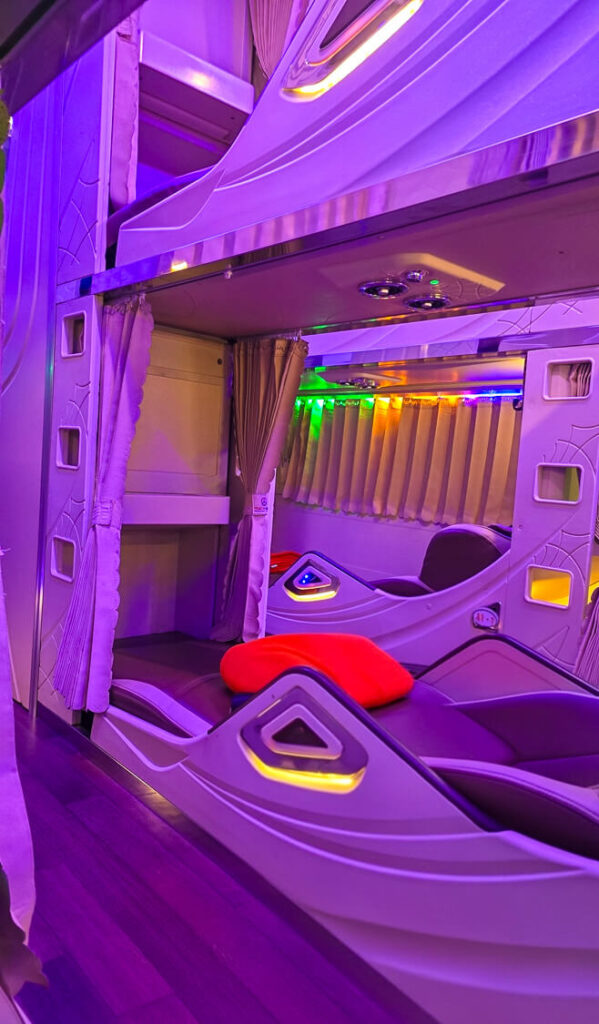
This is the most important of all the Vietnam sleeper bus tips on this list. If you don’t select your berth when booking, the operator assigns you one. And that usually means the last corner seat at the back, or a middle row berth with no window.
I made this mistake on the Hue to Hoi An bus. Got assigned the back corner seat. Every switchback on the mountain road was amplified. Every bump felt harder. Four hours of that is a very different experience from four hours in a front or middle window berth.
When booking on Vexere, the app shows you a seat map. Pick your berth deliberately. Lower berths are easier to access with luggage. Middle of the bus is smoother. Front is the best overall choice. Don’t skip this step on any Vietnam sleeper bus booking.
Tip 2: Book on Vexere Whenever Possible
Vexere is the best app for booking Vietnam sleeper buses. The prices are consistently lower than booking through your hostel. The interface is clear. Real-time availability. Booking takes three minutes. Confirmation is instant.
If Vexere doesn’t have your specific route or timing, 12go Asia is a solid backup. But Vexere is where you should start for every overnight bus Vietnam booking. I used it across my entire 50-day trip and never had an issue.
Tip 3: Wear Slippers, Not Shoes
Almost every sleeper bus in Vietnam asks you to remove your shoes before boarding. They give you a plastic bag to store them while you ride. If you’re wearing lace-up sneakers or boots, this becomes an annoying and time-consuming process every time you board and disembark.
Wear slip-on sandals or slippers. Takes two seconds to remove. Two seconds to put back on at rest stops and on arrival. A small thing that makes a real difference when you’re doing multiple Vietnam sleeper bus journeys.
Tip 4: Choose Overnight for Long Routes
If you have a choice between a daytime and overnight bus for a long journey, take the overnight. Less traffic means faster travel. And you’re sleeping through what would otherwise be hours lost from your trip.
Every overnight bus journey I took across Vietnam saved me a night’s accommodation cost while still covering the distance. The Ninh Binh to Hue HK Busline run is a perfect example. Left in the evening. Arrived in Hue early morning. Ten to thirteen hours traveled while sleeping. That’s the efficiency that makes overnight bus Vietnam travel so valuable for budget travelers.
Tip 5: Don’t Trust the Arrival Time. Seriously.
Bus operators give you an estimated arrival time. Treat it as a rough guide, not a schedule. Vietnam sleeper buses often arrive earlier than stated, sometimes significantly earlier.
On my Hoi An to Da Lat journey, the operator told me we’d arrive at 9 a.m. We pulled in around 7 a.m. Two hours early. I was asleep and suddenly standing in Da Lat with nothing open, no plan, and two hours to kill.
If you’ve arranged a specific check-in time or told someone to meet you, an unannounced early arrival can disrupt everything. Stay aware of where the bus is as you approach the destination. Don’t assume you have more time than the estimated arrival suggests.
Tip 6: Keep Your Carry-On Minimal
Unless you’ve booked a premium or VIP Vietnam sleeper bus, the berth space is limited. Your main bag goes in the hold under the bus. That’s expected. What’s not expected is trying to fit a full 30-liter daypack into a berth designed for your feet and a small personal bag.
I watched travelers struggle with this on almost every bus. Take only what you actually need for the ride in your carry-on. Phone. Headphones. A snack. A light jacket. Everything else goes under. It makes boarding faster, the berth more comfortable, and the whole Vietnam sleeper bus experience significantly smoother.
Tip 7: Rest Stops Depend on Journey Length
Some Vietnam sleeper bus routes have rest stops. Some don’t. Whether you get one depends entirely on how long the journey is.
Long overnight routes of eight hours or more typically stop once or twice at highway service stations. You get fifteen to twenty minutes to use the bathroom, buy a snack, and stretch.
Short routes of three to four hours often have no stops at all. Don’t assume one is coming. Use the bathroom before you board regardless. And carry water and a snack for routes where a rest stop isn’t guaranteed.
Tip 8: Research the Bus Class Before You Book
Not all Vietnam sleeper buses are the same. Not even close. The class you book determines the berth size, the privacy level, the vehicle quality, and the overall experience.
Standard sleeper bus: Open berths, shared cabin style, basic air conditioning. Fine for most routes.
VIP sleeper: Wider berths, better recline, sometimes a pillow and thin blanket included.
Cabin bus: Fully enclosed private pod with a curtain. The closest thing to actual privacy on a Vietnam sleeper bus.
Premium operators like HK Busline, Sapa Express, and Futa Bus Lines run newer vehicles with better service and more reliable schedules.
The price difference between basic and cabin class on the same route can be 200,000 VND or more. Sometimes the upgrade is worth it. Sometimes the basic bus is perfectly fine. Research what you’re actually booking before you confirm so there are no surprises on board.
Tip 9: Charge Everything Before You Board
Not all Vietnam sleeper buses have working charging ports. Some have ports that don’t work. Some have none at all.
Board with your phone fully charged. Headphones charged. Power bank topped up. If the bus has working ports, great. Use them. But if it doesn’t, you don’t want to arrive in an unfamiliar city at 5 a.m. with a dead phone and no way to pull up your accommodation address or call a Grab.
Tip 10: Download Offline Maps Before You Sleep
Before you board any Vietnam sleeper bus, download Google Maps offline for your destination city. Pin your accommodation. Save the bus drop-off location too.
You will arrive somewhere between early morning and the middle of the night. Mobile data at highway drop-off points can be unreliable. Having maps that work without a signal means you can orient yourself and move immediately without standing around waiting for connectivity.
This is one of those Vietnam sleeper bus tips that takes two minutes to act on and saves real stress on arrival.
Tip 11: Every Bus Operator Is Different
This connects to the class research tip but goes further. The same route with two different operators can be a completely different experience.
Some operators run newer buses with functioning AC controls, clean berths, and drivers who stick to schedule. Others run older vehicles where the temperature is either freezing or stifling, the berths are narrower than advertised, and the scheduled departure time is more of a suggestion.
Read reviews specifically for the operator, not just the route. Vexere shows operator names alongside route options. Spend two minutes checking what other travelers say about that specific company before confirming your Vietnam sleeper bus booking.
Tip 12: Know Your Drop-Off and Pickup Point Before Your Journey
Two things that catch Vietnam sleeper bus travelers off guard regularly. Where the bus drops you. And where it picks you up.
Drop-off: Sleeper buses don’t always stop at a central or convenient location. Some drop at a travel company office on the edge of town. Some drop at a highway junction. Know exactly where your bus stops in the destination city before you leave. Map it. Understand what transport you need for the final stretch to your accommodation.
Pickup: Most operators offer hotel or hostel pickup. The evening before departure, confirm your exact pickup time and location with the operator or booking platform. Bus schedules shift. Pickup points occasionally change. A quick confirmation message takes two minutes and prevents you from standing on the wrong street at departure time.
Both pieces of information should be sorted before your journey. Not on the morning of. The night before.
Would I Use Sleeper Buses in Vietnam Again?
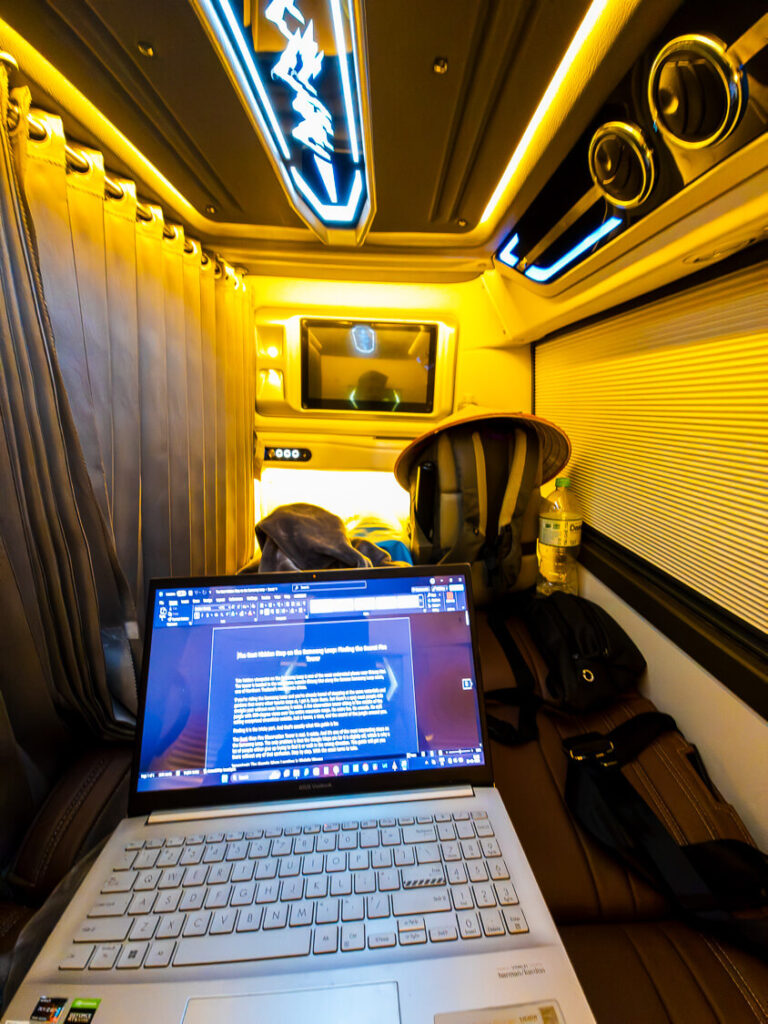
Yes. Without hesitation.
The Vietnam sleeper bus network is one of the most efficient ways to cover long distances in the country on a budget. Travel overnight. Save accommodation costs. Wake up somewhere new with a full day ahead. When you know what to expect, the Vietnam sleeper bus experience is genuinely good value.
Biggest advantages: cost, overnight efficiency, and direct routes between major cities that don’t require complicated transfers.
Biggest disadvantages: sleep quality varies. Bus class differences are significant and easy to get wrong if you don’t research. Early arrivals catch unprepared travelers off guard.
Who should use them: Budget travelers, slow travelers doing the north to south route, anyone looking to maximize time in Vietnam without paying for flights.
Who might prefer alternatives: Light sleepers who need real rest. Travelers who want the scenic coastal train experience between Hue and Da Nang. Anyone prioritizing schedule predictability over price.
For the kind of travel I do in Vietnam, sleeper buses were the right call every time.
Frequently Asked Questions About Vietnam Sleeper Buses
Are Vietnam sleeper buses safe?
Yes, on reputable operators. HK Busline, Sapa Express, and Futa Bus Lines are among the most reliable. Book through Vexere to access operator reviews and choose companies with consistent track records. Avoid unbranded buses with no reviews regardless of how cheap they are.
How do I choose a berth on a Vietnam sleeper bus?
Book through Vexere. The app shows a seat map when you select your route. Choose a lower berth in the middle section of the bus for the most stable ride. Avoid back corner seats which amplify every curve. This is one of the most important Vietnam sleeper bus tips for first-time riders.
Can I eat on a Vietnam sleeper bus?
Light snacks and water are fine. Strong-smelling food in a closed, air-conditioned bus isn’t popular with other passengers. Save proper meals for rest stops, which occur on longer overnight routes of eight hours or more.
Do Vietnam sleeper buses have toilets?
Some premium and cabin class buses do. Most standard sleeper buses do not. Sao Viet Bus on the Hanoi to Sapa route is one operator known for onboard toilets. For all other Vietnam sleeper bus routes, assume no toilet and plan accordingly.
How far in advance should I book a Vietnam sleeper bus?
Normal season: 1 to 2 days ahead is usually enough. Peak season between November and February: book 3 to 5 days ahead. Around Tet holiday: book weeks in advance. Prices rise sharply and availability disappears fast during Vietnamese public holidays.
Planning Your Vietnam Trip?
If you’re building a bigger Vietnam itinerary, here’s what else I’ve written:
Vietnam Itinerary for Slow Travel: My 50-Day Route Through the Real Vietnam
Vietnam Travel Budget: Exactly How Much I Spent in 50 Days
Hue Travel Guide for Slow Travel: 5 Days Beyond the Imperial City
Hue to Hoi An Transport Guide 2026: The Fastest, Cheapest and Most Scenic Ways to Travel
Ninh Binh Budget Travel Guide 2026: How I Spent 11 Days on $12 a Day
