Skip the Old Town crowds. After nine days of exploring by scooter, here are the hidden places in Hoi An you won’t find in standard guidebooks.(CLICK HERE)
Table of Contents
Most visitors to Hoi An spend one or two days walking the Ancient Town, taking photos of the lanterns, and moving on to the next city on their route.
I stayed nine days. And somewhere around day four, I started riding out past the edge of the Old Town to see what was actually out there.
What I found were hidden places in Hoi An that most travelers never hear about. A boat temple tucked into a fishing village. A quiet reservoir that turned out to be the best afternoon of my entire stay. A narrow bridge connecting two islands that felt built for locals rather than visitors. None of it in any guidebook. All of it more memorable than the Ancient Town itself. The Hoi An beyond the Old Town is a must visit.
Why You Should Explore Beyond Hoi An’s Ancient Town

Most tourists stay one to two days in Hoi An. That’s enough time for the Ancient Town, the Japanese Covered Bridge, a lantern-lit evening by the river, and not much else.
The Ancient Town is genuinely beautiful. But it’s only one part of Hoi An, and a fairly small one at that. The town’s real footprint stretches out into rice fields, fishing villages, and neighboring islands that almost nobody visiting for a short trip ever reaches.
The countryside around Hoi An offers a slower and quieter experience than anything inside the Old Town walls. No tour groups. No souvenir stalls. Just farmland, water, and daily life continuing the way it has for generations.
Slow travelers in particular will enjoy exploring beyond the main attractions here. Hoi An rewards the kind of traveler who has time to get a little lost, follow a road because it looks interesting, and stumble onto something that isn’t on any map worth searching for.
Hidden Places in Hoi An: What You Need to Know
Best way to explore these places: A bicycle or scooter. None of the hidden places in Hoi An covered in this guide are walkable from the Old Town, and none of them require anything more than basic riding confidence to reach.
Bicycle vs scooter: A bicycle is enough for the closer spots, including the boat temple and the connecting bridge, both of which sit on Cam Kim Island just across the river from the Old Town. A scooter makes more sense for Khe Tan reservoir, which is further out and better covered in a single afternoon with a motor under you rather than pedals.
Best time of day: Morning, for two reasons. The light is better for photos, and the heat hasn’t built up yet if you’re cycling. Rice fields and fishing villages also feel most alive early, before the day’s heat sends everyone indoors.
How much time to set aside: Half a day per spot is realistic if you’re not rushing. The boat temple and the bridge can be combined into a single morning since they’re on the same island route. Khe Tan reservoir deserves its own afternoon.
Why these places are easy to combine over several days: They sit in different directions from the Old Town, which means you can treat each one as its own small expedition rather than trying to cram everything into a single exhausting day.
Hidden Places in Hoi An You Shouldn’t Miss
These five spots became the actual highlight of my nine days in Hoi An. Not the lanterns. Not the Ancient Town. These.
The Boat Temple (Bon Van Duy Vinh)
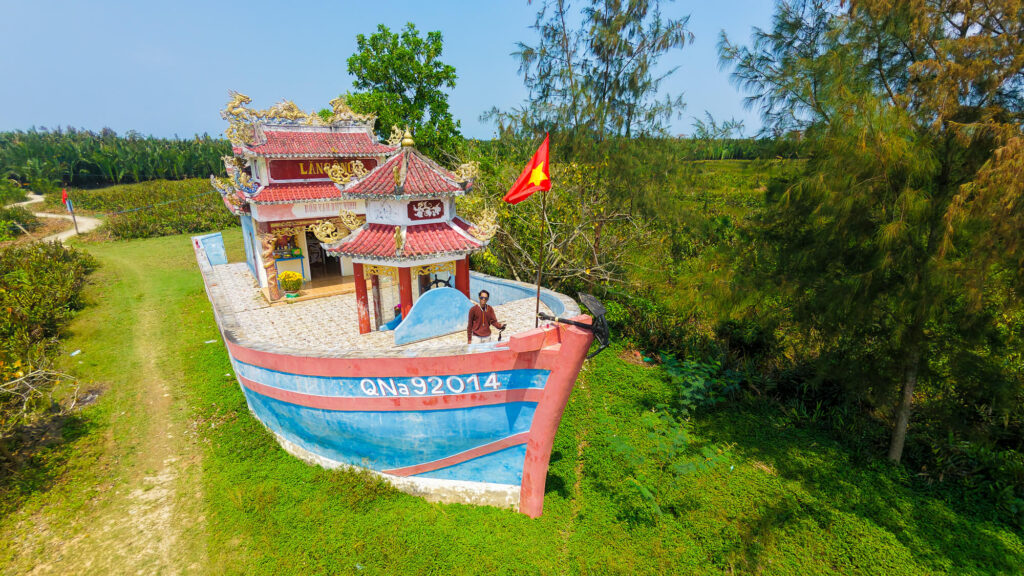
Tucked into one of the fishing villages on Cam Kim Island is a small shrine called Bon Van Duy Vinh, known locally simply as the boat temple. It’s built specifically to bless fishing boats and protect the families who sail out on them.
Why it’s worth visiting: There’s no ticket booth, no signage in English, and almost no chance you’ll find another tourist here. It’s a modest wooden structure with incense still burning and small offerings left by local fishing families. It exists for the community, not for visitors, which is exactly what makes it worth seeking out.
What to expect: A quiet, unassuming shrine that you’ll likely stumble onto rather than plan for with any precision. Bring a bit of respect and curiosity rather than an agenda. This isn’t a polished attraction. It’s a genuine piece of local life.
Best time to visit: Morning, when the village itself is at its most active and the light through the trees around the shrine is at its best.
The Reservoir Dam (Khu Du Lịch Sinh Thái Khe Tân)
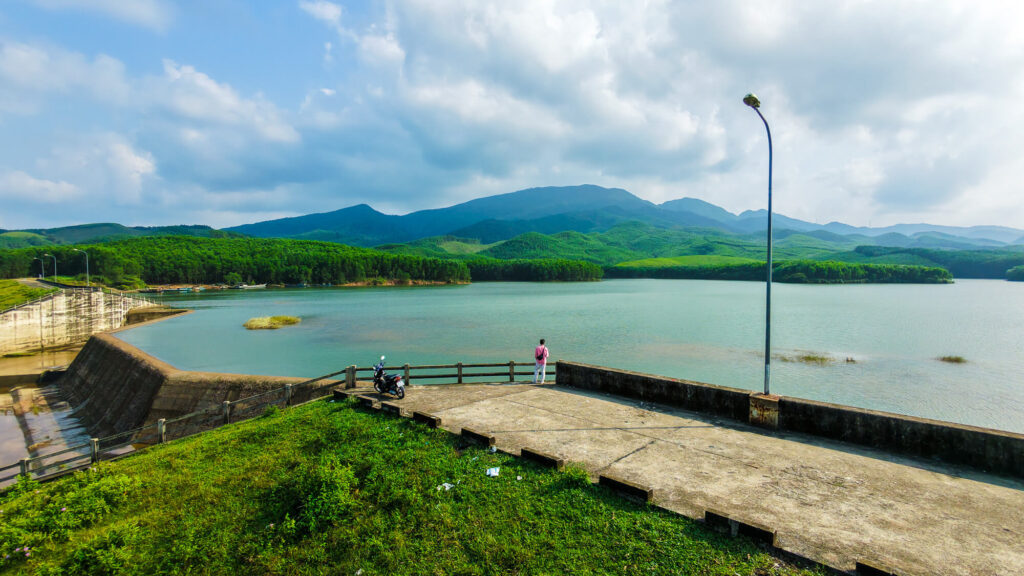
Khu Du Lịch Sinh Thái Khe Tân is an eco-tourism spot built around a large dam and reservoir outside Hoi An. It’s not on the standard tourist circuit at all, and that’s precisely why it became my favorite place in the entire city.
Peaceful surroundings: Still water stretching out toward green hills, with almost nobody else around. The kind of quiet that’s genuinely hard to find anywhere near a popular tourist town.
Scenic views: The dam itself offers wide views over the reservoir, and the surrounding hills give the whole area a scale that feels bigger than most spots this close to Hoi An.
Why it became my favorite: I’d just come from My Son Sanctuary, which was packed with tour buses and crowds moving through narrow temple paths. Khe Tan was the opposite in every way. I sat there for a long stretch of the afternoon doing very little, which was exactly the point.
The Bridge Connecting the Two Islands (Cầu máng Duy Phước)
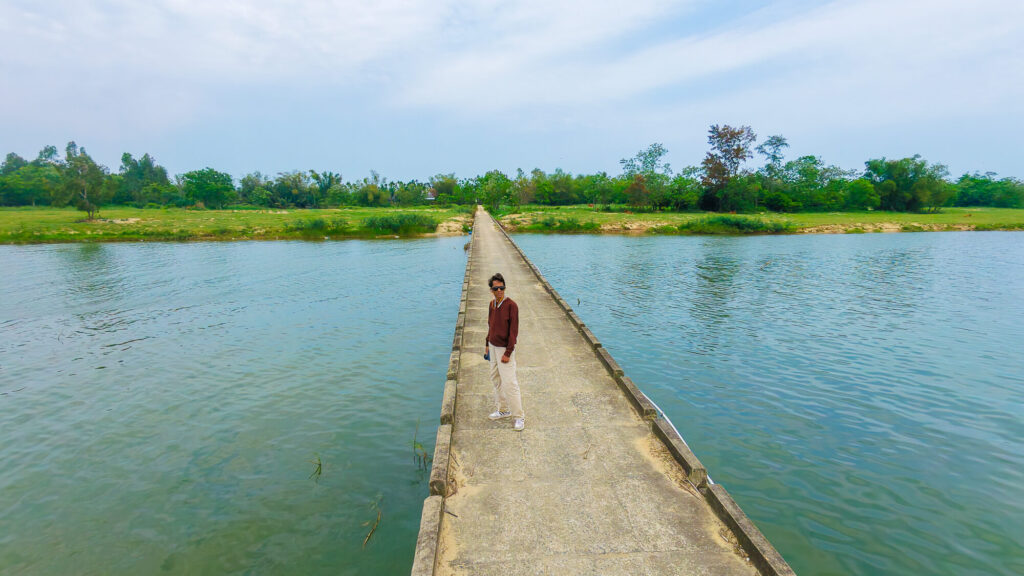
Cầu máng Duy Phước is a narrow bridge connecting Cam Kim Island to the neighboring landmass, built for local access rather than sightseeing.
Quiet atmosphere: There’s no crowd here, no photo queue, nothing performative about it. Just a functional piece of local infrastructure that happens to be genuinely scenic.
Local life: Farmers, fishermen, and villagers use this bridge daily. Riding across it puts you directly into the rhythm of island life rather than observing it from a distance.
Beautiful cycling route: The road leading to and from the bridge cuts through farmland and small villages, making it one of the best short cycling stretches near Hoi An.
Cycling Through the Neighboring Islands
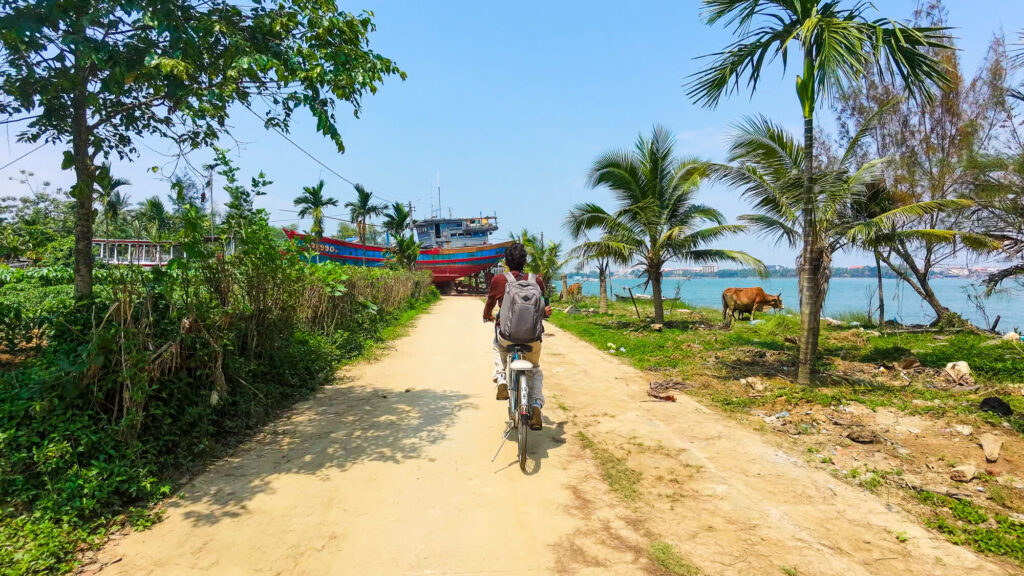
Beyond the three main spots, the islands around Hoi An, particularly Cam Kim, are worth exploring simply by riding without a fixed destination.
Small villages: Carpentry workshops, fishing households, and quiet residential streets that see very little tourist traffic.
Local farms: Vegetable plots and small-scale farming operations line many of the island roads, offering a very different picture of Vietnam than the Ancient Town’s tailors and lantern shops.
Peaceful roads: Flat, quiet, and largely free of the traffic that defines Hoi An’s town center.
Why this is one of the best ways to experience Hoi An: Because it puts you in contact with the version of the town that existed before tourism arrived, and that still runs underneath everything the Ancient Town shows visitors.
The Rice Fields Around Hoi An
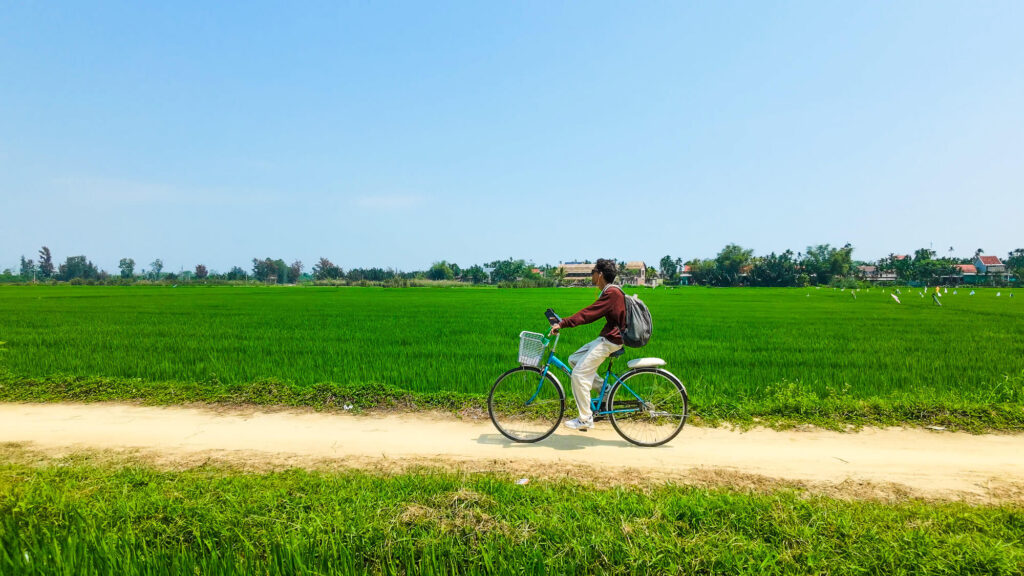
The paddies just outside town are consistently overlooked by travelers who stick to the center.
Early morning atmosphere: Mist over the fields, farmers already out working, and a stillness that the Old Town simply doesn’t have at any hour.
Local farming life: Water buffalo, manual labor, and centuries-old rhythms that continue regardless of how many tourists pass through the lantern streets each evening.
Photography opportunities: Some of the best and least crowded photo spots near Hoi An are simply roadside stops along the rice paddies, with none of the competition you’d find at the Ancient Town’s more famous corners.
Why they’re often overlooked: Because they require leaving the center with no specific “attraction” waiting at the end, which is exactly the kind of exploring that a lot of short-stay travelers skip.
How I Found These Hidden gems in Hoi An During My 9 Days?
My first three days in Hoi An looked like everyone else’s. Walking the Ancient Town. Sitting by the river. Watching the lantern boats drift past in the evening. Good, but it was the standard version of Hoi An that any short itinerary delivers.
By day four, I wanted more than the famous attractions. I rented a bicycle for two days and a scooter for two more, and that decision changed the entire trip.
There was no fixed itinerary to any of this. I’d pick a general direction, start riding, and see what turned up. Some days it rained heavily, the kind of sudden, soaking Vietnamese downpour that makes everything within minutes. I kept riding anyway. There’s something genuinely fun about cycling through rice paddies and fishing villages with nowhere you need to be and nobody expecting you.
That’s how I found the boat temple, tucked into a village I hadn’t planned to visit. That’s how I crossed the bridge, following a road simply because it looked interesting. And that’s how I ended up at Khe Tan reservoir, after deciding the crowds at My Son Sanctuary weren’t worth fighting through.
My favorite hidden places in Hoi An
1. Khu Du Lịch Sinh Thái Khe Tân (Reservoir Dam)
This is the one I’d return to first. After the disappointment of a crowded My Son Sanctuary, finding a quiet dam with almost nobody around felt like the entire trip recalibrating itself. Still water, green hills, and an afternoon with nothing scheduled. It became my favorite place in Hoi An without much competition.
2. Bon Van Duy Vinh (Boat Temple)
The boat temple stood out because of what it wasn’t. Not a tourist attraction. Not curated for visitors. Just a small, genuine shrine that local fishing families still use exactly as intended. Finding it felt like being let in on something rather than being sold an experience.
3. Cầu máng Duy Phước (Bridge Connecting the Two Islands)
I’d happily cross this bridge again purely for the ride leading to it. Farmland on both sides, quiet roads, and a structure that exists for the people who actually live on these islands rather than for anyone taking photos of it.
My Advice for Exploring offbeat Places in Hoi An
Stay at least 3 to 4 days. Anything shorter and you’ll only see the Ancient Town, never the countryside surrounding it.
Rent a bicycle if possible. It’s the easiest way to reach Cam Kim Island’s boat temple and bridge, and it keeps you moving at a pace that matches the surroundings.
Start exploring early in the morning. Rice fields, fishing villages, and quiet roads are all at their best before the heat and the day’s activity fully set in.
Don’t limit yourself to the Ancient Town. It’s beautiful, but it’s a small fraction of what Hoi An actually offers.
Leave room for spontaneous discoveries. The best hidden places in Hoi An aren’t things you plan for. They’re things you find because you turned down a road that looked interesting. There are a lot of unique things to do in Hoi An if you look beyond the usual.
Conclusion
The Ancient Town is what draws visitors to Hoi An, and it deserves its reputation. But the quieter countryside beyond it, the boat temple, the reservoir, the bridge, the rice fields, and the islands connecting them, is what made my nine-day stay genuinely memorable.
These hidden places in Hoi An don’t show up in most guidebooks because they don’t need to perform for tourists. They exist because local life keeps running whether or not anyone’s watching. Finding them just requires a bicycle, a scooter, and a willingness to ride somewhere without knowing exactly what’s waiting at the end.
Frequently Asked Questions
Are there hidden places in Hoi An worth visiting?
Yes. Beyond the Ancient Town, Hoi An has fishing villages, rice fields, a reservoir, and small local temples that most short-stay visitors never see. Spots like Bon Van Duy Vinh, Khu Du Lịch Sinh Thái Khe Tân, and Cầu máng Duy Phước offer a quieter, more local side of the city.
What’s the best way to explore hidden places in Hoi An?
A bicycle or scooter. None of these spots are walkable from the Old Town. A bicycle works well for closer destinations like Cam Kim Island, while a scooter is better suited for further spots like Khe Tan reservoir.
Do I need a scooter or is a bicycle enough?
A bicycle is enough for the boat temple and the connecting bridge, both on Cam Kim Island close to the Old Town. A scooter makes more sense for Khe Tan reservoir, which sits further out and is easier to cover in a single afternoon with a motor rather than pedals.
How many days should I spend in Hoi An?
Three days covers the Ancient Town basics. For genuinely exploring hidden places in Hoi An, four to five days is a better minimum, and anything up to nine or ten, which is what I did, gives the surrounding countryside room to properly open up.
Are these places suitable for first-time visitors?
Yes. None of the locations in this guide require advanced riding skills or specialized planning. A rented bicycle or scooter, a general sense of direction, and a willingness to explore without a fixed itinerary are all that’s needed.
Planning Your Vietnam Trip?
If you’re building a bigger Vietnam itinerary, here’s what else I’ve written:
Hoi An Travel Guide for Slow Travelers 2026: Beyond the Lanterns
How to Get from Da Nang Airport to Hoi An (2026 Prices & Tips)
Hue to Hoi An Transport Guide 2026: The Fastest, Cheapest and Most Scenic Ways to Travel
Vietnam Travel Budget: Exactly How Much I Spent in 50 Days
Vietnam Sleeper Bus Tips 2026: Things I Wish I Knew Before My First Ride