Planning a trip to Vietnam? Learn the latest Vietnam Entry Rules 2026, including passport requirements, e-Visa information, health declaration updates, and travel tips before you fly. (CLICK HERE)
Table of Contents
If you’ve been planning a trip to Vietnam recently, you’ve probably come across headlines about new Vietnam Entry Rules 2026 coming into effect from 1 July. Many travel websites reported that all international visitors would need to complete a mandatory health declaration before entering the country.
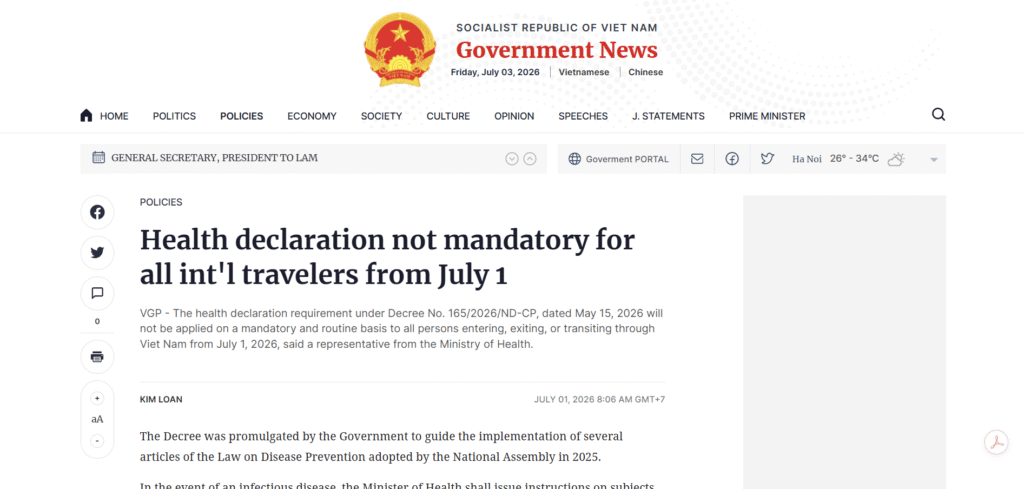
A few days later, however, Vietnam’s Ministry of Health clarified the announcement. While a new health declaration framework has been introduced, it isn’t currently mandatory for every international traveler. Instead, the requirement will only be used when public health authorities decide it’s necessary.
So what does this actually mean if you’re visiting Vietnam?
The good news is that the overall entry process hasn’t changed very much. Your visa requirements remain the same, passport rules are unchanged, and for most travelers, entering Vietnam is just as straightforward as it was before.
In this guide, I’ll explain what changed, what the current Vietnam entry requirements are, and what you should check before boarding your flight.
Vietnam Entry Rules 2026: What’s Changed?
The biggest talking point surrounding the Vietnam Entry Rules 2026 has been the new health declaration announcement.
Earlier this year, Vietnam introduced new regulations that included a health declaration framework for international travelers. The announcement quickly spread across travel websites, leading many people to believe that every visitor would need to complete a declaration before arriving.
Shortly after the announcement, the Ministry of Health released a clarification explaining that health declarations are not currently required for every traveler. Instead, the system has been put in place so it can be activated if public health authorities decide it’s needed in the future.
Apart from that clarification, very little has changed.
Your visa requirements remain exactly the same, passport validity requirements haven’t changed, and the existing immigration process is still in place.
For most travelers, the only real takeaway is to check the latest official updates before your flight instead of relying on older news articles or social media posts.
Do You Need a Vietnam Health Declaration?
This has probably been the biggest question since the July announcement.
What Was Originally Announced?
Under new regulations introduced from 1 July 2026, Vietnam announced a health declaration requirement for international travelers entering, leaving, or transiting through the country.
The news was picked up by travel blogs and media outlets around the world, with many reporting that completing a health declaration would become a mandatory step for everyone arriving in Vietnam.
Naturally, this caused some confusion among travelers who already had flights booked.
What Changed After the Announcement?
Not long after the initial reports, Vietnam’s Ministry of Health issued a clarification.
The ministry explained that although the new health declaration framework exists, it is not currently being applied to every international traveler.
Instead, the declaration will only be required if the public health situation changes and authorities decide it’s necessary.
In other words, the framework is there, but it isn’t something every visitor needs to worry about today.
Do You Need to Complete One?
At the time of writing, most travelers do not need to complete a Vietnam health declaration before entering the country.
However, this doesn’t mean you should ignore the latest travel updates.
Entry requirements can change depending on the public health situation, so it’s still worth checking the official government guidance a few days before your departure.
It only takes a couple of minutes and gives you peace of mind before your trip.
Where Should You Check Before Flying?
If you’re unsure whether a health declaration is required for your trip, always rely on official government sources rather than social media or outdated travel articles.
The Vietnam Government Portal and the official Ministry of Health announcements are the best places to check for any updates before your flight.
Current Vietnam Entry Requirements
Although the health declaration made the headlines, the rest of the Vietnam travel requirements remain largely unchanged.
Passport Requirements
Your passport should be valid for at least six months from the date you enter Vietnam.
It’s also a good idea to make sure your passport is in good condition and has enough blank pages if immigration stamps are required.
While airlines often check passport validity before boarding, immigration officers will also verify your documents when you arrive.
If your passport is close to expiring, renew it before your trip rather than taking the risk.
Vietnam e-Visa Requirements
The updated Vietnam Entry Rules 2026 haven’t changed the country’s visa policy.
If your nationality requires a visa, you’ll still need to apply for a Vietnam e-Visa before traveling unless you’re eligible for visa-free entry.
When applying, take your time and double-check every detail before submitting your application.
Even a small mistake in your passport number or name can delay your visa or require you to apply again.
If you haven’t applied yet, I recommend reading my complete Vietnam e-Visa Guide, where I explain the application process, processing times, and the most common mistakes travelers make.
Visa-Free Entry
Vietnam also allows citizens of certain countries to enter without a visa for a limited period.
The length of stay depends on your nationality, so check the latest visa exemption list before booking your trip.
Even if you qualify for visa-free entry, your passport still needs to meet Vietnam’s validity requirements.
Documents to Carry
I always recommend keeping both digital and printed copies of your important travel documents.
For your trip, you should have:
- Your passport
- Vietnam e-Visa (if required)
- Flight confirmation
- Accommodation booking
- Travel insurance details if you’ve purchased insurance
You probably won’t need every document, but it’s always better to have them ready than search through your inbox while standing at the immigration counter.
How to Prepare Before Your Flight
Now that you know what the current Vietnam entry requirements are, there are a few things you should check before heading to the airport.
I usually go through the same checklist before every international trip. It only takes a few minutes and helps avoid last-minute stress.
Check Your Passport
Make sure your passport is valid for at least six months from your date of entry into Vietnam.
If it’s due to expire soon, renew it before you travel. Airlines can refuse boarding if your passport doesn’t meet the entry requirements.
Confirm Your Vietnam e-Visa
If you need a visa, make sure it’s approved before your departure.
I also recommend comparing your e-Visa with your passport one last time. Check your name, passport number, nationality and travel dates. A small typo can cause unnecessary delays when you arrive.
Check the Latest Travel Updates
Although Vietnam Entry Rules 2026 haven’t changed much overall, it’s still worth checking the official government announcements a few days before your flight.
If there are any temporary health measures or other updates, you’ll know about them before arriving at the airport.
Keep Your Travel Details Handy
Save your flight confirmation and hotel booking on your phone, but also carry printed copies if possible.
I rarely need the printed versions, but they’ve been useful on more than one trip when my internet wasn’t working or my phone battery was running low.
Consider Travel Insurance
Travel insurance isn’t a requirement for entering Vietnam, but I still recommend it.
Hopefully you won’t need it, but if your luggage is delayed, your flight gets cancelled, or you need medical treatment, having insurance can save you a lot of money and stress.
Common Mistakes Travelers Should Avoid
Most travelers enter Vietnam without any problems. The issues that do come up are usually caused by simple mistakes that are easy to avoid.
Applying for Your e-Visa Too Late
Don’t leave your visa application until the last minute.
While many applications are processed quickly, delays can happen during busy travel periods. I usually recommend applying at least two or three weeks before your departure.
Using Unofficial Visa Websites
When you search online, you’ll find plenty of websites offering Vietnam visas for much higher prices.
Some are genuine agencies, but many charge unnecessary service fees.
If you’re applying yourself, use the official Vietnam e-Visa website.
Entering Incorrect Passport Details
This is probably one of the most common mistakes.
Before submitting your visa application, double-check every detail.
Make sure your passport number, full name, date of birth and nationality all match your passport exactly.
Assuming Older Travel Information Is Still Correct
Travel rules can change, especially when they’re related to visas or public health.
That’s exactly what happened with the Vietnam health declaration. Many websites reported the original announcement but never updated their articles after the Ministry of Health issued a clarification.
Before every trip, spend a few minutes checking the latest official updates rather than relying on information published months ago.
Not Carrying Printed Copies
Most airports accept digital documents, but I still travel with printed copies of my passport information page, visa, hotel booking and flight confirmation.
It’s one of those things you probably won’t need, but if your phone stops working or you can’t access your email, you’ll be glad you packed them.
My Advice Before Flying to Vietnam
I’ve spent nearly two months traveling across Vietnam, and it’s still one of the easiest countries I’ve visited in Southeast Asia.
Don’t let the recent headlines about the Vietnam Entry Rules 2026 make you think entering the country has suddenly become complicated.
For most travelers, the process is almost exactly the same as before.
Apply for your visa early if you need one, make sure your passport is valid, and spend a couple of minutes checking the latest official government updates before your flight.
That’s really all there is to it.
I also recommend keeping both digital and printed copies of your important documents. You may never need the printed versions, but they’ve saved me from unnecessary stress more than once while traveling.
If you prepare everything before leaving home, you’ll be able to focus on the fun part of the trip instead of worrying about paperwork at the airport.
Conclusion
The headlines surrounding the Vietnam Entry Rules 2026 understandably caused some confusion, especially after reports suggested that every traveler would need to complete a health declaration from 1 July.
The latest clarification from Vietnam’s Ministry of Health paints a different picture.
At the time of writing, a health declaration is not required for every international traveler. The framework is in place and can be activated if public health authorities decide it’s necessary, but for now, most visitors won’t need to complete one before arriving.
The rest of Vietnam’s entry process remains largely unchanged.
If your passport is valid, your visa is sorted if required, and you’ve checked the latest official travel updates before your flight, you should have everything you need for a smooth arrival.
Frequently Asked Questions
Do I need a Vietnam health declaration in 2026?
At the time of writing, no. Although Vietnam introduced a health declaration framework from July 2026, the Ministry of Health later clarified that it isn’t currently mandatory for all international travelers. It’s still worth checking the latest official guidance before you fly.
Do I still need a Vietnam e-Visa?
Yes, if your nationality requires one. The Vietnam Entry Rules 2026 haven’t changed the country’s existing visa policy.
Can the entry rules change again?
Yes. Immigration and public health measures can change over time, which is why it’s always a good idea to check the official government websites before your departure.
Should I print my travel documents?
I recommend it. Digital copies are useful, but printed copies can be a lifesaver if your phone battery dies or you have trouble accessing your documents.
Where can I check the latest official updates?
The Vietnam Government Portal and the official Vietnam Immigration and e-Visa websites are the best places to check for the latest entry requirements before your trip.