Don’t ruin your itinerary! Learn the biggest Vietnam travel mistakes first-time visitors make, including transport errors, weather traps, and overplanning.(CLICK HERE)
Table of Contents
Vietnam wasn’t a difficult country to travel through. But fifty days on the road taught me things that are genuinely hard to understand from a standard travel guide, the kind of lessons that only show up once you’re actually dealing with a locked scooter rental shop or a bus that arrives two hours early.
These Vietnam travel mistakes aren’t generic warnings copied from somewhere online. They’re things I learned from actually traveling through Hanoi, Sapa, Ninh Binh, Hue, Hoi An, Da Lat, and Ho Chi Minh City over fifty real days.
This article is really one question answered twelve different ways: what would I do differently if I could start my Vietnam trip again?
1. Don’t Try to See All of Vietnam Too Quickly

Vietnam feels a lot bigger once you’re actually moving between regions than it does looking at a map beforehand. The distance from Hanoi in the north to Ho Chi Minh City in the south is enormous, and every leg in between eats up more time than you’d expect.
Travel days consistently took longer than I initially planned for. The overnight bus from Ninh Binh to Hue alone ran close to 13 hours. Hoi An to Da Lat took a similar stretch overnight. These aren’t quick hops between neighboring towns.
I spent multiple days in most places rather than constantly moving, and that decision made the entire trip more enjoyable rather than less. Nine days in Hoi An. Five days in Hue. Eleven days in Ninh Binh, though that one wasn’t entirely planned. The difference between looking at Vietnam on a map and actually traveling through it is the difference between thinking a country looks manageable and realizing just how much time each transition actually costs you.
One of the biggest Vietnam travel mistakes first-time visitors make is building an itinerary where every second day is a new city. Don’t do that. Give yourself room to actually be somewhere instead of just passing through it.
2. Don’t Underestimate Vietnam’s Sleeper Buses

Sleeper buses became a major part of how I actually got around Vietnam, and they’re worth understanding properly before you book one blindly. What they’re actually like varies enormously depending on the operator. Overnight travel on a good bus, like HK Busline from Ninh Binh to Hue, meant a fully enclosed private berth with a curtain, pillow, and charging port. A cheaper standard sleeper elsewhere meant an open berth with far less privacy.
Boarding points aren’t always where you’d expect, journey lengths run longer than advertised more often than not, and comfort swings wildly between operators even on the same route. I learned this directly on the Hue to Hoi An leg, where I didn’t specify a seat when booking through my hostel and got assigned the back corner, easily the most uncomfortable seat on the bus for that mountain crossing.
Research the bus, the departure point, the arrival point, and the journey length instead of simply choosing whatever’s cheapest. This is one of the more practical Vietnam travel mistakes to avoid, since the price difference between a bad seat and a good one is often small, but the comfort difference over ten or more hours is significant.
3. Don’t Book Transport Without Checking Where the Bus Actually Leaves From
Different companies use different departure points, and this caught me off guard more than once. A bus office isn’t always the same as the actual boarding point, and pickup locations vary by operator even on identical routes.
Google Maps matters here more than people expect. Before booking anything, I started checking exactly where I’d need to be and how far that was from my accommodation. Vexere actually helped with this directly, since the app shows the exact distance to boarding and drop-off points in kilometers when you select an option, letting you pick the pickup spot closest to wherever you’re staying rather than guessing.
Allowing extra time to reach the departure point matters too, particularly in cities like Hanoi or Ho Chi Minh City where traffic can turn a short walk into a longer ordeal than expected. This is a smaller mistake compared to some others on this list, but it’s an easy one to avoid once you know to check it.
4. Don’t Build Your Trip Around Perfect Weather
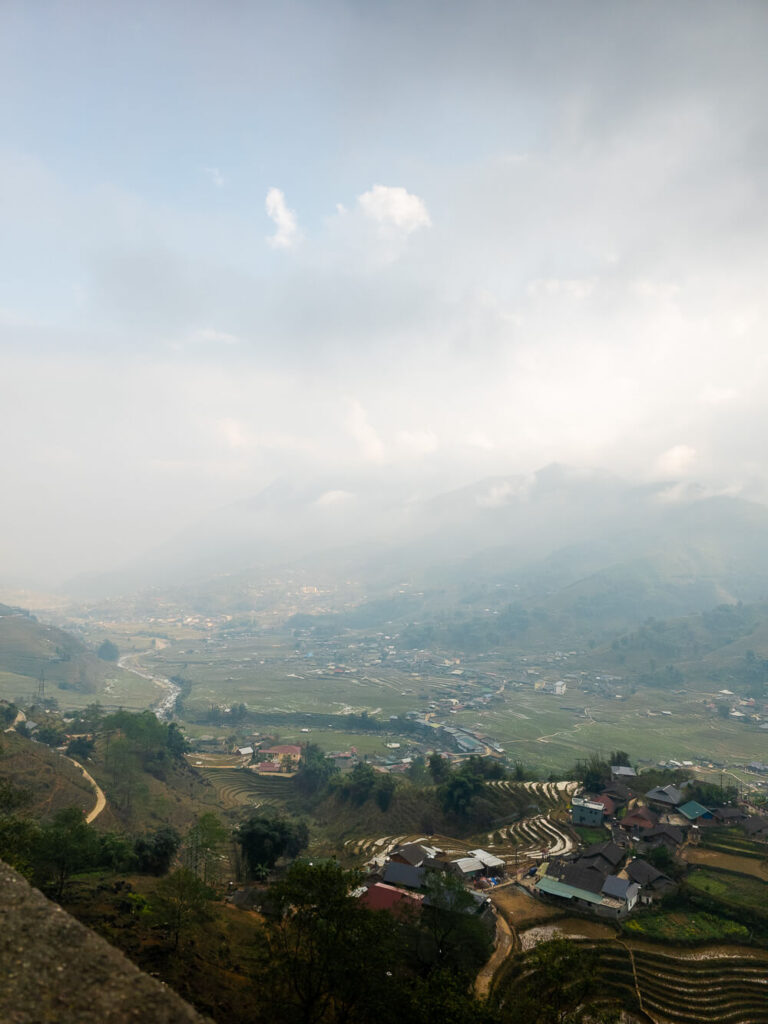
Vietnam’s weather varies dramatically by region, and assuming consistent conditions across the whole country is one of the more common Vietnam travel mistakes I made early on.
Northern, Central, and Southern Vietnam essentially run on three different climates. Fog, rain, heat, and sudden unexpected changes all showed up throughout my fifty days, often disrupting exactly the activities I’d planned around.
Sapa is the perfect example. I dealt with heavy fog for a large portion of my week there, which blocked mountain views and forced a scooter ride toward Ta Van to turn back partway through when visibility dropped to almost nothing. I did manage one clear day for the trek to Lao Chai village, but the fog dictated far more of my schedule than any plan I’d made in advance.
Having flexibility mattered more than having a perfect itinerary. If I’d rigidly stuck to a fixed schedule in Sapa, I would have missed the one clear window I actually got.
5. Don’t Assume Your Plans Will Always Work Out

This is different from weather specifically. Sometimes things just don’t go the way you expect for reasons that have nothing to do with rain or fog.
Da Lat is the strongest example from my entire trip. I’d planned around countryside exploration and scooter rides to waterfalls, coffee farms, and cloud-hunting spots. When I actually tried to rent a scooter, there simply weren’t any available anywhere I checked. My plans changed completely, and I ended up walking the entire day instead, eventually finding my way to Xuan Huong Lake and Da Lat Cathedral on foot rather than by scooter.
Activities getting cancelled, rentals falling through, plans changing on short notice, these things happen regardless of how well you’ve researched in advance. The trip can still work when your original plan doesn’t. Leave room for spontaneous changes instead of making every day dependent on one specific activity actually happening the way you pictured it.
6. Don’t Stay Only in the Obvious Tourist Areas
Some of my favorite experiences during the entire fifty days came from exploring beyond the standard checklist rather than sticking to famous names.
In Ninh Binh, I found Chùa Vàng entirely by accident, a golden temple on an island reached by a floating bridge that most travelers never hear about. I stumbled onto Thiên Cung Cave behind Bích Động after asking locals where a mysterious set of stairs led. In Hue, Rung Ru Cha Mangrove Forest gave me one of the most peaceful two hours of my entire trip, complete with an observation tower and a hidden shrine. Around Hoi An, Cam Kim Island, Khe Tan Reservoir, and a hidden boat temple in a fishing village all came from riding without a fixed destination rather than following a map pin.
None of these were on my original itinerary. All of them ended up being genuine highlights. Some of the best parts of a Vietnam trip come from simply exploring rather than following a standard checklist, and skipping this kind of wandering is one of the bigger Vietnam travel mistakes travelers make when they’re trying to see everything famous and nothing else.
7. Don’t Overplan Every Day
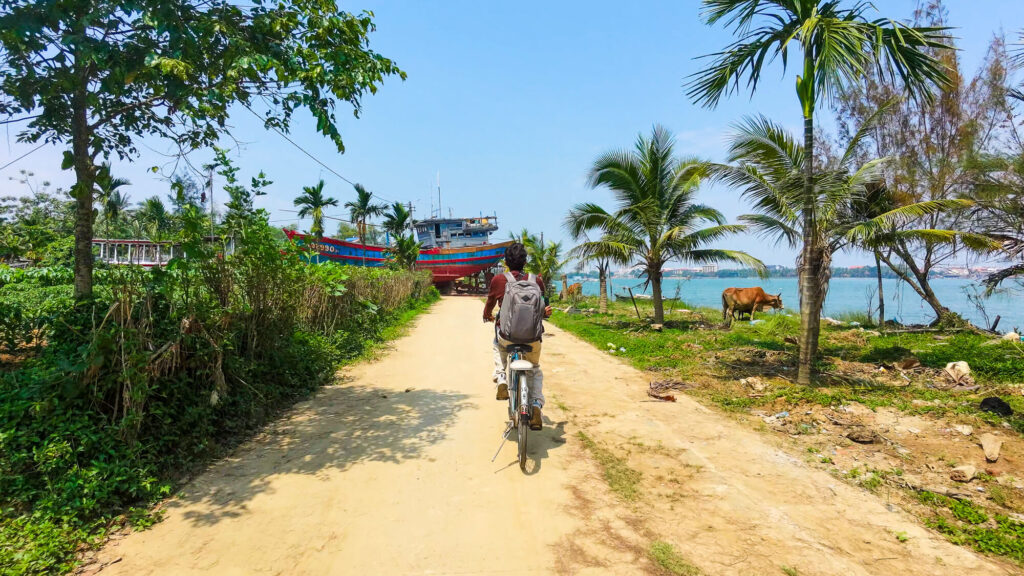
There’s a real difference between having a general route and planning every single hour of every single day.
Leaving free time, slow mornings, café stops, and simply walking around without a destination gave me room to actually experience places rather than constantly ticking off a list. Following something interesting I happened to find locally, a market, a side street, a random temple, only worked because I hadn’t scheduled that time slot for something else already.
My longer stays gave me the room to do this properly. Nine days in Hoi An meant I could spend the first few days doing the obvious things and still have time left over to cycle out to Cam Kim Island without feeling rushed. A tightly overplanned itinerary doesn’t leave space for that kind of discovery, which is exactly why this sits high on my list of Vietnam travel mistakes to actively avoid.
8. Don’t Assume You Need to Book Everything Months in Advance
This one deserves a balanced answer rather than a blanket statement either way.
What’s worth booking ahead: intercity transport during peak season or around Tet, and accommodation in smaller towns during busy periods. What can often be decided later: day-to-day activities, which restaurant to eat at, whether to rent a scooter today or tomorrow, and often even which city to head to next.
Flexibility mattered enormously during a trip this long. I generally booked accommodation a few days ahead rather than weeks, and transport similarly close to the date except during Tet, when everything changed completely. Advance booking makes the most sense specifically around predictable high-demand periods. Outside of that, deciding a few days out worked perfectly well for most of my fifty days.
9. Don’t Ignore Tet When Planning Your Vietnam Trip

This is one of the strongest, most practical lessons from my entire trip, and it deserves real attention if your dates overlap with Vietnam’s Lunar New Year even slightly.
Tet completely reshaped my time in Ninh Binh. I arrived planning to stay four or five days. I ended up staying eleven. Restaurants closed. Boat tours at Tam Coc and Trang An stopped running entirely. Buses out of the region were fully booked for over a week once I actually tried to leave. Business hours and availability shifted overnight the moment the holiday began.
I stayed in Ninh Binh for eleven days partly because of Tet, which makes it a genuine real-life example rather than a theoretical warning. If you’re traveling anywhere near the Tet period, check the exact dates for that specific year before booking anything, and build significant flexibility into your plans around it. This is easily one of the Vietnam travel mistakes with the biggest real consequences if you get caught out unprepared.
10. Don’t Assume Every Destination Will Work the Way You Expect
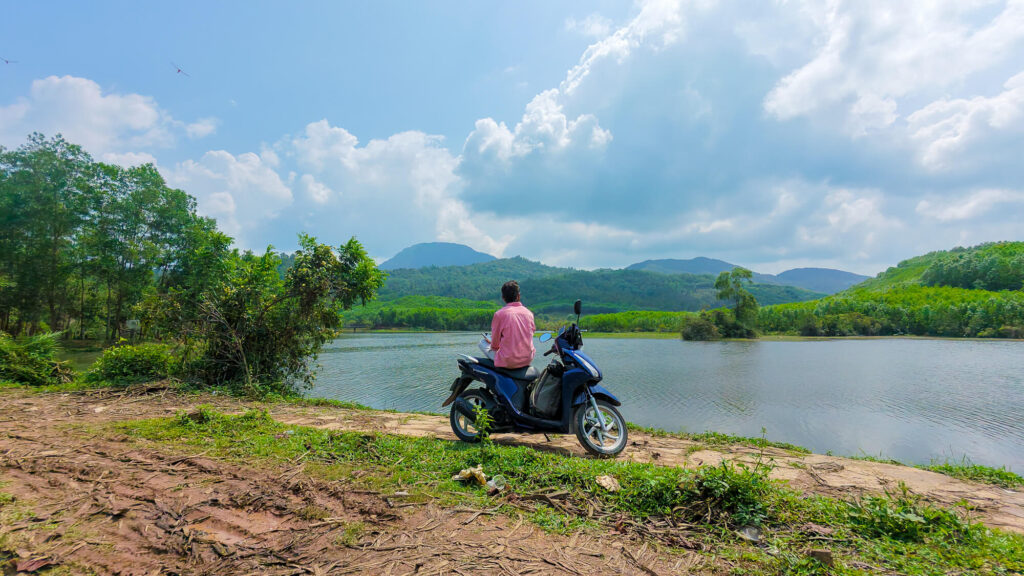
Each destination in Vietnam has its own rhythm, its own transport quirks, and its own practical challenges that don’t necessarily match what you’d assume going in.
Sapa’s scooter shops enforce a fixed same-day return time around 7 p.m. rather than the 24-hour rental windows common elsewhere in Vietnam, which caught me off guard entirely. Ninh Binh’s boat tours and general pace shut down completely during Tet in a way I hadn’t anticipated. Hue’s most memorable spots, the abandoned water park, the mangrove forest, weren’t the Imperial City everyone talks about. Hoi An rewarded riding without a plan far more than following any guide. Da Lat’s scooter shortage reshaped an entire three-day stay into something almost entirely different from what I’d pictured.
Expectations changed constantly once I actually arrived somewhere, and treating each place as having its own logic rather than assuming a single Vietnam-wide playbook made the whole trip easier to navigate.
11. Don’t Travel Without a Reliable Data Connection
Mobile data became more than just a convenience throughout my fifty days. Google Maps, Grab, Vexere, translation apps, Zalo, finding accommodation, and checking transport all depend on a working connection to function properly.
I bought a SIM in Hanoi’s Old Quarter rather than at the airport, since airport SIM prices in Vietnam run two to three times higher for the same package. Having reliable data from day one meant I could navigate unfamiliar cities, book transport on the fly, and communicate with hosts and drivers without constantly hunting for WiFi.
Not sorting out data properly is one of the more avoidable Vietnam travel mistakes, since it’s a five-minute fix that pays off every single day of a longer trip. My full guides on the Best SIM Card in Vietnam and Best Apps for Traveling in Vietnam go into exactly which network and apps actually mattered throughout my trip.
12. Don’t Pack for the Entire Country Without Thinking About the Regions
Northern, Central, and Southern Vietnam have genuinely different weather conditions, and packing as if the whole country shares one climate is a mistake I felt directly, particularly arriving in Sapa and Da Lat without warm enough layers for how cold the mornings actually got.
Laundry became a regular part of the trip rather than an occasional errand, roughly once a week, which meant rewearing clothes was completely normal rather than something to avoid. Packing lighter for a long trip mattered more than I expected going in, since carrying too much becomes its own burden across fifty days of buses, scooters, and constant movement.
This isn’t a full packing list, just the honest lesson that regional variation, cold mountain mornings in the north, humidity in the center, consistent heat in the south, deserves real thought rather than a single generic packing approach.
13. Don’t Assume a Longer Trip Means You Need a More Complicated Itinerary
Fifty days gave me the opportunity to slow down in a way a two-week trip never would have allowed.
Staying longer in places, working from cafés and hostels some mornings, getting familiar with specific neighborhoods, having repeat places, my favorite Banh Mi spot in Hoi An, a regular café by Xuan Huong Lake, and making small local connections along the way all came from not constantly chasing the next attraction.
A longer trip doesn’t need a more complicated itinerary. If anything, it needs a simpler one, fewer destinations, more time in each, and more room for the unplanned. That’s really the entire philosophy behind how I approached this trip once I understood it, and it’s the opposite of most of the Vietnam travel mistakes covered earlier in this article.
14. The Biggest Lesson I Learned From Traveling Vietnam for 50 Days

If I had to distill fifty days down to one idea, it’s this: flexibility mattered more than any itinerary I built in advance.
Slow travel genuinely changes the experience, not just the pace of it. Transport takes real time, always more than you initially expect. Weather will interfere with plans regardless of how well you’ve researched, whether that’s fog in Sapa or a scooter shortage in Da Lat. Some of the best places on the entire trip weren’t on my itinerary at all, a golden temple on a lake, a mangrove forest with a hidden shrine, a boat temple found by accident while cycling. And ultimately, you don’t need to see everything to have a trip that feels complete.
This is the lesson underneath every other Vietnam travel mistake on this list. Plans are useful as a starting point. They’re far less useful as a fixed script.
What Would I Do Differently If I Planned My Vietnam Trip Again?
Rather than adding more mistakes to the list, here’s a concise, practical recap of what I’d actually change.
I Would…
Leave more empty days built directly into the route rather than filling every single one in advance. Build more flexibility into transport bookings, particularly anywhere near Tet or peak season. Research weather by region specifically, rather than assuming one climate applies to the whole country. Check Tet dates before booking anything, the single most impactful piece of advice in this entire article. Avoid overpacking, since laundry and rewearing clothes became completely normal across fifty days. Spend longer in places I genuinely enjoyed rather than moving on simply because a rough plan said to. Keep looking beyond the obvious tourist attractions, since the places I found by accident consistently outperformed the ones I’d planned for.
Frequently Asked Questions About Vietnam Travel Mistakes
What are the biggest mistakes first-time travelers make in Vietnam?
Moving too quickly between destinations, overpacking a fixed itinerary with no flexibility, ignoring regional weather differences, and not checking Tet dates before booking transport are among the most common Vietnam travel mistakes first-time visitors make.
Is Vietnam difficult to travel independently?
No, Vietnam is very manageable to travel independently. Apps like Google Maps, Grab, and Vexere handle most of the logistics, and English is common enough in tourist areas to get by comfortably.
How many days should you spend in Vietnam?
This depends on your travel style, but two to three weeks covers the main highlights reasonably well, while a month or more, like my own fifty-day trip, allows genuine slow travel with room to explore beyond the obvious stops.
Is it a mistake to visit too many places in Vietnam?
Yes, generally. Vietnam is larger and more time-consuming to move through than it appears on a map, and cramming too many destinations into a short trip tends to reduce how much you actually experience in each place.
Should I book buses in Vietnam in advance?
During normal periods, a day or two ahead is usually sufficient. During peak season or anywhere near Tet, booking significantly further in advance is worth it, since availability and pricing both shift dramatically.
Are sleeper buses in Vietnam difficult to travel on?
Not difficult, but variable. Comfort depends heavily on the specific operator and seat assignment, so researching the bus and requesting a good seat matters more than people expect.
Should I avoid traveling during Tet in Vietnam?
Not necessarily avoid it, but plan around it carefully. Tet brings closures, transport shortages, and a completely different rhythm to daily life, which can be either disruptive or genuinely memorable depending on your flexibility.
How important is mobile data when traveling in Vietnam?
Very important. Nearly every practical tool, navigation, ride-hailing, bus booking, translation, communication, depends on a working connection, making a reliable SIM one of the first things worth sorting out after landing.
Is it better to travel Vietnam slowly?
Based on my own experience, yes. Slow travel allowed for repeat routines, local connections, and unplanned discoveries that a faster-paced itinerary simply wouldn’t have had room for.
What should I know before traveling to Vietnam for the first time?
Expect regional weather differences, research transport before booking rather than choosing blindly on price alone, check Tet dates if your trip falls nearby, and build in flexibility rather than a completely fixed itinerary.
Conclusion
Vietnam wasn’t a difficult country to travel through, but fifty days on the road taught me that flexibility is often more valuable than a perfect itinerary. Every mistake on this list, and there were plenty, came from assuming a plan would hold exactly as written rather than expecting the country to shape it along the way.
Making mistakes is part of learning how to travel a country properly. Fog rerouted Sapa. Tet rewrote Ninh Binh. A scooter shortage redefined Da Lat entirely. None of it matched the plan, and almost all of it became the part of the trip I remember most.
Planning Your Vietnam Trip?
If you’re building a bigger Vietnam itinerary, here’s what else I’ve written:
Vietnam Slow Travel Guide: 50-Day Itinerary & Budget (2026)
Vietnam Travel Budget: Exactly How Much I Spent in 50 Days
Vietnam Itinerary for Slow Travel: My 50-Day Route Through the Real Vietnam
How to Get From Hanoi Airport to Old Quarter: Bus, Grab & Taxi Guide