Have exactly 2 days in Yogyakarta? Skip the exhausting day trips and explore Central Jogja’s vibrant streets, squares, and historic sights at your own pace.(CLICK HERE)
Table of Contents
Planning 2 days in Yogyakarta? This is a slow 2 day Yogyakarta itinerary built entirely around Central Jogja. You’ll walk, wander through markets and old streets, watch a city sunset and spend an evening at Alun-Alun Kidul. There are no day trips to Borobudur or Prambanan in it. Most plans for two days here are packed. Temples at sunrise, a palace by mid-morning, a day trip in the afternoon, and a collapse into bed wondering what you actually saw.
I did it differently, mostly by accident. I was traveling from Jakarta to Surabaya, Yogyakarta sat in the middle, so I stopped. I stayed near Yogyakarta Train Station, kept my schedule empty and let the city show me what it wanted to.
I loved it. Properly loved it. I wish I’d had more time.
Note: This itinerary is designed for Central Yogyakarta and does not include Borobudur or Prambanan. If your priority is visiting the major temples, you’ll need a different route.
Is 2 Days in Yogyakarta Enough?
Short answer: it depends on what you want from the city.
If you want to tick off every famous attraction in and around Yogyakarta, no. Two days won’t cover it. The city has enough to keep you busy for a week, and trying to squeeze it all in is a good way to spend your whole trip in transit.
But if you want to actually feel the place, yes. Two days is enough for a real taste of Central Yogyakarta.
Here’s why it works. The central area is compact. A lot of what makes Jogja special sits close together: markets, squares, old streets, food stalls, people just living their lives. You don’t need a vehicle for most of it, and you don’t need a long list.
So this Yogyakarta itinerary 2 days long isn’t built around maximum sightseeing. It’s built around experience. Fewer places, more time in each, and room for things you didn’t plan.
What This Yogyakarta Itinerary Covers
- The area around Yogyakarta Train Station
- A local market nearby
- The mosque near the station
- Wandering through Central Jogja
- Tugu Jogja and Tugu Square
- Sunset at Tugu
- Central Yogyakarta after dark
- The historic heart of the city: Pasar Beringharjo, the Kraton and Taman Sari
- Alun-Alun Kidul and its famous twin banyan trees
- Street food, evening atmosphere and a lot of walking
These places fit naturally into a short, mostly central stay. That’s why they’re here.
2 Days in Yogyakarta at a Glance
| Area covered | Central Yogyakarta only |
| Travel style | Slow, walking-based, no fixed schedule |
| Best for | Short stopovers, first-time visitors, slow travelers |
| Where to base yourself | Near Yogyakarta Train Station or the central area |
| Getting around | Mostly on foot, Grab or Gojek for longer distances |
| Day 1 | Train station area, local market, mosque, Tugu Jogja, sunset at Tugu, evening streets |
| Day 2 | Pasar Beringharjo, Kraton Yogyakarta, Taman Sari, Alun-Alun Kidul |
| Scooter needed? | No |
| Not included | Borobudur, Prambanan and other day trips outside the center |
How to Get Around Yogyakarta
You don’t need a transport strategy for this itinerary. That’s the point of it.
Walking Around Central Yogyakarta
Most of my Yogyakarta trip happened on foot.
Central streets, the market, squares, small shops, food stalls. All of it close enough to walk. And walking changes what you notice. The guy fixing a motorbike on the corner. The woman setting up her stall. The little shop you’d have flown past in a car.
I didn’t follow a route. I picked a direction, walked until something looked interesting, then stopped. If you’re planning slow travel in Yogyakarta, that’s the whole method.
Grab and Gojek
Walking won’t cover everything. For longer distances, or when your feet need a break, Grab and Gojek both work well in Yogyakarta. They’re cheap, quick to book and handy for getting back to your accommodation after a long day or when you’re carrying luggage.
I used ride-hailing only when walking stopped making sense. That wasn’t often.
Scooter and Bicycle
If you want to go beyond the center, scooters and bicycles are an option. They make sense for attractions spread further out, and you get the freedom to stop wherever you like.
I didn’t rent either. Nothing in this itinerary depends on one.
Day 1: Exploring Central Yogyakarta
The first day was about the area around where I stayed. No big plan. Just a neighborhood and a pair of legs.
Yogyakarta Train Station Area
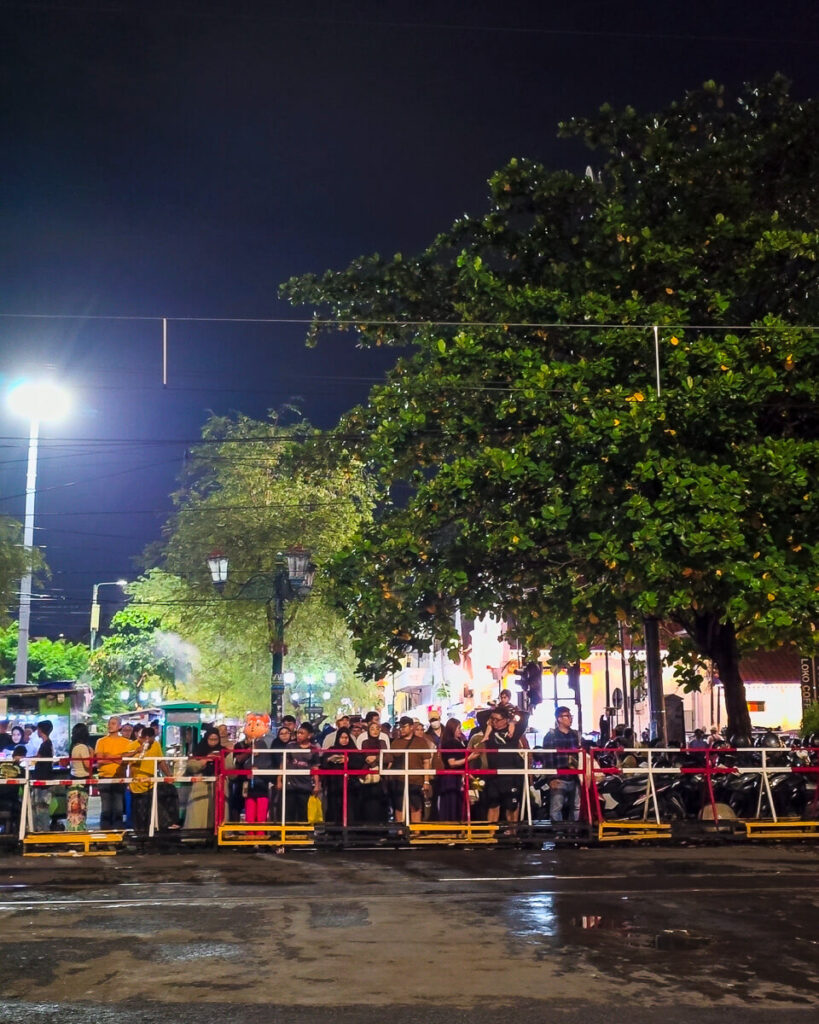
I stayed close to the train station, and I’d recommend it for a short visit.
The streets around the station are busy but not stressful. Food everywhere. Small shops. People heading to work, people heading home, people waiting on corners for reasons I couldn’t figure out. It feels like a real neighborhood that happens to have a station in it.
Being based here meant I could walk to a lot of things without planning transport. I just stepped outside and started exploring.
The Local Market Near the Train Station
There’s a local market within walking distance of the station, and it’s worth an hour of your time even if you buy nothing.
This isn’t a market set up for tourists. It’s where people from the area shop. Fruit, vegetables, snacks, everyday items, small food stalls. Sellers calling out, buyers bargaining, bikes squeezing through gaps that look too small for them.
What I liked most was how ordinary it was. Nobody was performing. Nobody was trying to sell me a souvenir. It was a normal morning for everyone else, and I happened to be walking through it.
Wandering Through Central Jogja
This became one of my favorite parts of the trip, and I didn’t even plan it.
I walked through central streets, then side streets. Past small shops, food stalls, old buildings, people sitting outside their houses. Nothing dramatic. But when you walk slowly you start seeing things. A faded sign. A street with only bicycle repair shops. A stall with a queue that tells you the food is good.
These are the places that disappear when you follow a strict itinerary. For a 2 day Yogyakarta itinerary, this is the thing I’d protect. Leave time to wander. It’s not filler. It’s the trip.
Tugu Jogja and Tugu Square
Tugu Jogja is one of the city’s best-known landmarks, a white monument standing at a busy junction in Central Yogyakarta. It’s tied to the symbolic line that connects the Sultan’s palace with Mount Merapi to the north.
You don’t need much more history than that. What matters is what it’s like to be there.
The square around it is open and easy to reach from the station area. The streets are busy, but the junction has a calm of its own, with people stopping to take photos, sit or just watch the traffic flow around them.
Watching the Sunset at Tugu
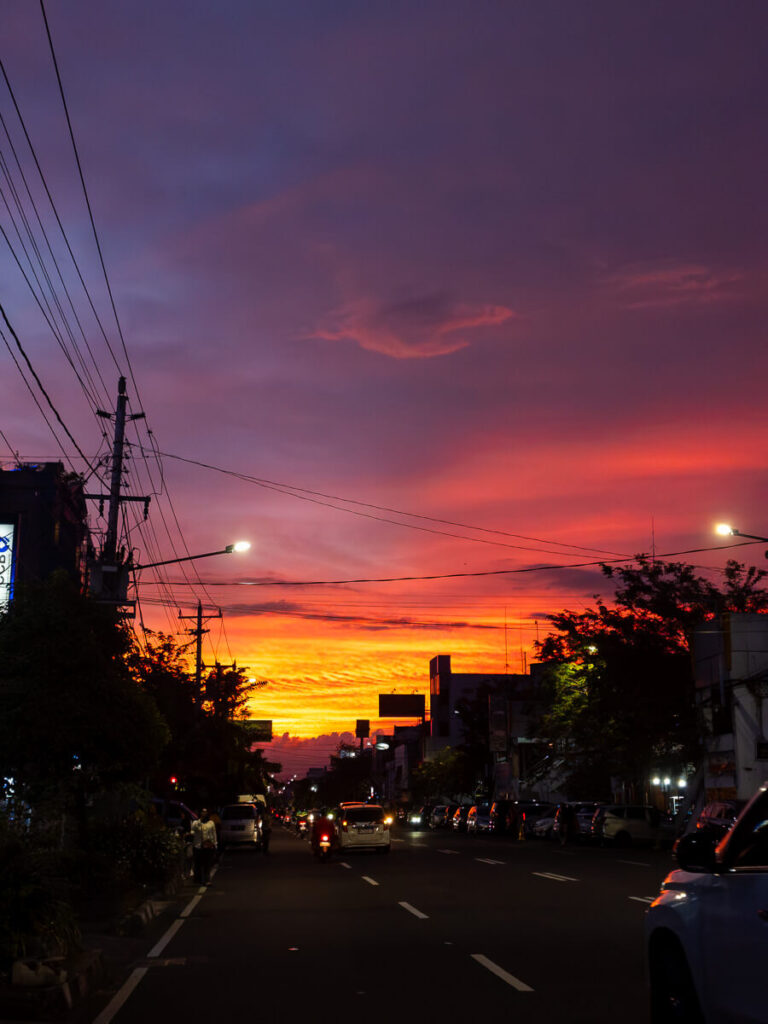
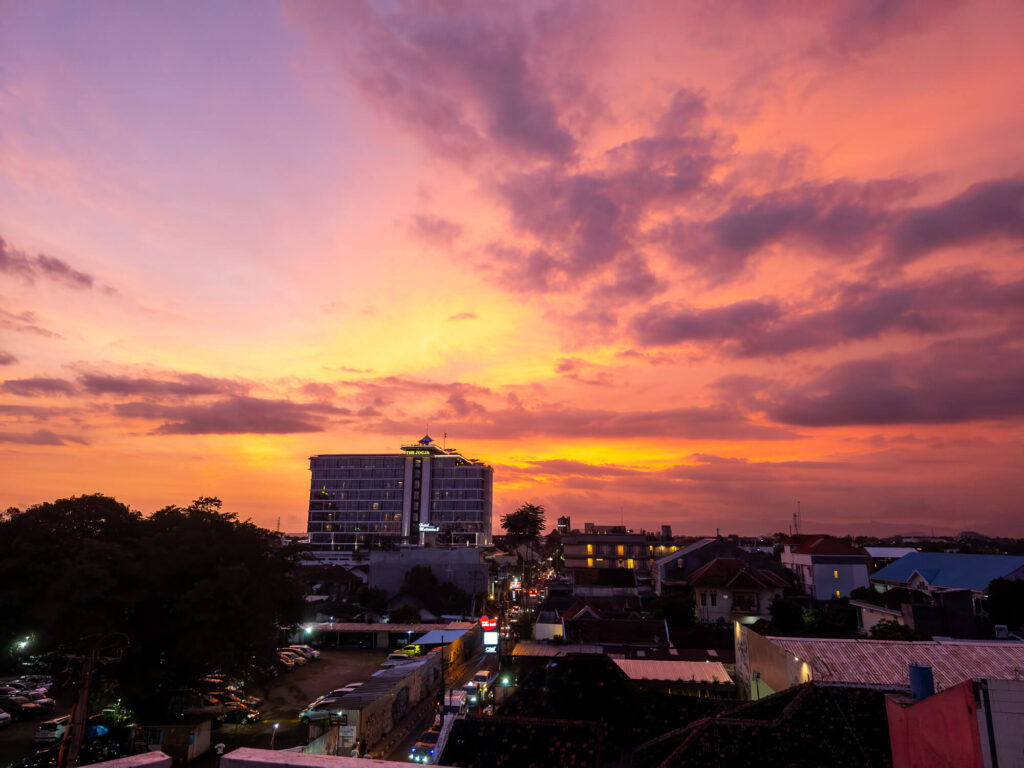
This was my favorite moment in Yogyakarta.
We usually think of sunsets as something for beaches and mountains. Open horizons, nothing in the way. I’ve watched plenty of those and I love them.
But the sunset at Tugu showed me something else. A city sunset can be just as beautiful. Maybe more, because of everything around it. Buildings, rooftops, wires, traffic, people. The sky turned colors over all of it, and the whole junction seemed to slow down for a moment.
It’s the best sunset I’ve seen in a city. No question. And it wasn’t a viewpoint. No entry fee, no platform, no planning. I stood in the middle of the city and watched the sky do its thing. You can’t schedule a moment like that, which is exactly why slow travel works.
If you only have 2 days in Yogyakarta, be near Tugu around sunset. Don’t rush it.
Central Yogyakarta After Dark
The city shifts in the evening.
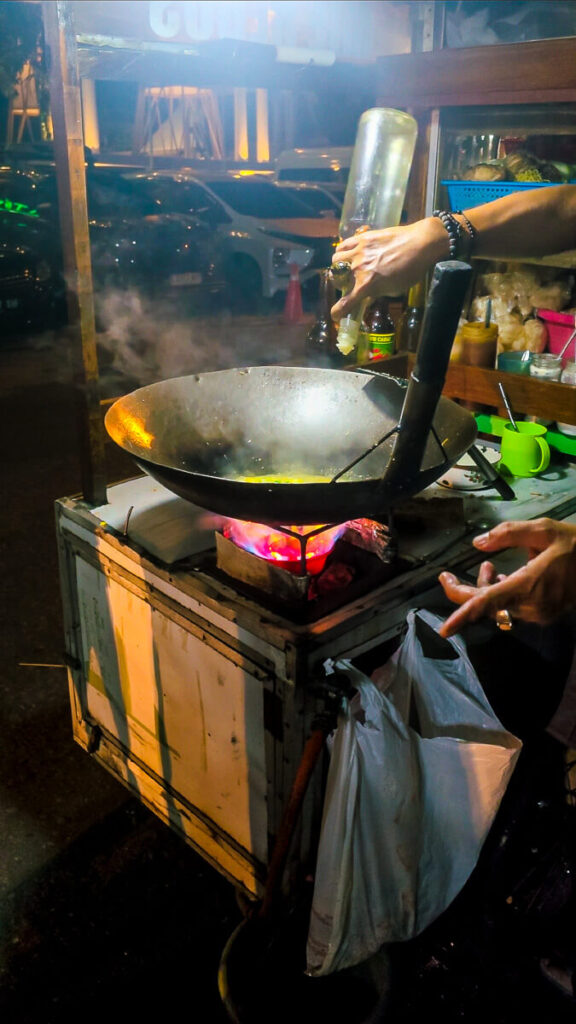
The heat drops. The streets fill with a different kind of energy. Food stalls light up, shops stay open, people come out to eat, walk and sit. It feels less like a place you’re visiting and more like a place that’s letting you in.
I spent my evenings outside. Walking, eating street food, watching people. No big attraction. I didn’t need one.
Day 2: Exploring the Historic Heart of Central Yogyakarta
Day 2 moves south into the older part of the city. If Day 1 was about the neighborhood around the station, this is the stretch that leads from the main market street down to the Sultan’s palace and the southern square.
The places below sit in a rough line, so you can walk or ride between them without crisscrossing the city. Take them in whatever order suits you.
Alun-Alun Kidul

Alun-Alun Kidul was one of the highlights of my second day, and it’s easy to see why people love it.
It’s a large open ground in the southern part of Central Yogyakarta, just south of the Kraton. Wide, flat and full of life. At its center stand two huge banyan trees, side by side. You’ll notice them immediately.
There’s a tradition tied to them called Masangin. The idea is that you walk between the two trees with a blindfold on. According to the story, if you can walk straight through, you’re said to have a pure heart or good intentions. Some people believe it brings good luck. That’s folklore and belief, not recorded history, but it’s a big part of why the square draws such a crowd. Watching people try it, laughing, veering off course, getting guided by friends, is entertaining on its own.
Around the square there’s plenty to see. Street food stalls, groups sitting on mats, families, couples, friends hanging out. It feels like the whole neighborhood has come out for the evening. When it gets dark, the square changes. Brightly lit pedal vehicles roll around with music playing, and the open ground fills with color and noise.
What stood out to me was how local it felt. It’s famous, but it doesn’t feel like a stage set. It feels like a place people actually use. I walked around, watched the trees, grabbed some food and sat and took it in.
It’s the kind of place where you stop checking the time.
Pasar Beringharjo and Malioboro
Pasar Beringharjo is Yogyakarta’s best-known traditional market, sitting at the southern end of Jalan Malioboro, the city’s main shopping street. It has been a trading spot for a very long time, and it’s still busy with locals, not just visitors.
It’s especially known for batik and other textiles, with food, spices and everyday goods mixed in. It’s a good place to see how central Jogja actually shops, and a much more grounded experience than the souvenir stalls along the main road.
A few practical notes:
- Bargaining is normal in the textile sections, so stay friendly and don’t rush
- Bring cash
- Go with an open mind rather than a shopping list
Walking down Malioboro to reach it is part of the experience. Expect crowds, street vendors and a lot of movement. From the market area you’re also close to the Titik Nol Kilometer junction and the old colonial-era buildings around it, which make an easy, free stop on foot.
Kraton Yogyakarta (The Sultan’s Palace)
Kraton Yogyakarta is the royal palace complex and the cultural center of the old city. It’s still the seat of the Sultan of Yogyakarta, which is why this part of town feels different from the rest. The streets around it are quieter, and many people live and work inside the walled area.
Even if you don’t go in, the area around the Kraton rewards walking. Wide squares to the north and south, old walls, gates and traditional architecture. If you do plan to go inside, check opening hours locally before you head over, as visiting times can change on ceremony days, and dress respectfully.
Taman Sari
Taman Sari is the former royal water garden, just west of the Kraton. It was built in the 18th century as a retreat for the Sultan’s family, with bathing pools, gates and passages.
What makes it interesting for a slow trip is the surrounding neighborhood. The old complex is surrounded by narrow lanes, where local houses, small batik workshops and cafés sit side by side. You can easily spend time just wandering these lanes, which suits the whole spirit of this itinerary.
Wear comfortable shoes. The ground is uneven in places, and you’ll want to walk without watching the time.
Leave Some Time to Wander
This is the part of the itinerary I want to be loud about.
You don’t need to fill every hour. In a 2 day trip, the temptation is to keep moving. Resist it.
Use the free time for the things that make a trip feel good:
- Have a long lunch
- Find a café and sit for a while
- Rest
- Walk without a destination
- Go back to somewhere you liked
- Follow a street that looks interesting
That’s how I experienced Yogyakarta. Unplanned and a little lazy. I wasn’t trying to cover the city. I was trying to be in it.
What Makes This Yogyakarta Itinerary Different?
Most plans for 2 days in Yogyakarta are built to fit in as many attractions as possible. This one isn’t.
It’s built around:
- Staying relatively central
- Walking
- Local markets
- Everyday neighborhoods
- Public squares
- Sunset
- Evening life
- Spontaneous exploration
- Leaving room to slow down
A short trip doesn’t have to be a checklist. You can give a city two days and still come away with a real feeling for it. That’s how I like to travel, and it’s what Unmapped Asia is about. Less rushing, more noticing.
What I Skipped in Yogyakarta
I’ll be upfront about this. I didn’t explore the wider city.
Yogyakarta has major attractions and day trips outside the central area, including Borobudur and Prambanan. This itinerary doesn’t cover them, and I won’t pretend to know them. I’m not going to describe places I haven’t been.
This article is the Yogyakarta I experienced in two days. Central, local, slow. If you want the bigger sights, you’ll need a different route, or more time than I had.
Practical Tips for Spending 2 Days in Yogyakarta
Stay Central
When you only have two days, location matters. Staying near the center, or near the train station like I did, means you can walk to a lot and waste less time on transport.
Don’t Try to See Everything
Squeezing distant attractions into a short trip changes the whole feel of it. You spend more time moving than looking. Pick less. Enjoy it more.
Wear Comfortable Shoes
Walking is the main way you’ll explore. Good shoes make a big difference, especially around Taman Sari’s lanes.
Carry Some Cash
Markets like Pasar Beringharjo, street food stalls and small shops often prefer cash. Keep some on you.
Keep Grab or Gojek Handy
For the gaps between the center and the southern part of the city, a ride-hailing app fills the space. Just keep it installed and ready.
Let Your Plans Change
Weather shifts. Energy dips. Sometimes you find something you’d rather stay at. A loose plan lets you say yes to that.
Frequently Asked Questions About 2 Days in Yogyakarta
Is 2 days enough for Yogyakarta?
It’s enough to experience Central Yogyakarta properly, but not enough to see the whole city and its surroundings. Two days works well if you focus on the center and move slowly.
What should I do in Yogyakarta in 2 days?
Explore the area around the train station, visit a local market, walk through Central Jogja, watch the sunset at Tugu, wander around Pasar Beringharjo, the Kraton and Taman Sari, and spend an evening at Alun-Alun Kidul.
What is the best way to explore Yogyakarta in 2 days?
On foot, mostly. Central Yogyakarta is compact enough to walk, and walking lets you notice things you’d miss otherwise. Use Grab or Gojek for longer distances.
Can you explore Yogyakarta without a scooter?
Yes. Everything in this itinerary can be done on foot or with ride-hailing apps. A scooter only matters if you want to explore further out.
Is Yogyakarta good for slow travel?
Yes. The central area is walkable, full of public spaces and has plenty of local life to watch. It rewards people who don’t rush.
What is Tugu Jogja known for?
Tugu Jogja is a landmark monument in Central Yogyakarta. It’s tied to the symbolic axis connecting the Sultan’s palace with Mount Merapi, and it’s a popular spot around sunset.
Where can you watch the sunset in Central Yogyakarta?
I watched mine at Tugu Square, and it was the best city sunset I’ve seen. The open junction, the buildings and the movement around you make it memorable.
What is Alun-Alun Kidul known for?
It’s known for its large open ground, its two famous banyan trees, the Masangin tradition, street food and a lively evening atmosphere with illuminated pedal vehicles.
What are the famous trees at Alun-Alun Kidul?
Two large banyan trees stand at the center of the square. According to local belief, walking blindfolded between them is a test of a pure heart.
Can I explore Yogyakarta without following a strict itinerary?
Absolutely. That’s how I did it. The central area is easy to explore without a plan, and some of the best moments come from not having one.
Can I visit Borobudur and Prambanan during a 2-day Yogyakarta trip?
They’re outside the central area and not part of this itinerary. If they’re a priority, you’ll want a different route or extra time planned around them.
Conclusion
My 2 days in Yogyakarta weren’t about seeing everything.
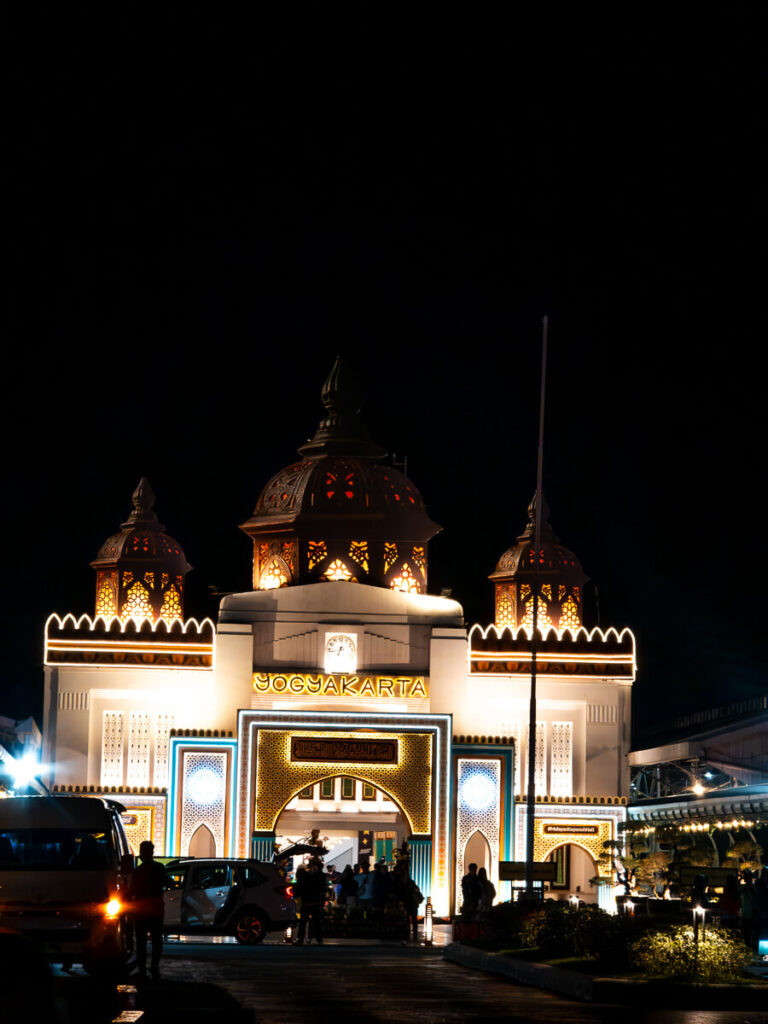
I stayed around the center. I walked. I explored a local market. I noticed the places around the train station. I stood outside a mosque that caught my eye at night. I watched a sunset at Tugu I’m still thinking about. I spent time in public squares, stood under the twin banyan trees at Alun-Alun Kidul and let myself wander.
And yes, I didn’t travel far around the city. I’d be lying if I said I didn’t wish I’d had more time. But staying local gave me a different Yogyakarta. A quieter one. One where I actually noticed the small things.
Sometimes slowing down gives you a better sense of a place than collecting attractions ever could. Yogyakarta did that for me. It might do the same for you.
If this helped you plan your trip, come find me on Instagram. I share the real unfiltered version of these journeys, the ones that don’t always make it into the highlight reel.
Read my Vietnam Article
Vietnam Slow Travel Guide: 50-Day Itinerary & Budget (2026)
Vietnam Travel Budget: Exactly How Much I Spent in 50 Days
Vietnam Itinerary for Slow Travel: My 50-Day Route Through the Real Vietnam
How to Get From Hanoi Airport to Old Quarter: Bus, Grab & Taxi Guide
Best Months to Visit Vietnam: A Month-by-Month Guide
Best SIM Card in Vietnam: Which SIM Should You Buy?
Vietnam Travel Mistakes: Things I Wish I Knew Before My 50-Day Trip