Planning your trip? From handling cash to crossing the street, these are 18 essential Vietnam travel tips for first-time visitors to make your arrival easy.(CLICK HERE)
Table of Contents
Vietnam is an easy country to explore independently once you understand a few basic things. This isn’t about building the perfect itinerary or listing famous attractions. It’s about the small practical details that make your first few days genuinely easier rather than confusing.
After spending fifty days traveling through Vietnam, from Hanoi in the north down to Ho Chi Minh City in the south, these are the Vietnam travel tips for first-time visitors I’d want someone to know before landing. Nothing here requires advance expertise. Most of it just requires knowing what to expect before you’re standing in the middle of it.
Check Vietnam’s Entry and Visa Requirements
Most travelers will need a visa or eVisa to enter Vietnam, though requirements vary depending on your nationality and length of stay. Check your specific entry requirements well before booking flights, since processing an eVisa takes time and shouldn’t be left until the last minute.
Passport validity matters too, most entry requirements expect at least six months remaining on your passport from your arrival date. Make sure the information on your eVisa application matches your passport exactly, since even a small mismatch can cause problems at the border. My full Vietnam eVisa Guide covers the entire application process in detail.
Save Your Important Travel Information Offline
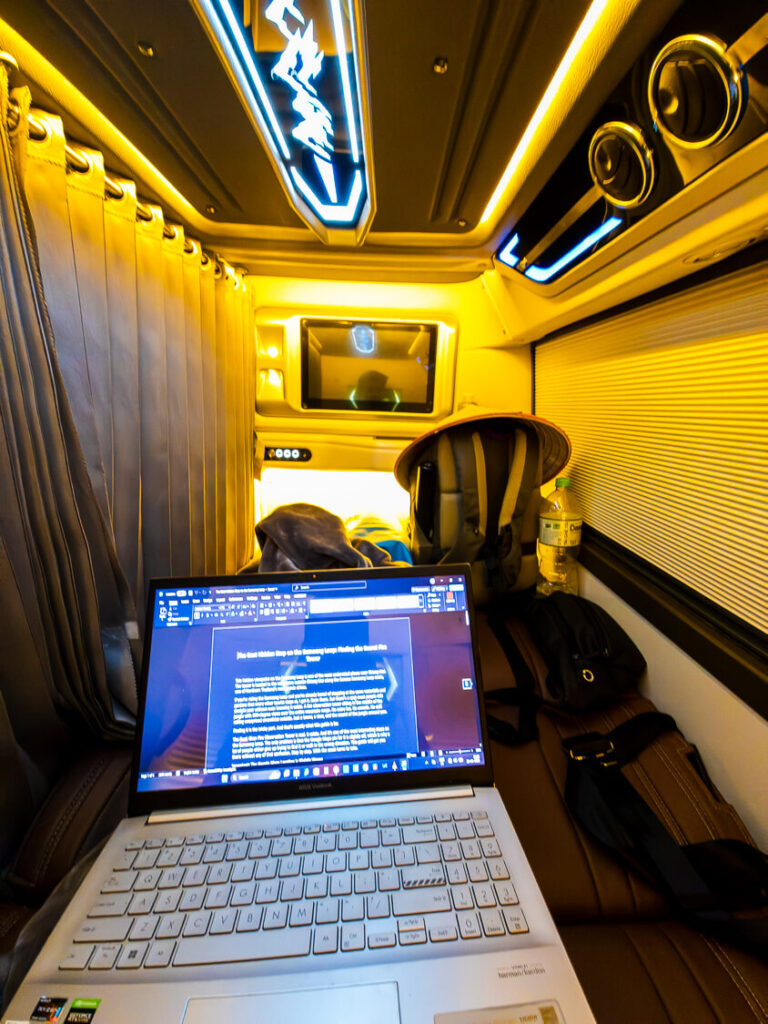
Before you land, save a copy of your passport, your visa or eVisa approval, your accommodation address, flight details, and any bus bookings somewhere accessible without internet. Emergency contacts too, ideally written down rather than only saved in an app that needs data to open.
Having this available offline matters most in the first hour after landing, when you might not have a SIM card yet and airport WiFi isn’t always reliable.
Money in Vietnam: What First-Time Visitors Should Know

Vietnamese Dong Can Look Confusing at First
Seeing prices like 10,000 VND, 50,000 VND, 100,000 VND, and 500,000 VND everywhere takes some adjustment. A simple way to think about it without constantly converting: drop the last three zeros and divide roughly by 24 to 25 to get a rough dollar figure, so 100,000 VND is about $4, and 500,000 VND is about $20.
Carry Some Cash
Small restaurants, street food stalls, small shops, and local businesses frequently don’t accept cards. This came up constantly throughout my trip, my favorite Banh Mi spot in Hoi An, local noodle stalls in Ninh Binh, small cafés everywhere, all cash only. Keep enough on hand for a normal day of eating and small purchases.
Get a SIM or eSIM Before You Need One
Mobile data becomes useful the moment you land, not once you’re settled into your hostel. Google Maps for finding your accommodation, Grab or Be for getting into the city, translation apps for basic communication, and messaging apps for confirming bookings all depend on a working connection.
I bought mine in Hanoi’s Old Quarter rather than at the airport, since airport SIM prices run considerably higher for the exact same package. My full guide on the Best SIM Card in Vietnam breaks down exactly which network and plan makes sense depending on your route.
Download These Apps Before Your Trip

A handful of apps handled almost everything during my fifty days. Google Maps for navigation, Grab and Be for getting around, Vexere for booking intercity buses, Google Translate for communication, Zalo since many businesses and drivers use it over WhatsApp, and Agoda for accommodation.
My complete guide on the Best Apps for Traveling in Vietnam covers all of these in far more detail, including the specific features that made the biggest difference throughout my trip.
Understand How Getting Around Vietnam Works

Within Cities
Walking works fine in compact areas like Hanoi’s Old Quarter or Hoi An’s Ancient Town. GrabBike and GrabCar cover most short trips reliably, Be works as a solid alternative, and standard taxis are available though less predictable on price than app-based options.
Between Cities
Sleeper buses cover most of the longer routes and are how I made almost every intercity journey throughout my trip. Trains exist on certain routes, particularly along the coast, and domestic flights make sense for longer stretches like Hanoi to Ho Chi Minh City if you’re short on time.
For the specifics on any particular route, my detailed transport guides cover exact costs, booking processes, and what to expect on each journey.
Accommodation: A Few Things to Know Before Booking
Location Matters
Check the neighborhood and distance from the places you actually want to visit before booking anything. Staying in Hanoi’s Old Quarter put me within walking distance of everything I needed during my first days in Vietnam, while accommodation slightly further out would have meant relying on transport for even simple errands.
Read Recent Reviews
Focus on cleanliness, noise levels, actual location relative to what’s advertised, WiFi reliability, staff responsiveness, and whether the property genuinely matches its photos. Older reviews matter less than recent ones, since properties change hands and standards shift over time.
Agoda Is the Platform I Personally Prefer (NOT SPONSORED)
I used Agoda for nearly every night of accommodation across my fifty days and consistently found good prices and a smooth booking process. This is based purely on my own experience rather than a claim that it’s objectively superior to every alternative, but it’s the platform I opened first every single time.
Expect a Language Barrier
English is fairly common in tourist areas, hostels, restaurants near major attractions, and central parts of bigger cities. Outside those areas, communication becomes noticeably harder, something I ran into constantly in smaller towns and local restaurants throughout my trip.
Keep addresses written down rather than relying on saying them out loud. Translation apps help enormously, and showing something on your phone screen is often easier than trying to explain it verbally. My Best Apps for Traveling in Vietnam guide covers exactly which translation tools worked best for me.
Learn a Few Basic Vietnamese Words
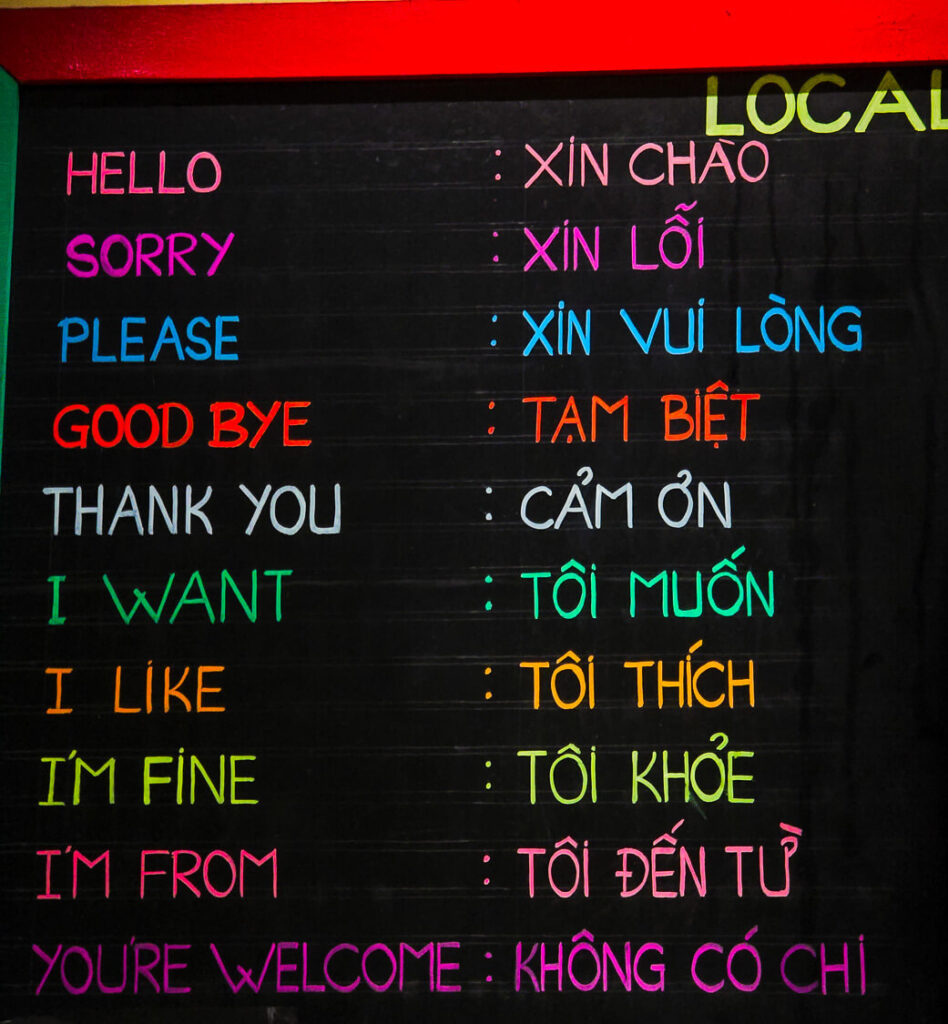
You don’t need fluency. Even a handful of words made everyday interactions noticeably smoother throughout my trip.
Hello – Xin chào
Thank You – Cảm ơn
How Much? – Bao nhiêu tiền?
Yes / No – Có / Không
Excuse Me – Xin lỗi
None of these require perfect pronunciation to be useful. Locals consistently appreciated the effort even when I clearly wasn’t saying it quite right.
Crossing the Street in Vietnam
This deserves its own explanation, since it genuinely surprises most first-time visitors. Traffic, particularly scooters, moves in a constant flow rather than stopping and starting the way it might elsewhere.
The trick is crossing steadily at a consistent pace rather than rushing or hesitating. Watch the traffic and let it flow around you rather than making sudden movements. Avoid stopping unexpectedly in the middle of the road, since scooters are adjusting around your predicted path, not reacting to sudden changes. It feels unnatural the first few times. By the end of my trip, it had become second nature.
Be Aware of Vietnam’s Everyday Noise and Pace
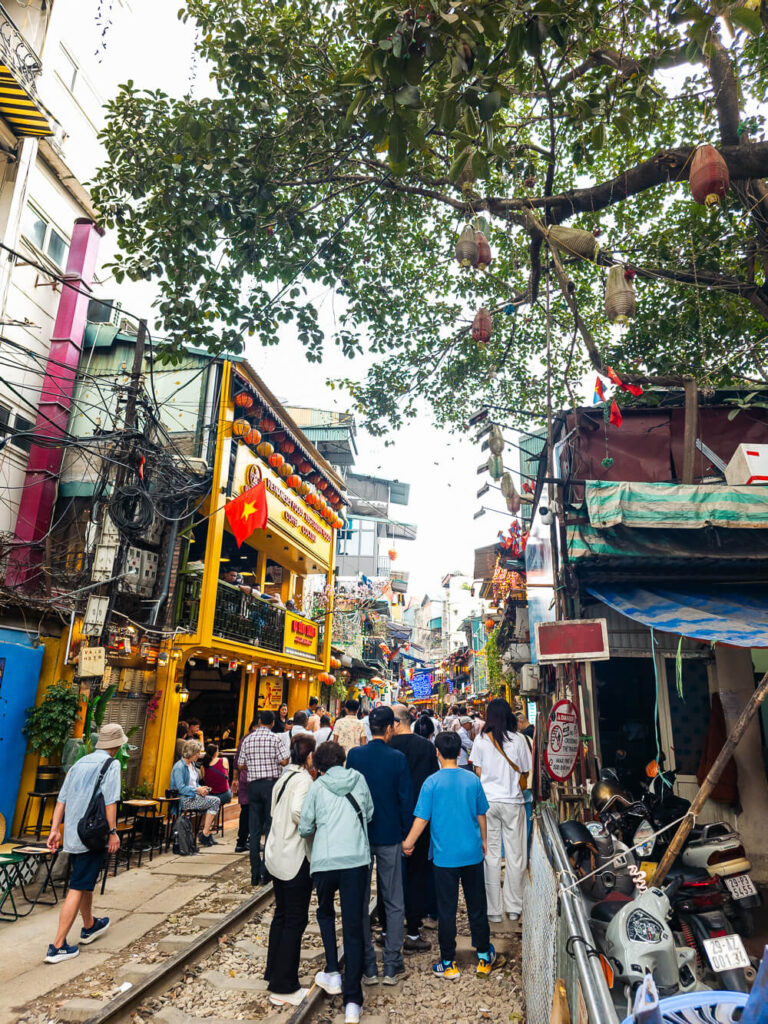
Vietnam can feel busy, loud, and genuinely chaotic in its bigger cities, particularly around Hanoi’s Old Quarter or central Ho Chi Minh City. Motorbikes everywhere, constant horns, packed sidewalks, and near-continuous street activity define daily life in these areas.
This isn’t a sign that something’s wrong or that you’ve ended up somewhere unusual. It’s simply part of everyday urban life here, and it settles into background noise faster than you’d expect once you’ve spent a few days in it.
Don’t Be Surprised by How Different Vietnamese Cities Feel
Every place I visited had its own distinct character, and expecting one Vietnam experience to apply everywhere is a mistake worth avoiding early.
Hanoi felt dense, energetic, and constantly in motion. Sapa slowed everything down into cool mountain air and unpredictable fog. Ninh Binh offered wide open countryside and a completely different pace, especially once Tet emptied the streets. Hue felt quieter and more historical, with some of my best memories coming from places well outside the Imperial City. Hoi An balanced a polished lantern-lit center against genuinely rural countryside just across a bridge. Da Lat brought cool highland air and an entirely different landscape from anywhere else on the trip. Ho Chi Minh City felt like the biggest shift of all, fast, modern, and considerably more intense than anywhere further north.
None of these are better or worse than each other. They’re simply different, and arriving somewhere new in Vietnam consistently meant recalibrating expectations rather than assuming the last city would predict the next one.
Dress Appropriately for Religious Sites
Temples, pagodas, and shrines generally expect shoulders and knees covered, and some request shoes removed before entering specific areas. I ran into this consistently, from major sites to small local shrines I stumbled onto by accident in places like Cam Kim Island near Hoi An.
Expectations vary somewhat by site, so pay attention to signage or how other visitors are dressed if you’re unsure. Carrying a light scarf or shawl solves this easily if you’re wearing something more casual that day.
Carry Tissues and Basic Essentials
A few small items made a genuine daily difference throughout my trip. Tissues, since public restrooms don’t always provide them. Hand sanitizer for general use, particularly around street food. A reusable water bottle, since Vietnam’s heat and humidity mean you’ll be drinking constantly. A power bank, since a long day out with Google Maps, Grab, and photos running drains a phone faster than you’d expect.
Be Patient With Local Interactions
Communication takes longer sometimes, particularly outside tourist-heavy areas. Misunderstandings happen, directions don’t always come explained the way you’d expect, and a calm attitude consistently made these moments easier rather than more frustrating.
This isn’t about avoiding mistakes, it’s simply about adapting to an environment that runs differently than what you’re used to. A little patience goes a long way toward turning a confusing moment into a manageable one.
Vietnam Is More Connected Than You Might Expect
First-time visitors are often surprised by how much can be handled digitally here. Accommodation bookings, bus tickets, ride-hailing, maps, messaging, and even food delivery all worked smoothly throughout my fifty days, often more reliably than I expected going in.
This connectivity is exactly what makes independent travel through Vietnam genuinely manageable rather than intimidating. My Best Apps for Traveling in Vietnam guide covers the specific tools that made this possible throughout my trip.
Keep Your Hotel or Accommodation Address Handy
This matters more than it sounds. Taking Grab, hailing a taxi, arriving by bus at an unfamiliar drop-off point, returning late at night, or dealing with a language barrier all become considerably easier when you can simply show your address rather than trying to explain it.
Keep it saved in Google Maps, as a screenshot, and written in your phone’s notes app as backup. I relied on all three at different points throughout my trip, particularly after overnight bus arrivals in unfamiliar cities.
Frequently Asked Questions About Traveling to Vietnam for the First Time Visitors
Is Vietnam easy for first-time travelers?
Yes, generally. Vietnam is well set up for independent travel, with reliable apps, widely available transport, and enough English in tourist areas to manage most situations comfortably.
What should I know before traveling to Vietnam?
Check your visa requirements early, get a local SIM soon after landing, carry cash for smaller purchases, and expect regional differences in weather, pace, and language accessibility across the country.
Do I need a visa to visit Vietnam?
Most travelers need a visa or eVisa, though requirements depend on nationality. Check your specific situation and apply well before your trip rather than at the last minute.
Do I need a SIM card in Vietnam?
Yes, it’s genuinely useful from the moment you land, covering navigation, ride-hailing, translation, and communication throughout your trip.
Can I use credit cards in Vietnam?
Cards work at larger hotels, restaurants, and shops, particularly in bigger cities. Smaller local businesses, street food, and rural areas generally expect cash.
Do I need cash in Vietnam?
Yes, carry cash regularly. Many of the best food and shopping experiences throughout Vietnam happen at small, cash-only local businesses.
Is English widely spoken in Vietnam?
It’s common in tourist areas and among younger people in bigger cities, but becomes noticeably less common in smaller towns and rural areas.
What apps should I download before visiting Vietnam?
Google Maps, Grab, Be, Vexere, Google Translate, Zalo, and Agoda cover most practical needs. My dedicated apps guide covers each in detail.
Is it easy to travel around Vietnam independently?
Yes. Between reliable apps, widely available sleeper buses, and generally good infrastructure, independent travel through Vietnam is genuinely manageable for first-time visitors.
What should I wear when visiting temples in Vietnam?
Cover your shoulders and knees, and be prepared to remove your shoes at certain sites. Expectations vary slightly by location, so watch for signage or follow what other visitors are doing.
Is crossing the street in Vietnam difficult?
It feels unusual at first given the constant scooter traffic, but crossing steadily at a consistent pace, without sudden stops or rushing, becomes manageable quickly.
What should I carry with me while exploring Vietnam?
Tissues, hand sanitizer, a reusable water bottle, a power bank, cash, and your accommodation address saved offline cover most everyday situations.
Conclusion
Vietnam can feel overwhelming for a first-time visitor because so many everyday things, currency, traffic, language, pace, work a little differently than what you’re used to. But once you understand the basics covered in these Vietnam travel tips for first-time visitors, most of it becomes surprisingly straightforward within just a few days.
After fifty days moving through the country, the thing that surprised me most wasn’t any single challenge. It was how quickly all of it stopped feeling unfamiliar. Give it a few days, stay curious rather than anxious about the differences, and Vietnam opens up far more easily than it might seem before you land.
Planning Your Vietnam Trip?
If you’re building a bigger Vietnam itinerary, here’s what else I’ve written:
Vietnam Slow Travel Guide: 50-Day Itinerary & Budget (2026)
Vietnam Travel Budget: Exactly How Much I Spent in 50 Days
Vietnam Itinerary for Slow Travel: My 50-Day Route Through the Real Vietnam
How to Get From Hanoi Airport to Old Quarter: Bus, Grab & Taxi Guide
Best Months to Visit Vietnam: A Month-by-Month Guide
Best SIM Card in Vietnam: Which SIM Should You Buy?
Vietnam Travel Mistakes: Things I Wish I Knew Before My 50-Day Trip