Learn exactly how to get around Vietnam efficiently. A 50-day traveler’s guide to navigating sleeper buses, trains, Grab, flights, and scooter rentals.(CLICK HERE)
Table of Contents
Vietnam is a long, narrow country, and getting around is a major part of the travel experience rather than just a logistical detail to sort out between destinations. There’s no single best way to get around Vietnam. Your choice depends on distance, budget, time, comfort, where you’re headed, and whether you want to travel quickly or slowly.
During my own fifty-day trip, I used almost every option covered in this guide, sleeper buses, a limousine van, scooters, bicycles, walking, and Grab, often switching between them depending on exactly what a specific leg of the journey called for. This guide breaks down how to get around Vietnam properly, based on real routes I actually traveled rather than theoretical advice.
The Main Ways to Get Around Vietnam
Intercity Transport
Sleeper buses, day buses, limousine vans, trains, and domestic flights all connect Vietnam’s major cities and regions, each suited to different distances and budgets.
Getting Around Cities and Towns
Walking, bicycles, GrabBike, GrabCar, Be, taxis, and local buses handle short-distance movement within any given city or town.
Exploring the Countryside
Bicycles, scooters, private cars, and occasionally local transport cover the areas surrounding cities, where the real exploring tends to happen.
Traveling Between Cities in Vietnam
Sleeper Buses
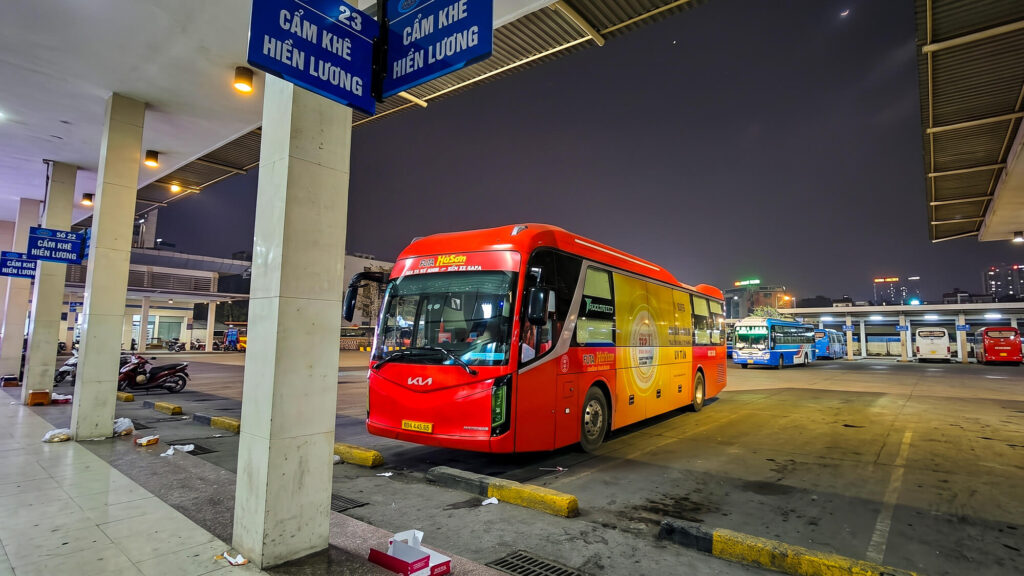
Sleeper buses are genuinely one of the most common ways to get around Vietnam over long distances, and they became my primary method of intercity transport throughout the entire trip.
Day buses exist, but overnight sleeper services dominate the longer routes, since they let you cover significant distance while sleeping rather than losing a full day to travel. Long-distance routes commonly run 8 to 13 hours, and different operators use different bus layouts, some with open berths, others with fully enclosed private cabins.
Comfort varies enormously by operator. Luggage typically goes in a hold beneath the bus, while a smaller bag stays with you in your berth. Boarding and drop-off points differ by company too, something worth confirming before you travel rather than assuming every bus leaves from the same station.
Sleeper buses were my main form of intercity transportation throughout Vietnam, and I traveled several major routes this way. Hanoi to Sapa with FUTA HA SON, paying 260,000 VND for an overnight berth. Sapa back to Hanoi on the return leg. Ninh Binh to Hue with HK Busline, a genuinely excellent private cabin experience for 700,000 VND covering close to 13 hours overnight.
Hue to Hoi An on a standard tourist bus for 200,000 VND, where not specifying my seat meant getting assigned an uncomfortable back corner spot for the Hai Van Pass crossing. Hoi An to Da Lat overnight, where the bus arrived nearly two hours earlier than the advertised time. And finally Da Lat to Ho Chi Minh City with Phuong Trang for 260,000 VND, another comfortable overnight sleeper.
They’re a genuinely good option for budget travelers specifically because the price typically covers both transport and a place to sleep in one ticket.
Limousine Vans and Minivans
Limousine vans are smaller, more comfortable vehicles than full-size buses, typically seating 9 to 16 passengers in individual reclining seats rather than rows.
They differ from standard buses mainly in comfort and convenience, often including direct hotel or hostel pickup as part of the ticket price. This makes them particularly useful for shorter intercity routes where a full sleeper bus feels excessive for the distance involved.
My Hanoi to Ninh Binh journey used exactly this option, a van booked through Vexere for 155,000 VND that picked me up directly from my hostel in Hanoi’s Old Quarter and dropped me near Tam Coc. For a roughly two-hour journey, this made far more sense than navigating to a bus station for a longer-format sleeper bus.
Trains in Vietnam
Vietnam’s railway network runs primarily along the coast, connecting major cities like Hanoi, Hue, Da Nang, and Ho Chi Minh City. Travelers can expect a range of options, from basic hard seats to sleeper cabins with two, four, or six berths per compartment.
Soft-seat options work well for shorter daytime journeys, while sleeper cabins suit longer overnight routes similarly to buses. Trains are particularly useful for specific scenic stretches, the coastal section between Hue and Da Nang crossing the Hai Van Pass area is genuinely one of the more beautiful rail journeys in the country.
Advantages compared to buses include a smoother ride and more space to move around. Disadvantages include fewer route options overall and, on some routes, no station directly in your destination town, meaning an additional transfer at the end.
Domestic Flights
Flying makes sense specifically when the distance is very long and time is limited, Hanoi to Ho Chi Minh City being the clearest example, since that overland journey would otherwise take multiple days.
Major domestic airports connect all of Vietnam’s key cities, with budget carriers keeping prices reasonable on popular routes. Factor in extra time for airport transfers on both ends, security, and baggage handling, since a one-hour flight can easily become a half-day commitment once you include getting to and from the airport.
Flights don’t naturally fit a slow-travel style, since they skip over the countryside and small towns that often turn out to be the most memorable part of getting somewhere. I didn’t use a domestic flight during my own trip, choosing overland transport for the entire fifty days instead.
Getting Around Vietnam by Scooter or Motorbike

This deserves real attention, since motorbikes are such a defining part of how the country actually moves.
Renting a Scooter
Scooters offer genuine freedom, particularly for exploring outside city centers where public transport thins out considerably. The ability to stop whenever something looks interesting, rather than being tied to a fixed route, is exactly what makes countryside exploration in Vietnam so rewarding.
Fuel is cheap, and rental costs vary by region and bike type, generally running from 100,000 to 150,000 VND per day depending on where you are.
Where Scooters Make the Most Sense
Smaller towns, open countryside, and scenic regions with spread-out attractions are where a scooter genuinely transforms the experience. Ninh Binh’s temples and rice fields, Hue’s outlying spots like the abandoned water park and Rung Ru Cha Mangrove Forest, and the mountain roads around Sapa all benefit enormously from having your own wheels rather than relying on tours or fixed transport.
Where Scooters Can Be Less Convenient
Heavy city traffic, particularly in Hanoi or Ho Chi Minh City, makes scooters considerably more stressful for inexperienced riders. Long-distance travel between cities is impractical compared to a bus or train, weather can turn a pleasant ride into a genuinely difficult one, and parking in busy central areas isn’t always straightforward.
My own scooter experience varied significantly by destination. In Sapa, fog repeatedly disrupted planned rides, cutting a scooter trip toward Ta Van short when visibility dropped to almost nothing. In Da Lat, the bigger issue wasn’t riding conditions at all, I simply couldn’t find a scooter available to rent anywhere in the city during my three-night stay, which forced an entire day of walking instead. This inconsistency is worth knowing before you build a route that depends entirely on scooter availability.
Getting Around Vietnam by Bicycle
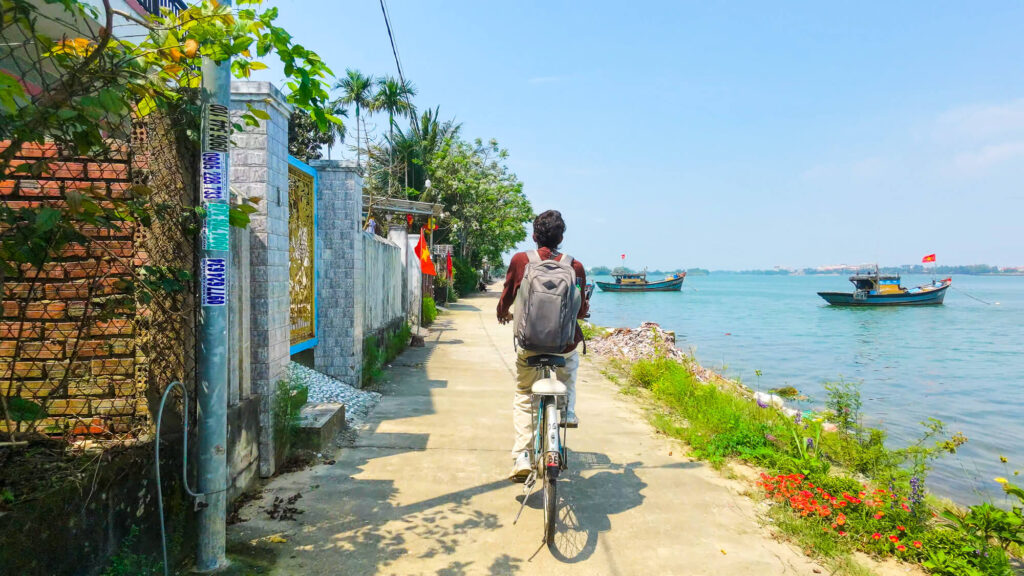
Bicycles are often overlooked when people talk about transportation in Vietnam, but for slow travel specifically, they became one of the best ways I found to actually experience places rather than just pass through them.
Why I Loved Cycling in Vietnam
Moving at your own pace on a bicycle changes what you notice completely. Everyday life, farmers in rice paddies, kids playing outside village homes, fishing boats docked along quiet waterways, all became visible in a way that riding a scooter or sitting in a car simply doesn’t allow.
Stopping whenever something looked interesting, without the mental cost of pulling over a motorized vehicle, made exploring feel genuinely unhurried. Quiet roads opened up constantly, the kind you’d never find intentionally, and the whole experience avoided that rushed feeling of constantly moving between fixed attractions.
Where Bicycles Work Best
Hoi An was where cycling genuinely defined my experience. I rented a bicycle for two full days and used it to explore Cam Kim Island, discovering a hidden boat temple and quiet fishing villages I never would have found any other way. Ninh Binh’s flat countryside around Tam Coc also suited cycling well, alongside other smaller towns with quiet, flat roads and minimal traffic.
The common thread across all of these places is flat terrain and quieter routes, conditions where a bicycle keeps up perfectly well with a scooter while adding a slower, more immersive pace to the whole experience.
Renting a Bicycle in Vietnam
Most hostels and hotels offer bicycle rental directly, often for a small daily fee or sometimes included free with your stay. Local rental shops are also common in towns with heavy cycling tourism like Hoi An.
Before taking a bicycle out, check the brakes actually work, the tires hold air properly, the seat height suits you, and whether a lock is provided if you plan to leave it unattended anywhere. If you’re riding later in the day, confirm the bike has working lights, since many rental bicycles don’t include them by default.
Is Cycling in Vietnam Safe?
Generally yes, with some common sense applied. Quiet countryside roads, like those around Cam Kim Island or rural Ninh Binh, are considerably safer and more pleasant than cycling through busy city centers, where traffic density makes bicycles feel more vulnerable.
Staying aware of your surroundings, avoiding major roads when a quieter alternative exists, checking weather before heading out, and avoiding riding after dark on unfamiliar roads all reduce risk significantly. I rode through genuinely heavy rain at points during my time cycling around Hoi An’s countryside, which added difficulty but never felt unsafe given how quiet those specific roads were.
Getting Around Vietnamese Cities
Transportation within a city changes considerably depending on that city’s size and character.
Walking

Old quarters, central areas, markets, and cafés are almost always better explored on foot than by any vehicle. Hanoi’s Old Quarter, Hoi An’s Ancient Town, and central Da Lat around Xuan Huong Lake all rewarded walking specifically, short distances between points of interest and streets often too narrow or busy for comfortable riding anyway. Walking became a natural part of my travel style in exactly these kinds of dense, walkable centers.
GrabBike and GrabCar
Booking through the Grab app removes the need to negotiate fares entirely. GrabBike suits short solo trips across town, while GrabCar makes more sense when carrying luggage or traveling with others. Airport transfers work smoothly through Grab too, and it’s always worth double-checking the pickup point shown in the app matches where you’re actually standing.
Be
Be functions as a genuine Vietnamese alternative to Grab, with BeBike, BeCar, and BeTaxi covering similar territory. Comparing fares between the two apps before booking can save a meaningful amount over a longer trip, and having a second option available matters whenever Grab prices spike or availability runs thin.
Taxis
Traditional taxis remain useful, particularly for travelers who prefer not to rely entirely on apps. They’re especially common around airports and major transport hubs. Always check that the meter is running, and stick to established companies like Mai Linh or Vinasun where possible rather than unmarked vehicles.
Local Buses
City buses make sense when you’re on a tight budget and don’t mind a slower, less direct route. They’re genuinely inexpensive, the public bus from District 1 to Ho Chi Minh Airport cost me just 6,000 VND, plus a small extra charge for larger luggage. They can be less convenient for first-time visitors specifically because routes and destination signage aren’t always in English, so using a maps app alongside the bus helps considerably.
How to Choose the Best Way to Get Around Vietnam
Best for Budget Travelers
Sleeper buses for long distances, local buses within cities, and bicycles or walking for short trips all keep costs low without sacrificing much practicality.
Best for Saving Time
Domestic flights for the longest stretches, direct buses or vans for mid-distance routes where flying isn’t necessary.
Best for Comfort
Trains for a smoother ride, private cars for door-to-door convenience, and premium sleeper bus options with enclosed cabins like the one I used between Ninh Binh and Hue.
Best for Slow Travel
Bicycles and scooters for genuine exploration, walking within cities, and buses paired with longer stays in each destination rather than constant movement.
Best for Short Distances
Walking, GrabBike, or a bicycle cover almost anything within a single city or town efficiently.
Best for Long Distances
Sleeper buses, trains, or flights, chosen based on how much time you have and how much of the journey you actually want to experience versus skip entirely.
How to Book Transportation in Vietnam
Vexere
Vexere was the platform I relied on most heavily throughout my entire trip for intercity transport. It lets you compare buses, departure times, and operators side by side, confirm exact prices before paying, and receive instant booking confirmation. One feature I found genuinely useful was checking the exact distance to boarding and drop-off points in kilometers before choosing an option, letting me pick whichever pickup point sat closest to my accommodation.
Booking Trains
Train tickets can be booked through the official Vietnam Railways website or through general booking platforms that list train options alongside buses. Compare seat or berth classes and confirm departure stations before paying, since larger cities sometimes have multiple stations.
Booking Domestic Flights
Check airline schedules directly or through comparison sites, paying attention to baggage allowance since budget carriers often charge extra for checked bags. Factor in getting to the airport and arriving with enough buffer time before departure, particularly for international connections onward.
What I Used to Get Around Vietnam During 50 Days
Intercity Travel
I relied heavily on sleeper buses and one limousine van for essentially every intercity leg of my trip. This suited both my budget and my preference for overland travel, since it meant seeing the countryside pass by, or sleeping through the distance overnight, rather than skipping it entirely by flying.
Around Cities
Walking covered most of my time in compact areas like Hanoi’s Old Quarter and Hoi An’s Ancient Town. Grab handled shorter trips and airport transfers when walking wasn’t practical, and the public bus got me to Ho Chi Minh Airport at the end of my trip for a fraction of what Grab would have cost.
Exploring More Slowly
This is where bicycles genuinely changed my trip. Cycling around Cam Kim Island near Hoi An led directly to finding a hidden boat temple and quiet fishing villages I never would have discovered otherwise. Scooters filled a similar role elsewhere, Sapa and Ninh Binh specifically, though scooter availability wasn’t always guaranteed, as Da Lat proved when I couldn’t rent one at all.
Common Transportation Mistakes to Avoid
Checking the Departure Point
Confirm exactly where your bus, van, or train actually leaves from rather than assuming every operator uses the same station.
Arriving Too Late for Your Bus
Give yourself buffer time to reach the departure point, particularly in busier cities where traffic can slow down even a short trip.
Choosing a Bus Only Because It Is Cheapest
Price alone doesn’t tell you much about comfort or seat assignment. My own back-corner seat mistake on the Hue to Hoi An route came directly from not specifying a preference when booking.
Not Checking the Drop-Off Location
Some buses arrive well outside a city center rather than somewhere central, meaning you’ll need additional transport just to reach your accommodation.
Forgetting How Long Airport Transfers Take
Factor in traffic and check-in time rather than assuming the flight time alone determines your schedule.
Not Checking Your Bike or Scooter Before Leaving
Brakes, tires, and general condition matter regardless of whether you’re renting a bicycle for an afternoon or a scooter for a week.
Frequently Asked Questions About How to Get Around Vietnam
What is the best way to travel around Vietnam?
There isn’t one single best way. Sleeper buses work well for long distances on a budget, scooters and bicycles suit countryside exploration, and flights make sense for very long stretches when time is limited.
What is the cheapest way to get around Vietnam?
Local buses within cities and sleeper buses between them offer the best value for budget travelers, often costing a fraction of flights or private transport for similar distances.
Are sleeper buses in Vietnam comfortable?
Comfort varies significantly by operator. Premium options with enclosed private cabins, like the one I used between Ninh Binh and Hue, offer genuine comfort, while standard sleeper buses provide a functional but more basic experience.
Is it better to travel by train or bus in Vietnam?
It depends on the route and priorities. Trains offer a smoother ride and scenic value on certain coastal stretches, while buses generally reach more destinations directly and often cost less.
Are domestic flights worth taking in Vietnam?
Yes, specifically for very long distances like Hanoi to Ho Chi Minh City, where flying saves significant time compared to overland travel.
Can tourists rent scooters in Vietnam?
Yes, scooter rental is widely available and commonly used by both locals and tourists, though availability can vary by destination and season.
Is cycling a good way to get around Vietnam?
Yes, particularly in flat, quieter areas like Hoi An’s countryside or rural Ninh Binh, where cycling offers a genuinely immersive way to explore beyond the main tourist areas.
Can you rent bicycles in Vietnam?
Yes, most hostels and hotels offer rentals directly, and dedicated rental shops are common in cycling-friendly towns like Hoi An.
Is Grab available throughout Vietnam?
Grab operates in most major cities and tourist areas, though coverage can thin out in smaller towns and rural regions.
Is Be available in Vietnam?
Yes, Be operates similarly to Grab across major cities, offering a useful second option for comparing fares and availability.
How do you book buses in Vietnam?
Vexere is the platform I used most consistently, allowing direct comparison of operators, prices, and departure times with instant booking confirmation.
Is it easy to travel around Vietnam independently?
Yes. Between reliable apps, widely available buses, and generally good infrastructure, independent travel around Vietnam is genuinely manageable without needing organized tours.
Conclusion
There isn’t one best way to get around Vietnam. The right transport depends entirely on how far you’re going and how you want to experience the country along the way.
For my own style of slow travel, sleeper buses, walking, bicycles, and occasional scooters made far more sense than constantly flying between destinations. Each of these methods, in its own way, became part of the actual experience rather than just a means of skipping between the parts of the trip that mattered. Figuring out how to get around Vietnam properly isn’t really about finding the fastest option. It’s about matching the method to the moment, and letting some of that transportation itself become part of the story.
Planning Your Vietnam Trip?
If you’re building a bigger Vietnam itinerary, here’s what else I’ve written:
Vietnam Slow Travel Guide: 50-Day Itinerary & Budget (2026)
Vietnam Travel Budget: Exactly How Much I Spent in 50 Days
Vietnam Itinerary for Slow Travel: My 50-Day Route Through the Real Vietnam
How to Get From Hanoi Airport to Old Quarter: Bus, Grab & Taxi Guide
Best Months to Visit Vietnam: A Month-by-Month Guide
Best SIM Card in Vietnam: Which SIM Should You Buy?
Vietnam Travel Mistakes: Things I Wish I Knew Before My 50-Day Trip